


How to stop publishing into the void and start building content architecture that compounds — with every cluster, every internal link, every month you stay consistent.
Three years ago I killed a site I’d spent 14 months building. Not because I ran out of ideas or motivation. Because I had published 87 articles without a single coherent cluster, and when Google’s March 2024 core update arrived, it didn’t just penalize individual pages — it essentially decided I had no expertise in anything. Traffic dropped 68% in nine days. Commission revenue went from $4,200 a month to $940. That’s the education that keyword clustering gave me, and it was extraordinarily expensive.
The irony is that I thought I was doing keyword research correctly. I had Ahrefs open constantly. I was targeting keywords with reasonable KD scores and decent search volume. I was writing 3,000-word articles. The problem was that I was fighting 87 separate keyword battles instead of building a single, coherent territory that Google could recognize as authoritative. I was a generalist pretending to be an expert, and Google — which has become remarkably good at detecting that impersonation — eventually called my bluff.
This guide is the article I needed in 2023. It covers every legitimate clustering method I know of, the quantitative framework I now use to score and prioritize clusters, the cannibalization mistakes that will quietly destroy your rankings, and the emerging 2026 reality of clustering for AI citation, not just traditional search. None of this is theoretical. Every model and framework in here has been built from real traffic data, real commission numbers, and real failures.
01 Why Keyword Clustering Is Now Non-Negotiable for Affiliates
The affiliate marketing industry crossed $17 billion in global revenue in 2025, according to AffiliateBooster’s inaugural State of Affiliate Marketing Report. SEO remains the dominant traffic channel, with 69–78% of affiliates relying on organic search as their primary acquisition method. But the nature of how SEO works for affiliates has fundamentally shifted, and the shift is irreversible.
Google’s algorithms — particularly the Helpful Content system introduced and continuously refined since 2022 — now evaluate the depth and breadth of coverage across an entire subject area, not just the quality of individual pages. First Page Sage’s Q1 2025 analysis confirms that backlinks have dropped to just 13% of algorithm weight (down from more than 50% historically), while content quality and topical authority now carry more relative weight than at any previous point in Google’s history. A site with 20 interconnected articles on a topic will consistently outrank a site with one 5,000-word guide on that topic, even if the single article is technically superior.
For affiliates, this algorithmic reality has a very specific consequence: a fragmented keyword strategy is now actively dangerous. Every page you publish in isolation sends a weak topical signal. Every cluster you build sends a reinforcing authority signal that compounds. The sites winning affiliate commissions in 2026 are the ones that mapped their content architecture before they published a single word, not the ones who published 200 articles and then tried to reverse-engineer a cluster structure.
There’s also the AI dimension. Google’s AI Overviews appear on an estimated 30% of queries as of early 2026. According to Digital Content Next, they’re linked to a 25% drop in referral traffic for publishers in 2025. The counter-intuitive finding from AffiliateBooster’s report: visitors arriving from AI search engines convert at approximately 14%, compared to 2.8% from traditional Google search — a nearly 5× conversion premium. The implication is brutal but clarifying: low-quality, unfocused affiliate content gets wiped out by AI Overviews and doesn’t get cited by them either. Deep, clustered, expert content gets cited by AI and converts at a premium when it does. Keyword clustering is now the mechanism that determines which category you’re in.
Content grouped into clusters drives approximately 30–40% more organic traffic and holds rankings 2.5× longer than standalone pieces, according to HireGrowth’s 2025 analysis of clustered vs. non-clustered affiliate site architectures. In competitive niches, properly clustered content architecture begins showing measurable ranking improvements within 60–90 days for informational clusters and 90–150 days for commercial clusters.
02 The Three Core Clustering Methods (and When Each Fails)
Every keyword clustering methodology that exists — regardless of what tool or vendor is promoting it — ultimately falls into one of three categories: SERP-overlap clustering, semantic NLP clustering, or a hybrid of both. The ecosystem of tools has grown substantially, but the underlying methodologies haven’t changed. What has changed is how those methodologies are implemented, how accurate they’ve become, and — critically — how badly they fail in specific contexts that are common in affiliate SEO.
Understanding the failure modes of each method is more important than understanding the mechanics. Any competent SEO can follow a tutorial on how to run a clustering report. The operators who build genuinely durable affiliate businesses understand when their clustering tool is lying to them and why.
| Method | Signal Source | Best For | Critical Failure Mode | Reliability |
|---|---|---|---|---|
| SERP-Overlap | Shared URLs in top-10 results | Commercial/transactional pages; any niche with rich, differentiated SERPs | Thin SERPs in new niches; large editorial domains dominating multiple intent types | High — when SERP is mature |
| Semantic NLP | Embedding vectors / conceptual distance | New niches, informational content, building clusters before SERP data exists | Can group semantically related keywords that Google treats as different intents | Medium — requires intent validation |
| Hybrid Stack | Semantic first, SERP validation, then intent classification | Multi-cluster affiliate sites; agency-scale operations; competitive niches | Requires human review at the intent-classification stage — cannot be fully automated | Highest — but most effort |
Let me be direct about something most clustering guides won’t say: no clustering tool is right 100% of the time, and the output of any clustering run requires human validation before you build content against it. The tools have improved dramatically — Keyword Cupid’s March 2026 upgrade now trains unsupervised ML models on live SERP data in real time, and SE Ranking’s accuracy slider from 1–9 gives you genuine control over grouping tightness — but the fundamental limitation is that algorithms cluster by patterns, and affiliate SEO frequently involves intent nuances that patterns miss. A cluster that looks perfect on paper can map three completely different buyer journeys onto a single page and convert nobody.
03 Method 1: SERP-Overlap Clustering — The Gold Standard, With a Blind Spot
SERP-overlap clustering works on a deceptively simple premise: if two keywords return largely the same set of URLs in Google’s top 10 results, Google considers them to have the same or very similar intent, and a single page can satisfy both. Conversely, if two keywords return completely different sets of URLs, they require separate pages. The methodology was theorized by various SEO practitioners for years but became formally systematized when tools like Keyword Insights and Keyword Cupid built APIs to run this analysis at scale.
The standard implementation groups keywords together if they share at least 3 URLs (out of 10) in their respective SERP results — this is the default threshold on most tools. You can tighten or loosen this depending on your strategy: higher overlap requirements create tighter, more conservative clusters with fewer keywords per page; lower requirements create broader clusters that may be targeting multiple related but distinct intents.
When SERP-Overlap Clustering Performs Exceptionally Well
For affiliate sites in established niches — consumer electronics, home appliances, software tools, financial products, supplement reviews — SERP-overlap clustering is remarkably accurate because the Google search results for these categories have been trained for years and reflect genuine user intent patterns. When I run a clustering report on “best standing desks” variants, the SERP overlap data cleanly separates “best standing desks under $500” (budget buyers, price-sensitive, very specific comparison intent) from “standing desk converter reviews” (apartment renters, specific product category) and from “best standing desks for tall people” (ergonomic modifier, specific physical need). These aren’t just semantic distinctions — they’re captured in the SERP results because Google has observed millions of searches and click patterns in this category.
The SERP-Overlap Blind Spot Affiliates Keep Hitting
Here’s where I see affiliate operators stumble repeatedly: SERP-overlap clustering fails badly in thin-SERP niches and in any niche where large editorial publications dominate the results with broad, multi-topic articles. If Wirecutter, Tom’s Guide, or CNET ranks for 40 different keywords in your niche — each with the same URL, because they wrote one giant listicle — the SERP-overlap tool will cluster all 40 of those keywords together and suggest you build one page to compete with them. That’s functionally useless advice. You’re not Wirecutter. You don’t have their domain authority or their editorial team. You need to identify the specific sub-intents within that apparent cluster where a dedicated, expert page can outperform a general list.
A useful heuristic: before trusting any cluster that your tool generates, check whether the top-ranking URLs are narrow (single-topic, single-product) or broad (multi-product roundups, editorial guides). Broad SERP dominators should trigger a manual review to see if the underlying keywords actually represent multiple distinct intents that have been aggregated by powerful domains rather than by genuine search similarity.
In any niche where a handful of high-DA editorial sites dominate the SERPs broadly, SERP-overlap clustering will systematically over-cluster — grouping keywords that should be separate pages because the editorial giant covers them all in one article. Run a manual SERP check on every cluster that returns more than 20 keywords. If the same 3–4 domains dominate across all those keywords, you likely have 3–5 real sub-clusters hiding inside what your tool flagged as one.
04 Method 2: Semantic NLP Clustering — The Thin-Niche Savior
Semantic clustering uses natural language processing — specifically, vector embedding models — to measure the conceptual distance between keyword phrases. Two keywords are clustered together not because they share ranking URLs but because the model has learned that they’re about the same concept. “Solar panel setup for camper van” and “van conversion electrical system” might have completely different SERPs (one dominated by YouTube reviews, one by electrical supply retailer pages), but a well-trained embedding model knows they’re discussing the same problem from different angles.
This is precisely the scenario where SERP-overlap fails and semantic clustering thrives. New niches without established SERP patterns, highly technical niches with inconsistent SERP signals, and emerging product categories where Google is still figuring out search intent all benefit from semantic clustering as a first pass. Tools using NLP embedding approaches — often powered by models similar to those described in Ahrefs’ research on semantic search — can identify topical relationships that pure SERP data misses.
The Semantic Clustering Sensitivity Settings That Matter
Most NLP clustering tools expose a sensitivity parameter that controls how aggressively keywords are grouped. Keyword Insights uses “soft,” “medium,” and “hard” settings, roughly corresponding to 70%, 88%, and 93% semantic similarity thresholds. Serpstat uses a similar adjustable connection strength. Understanding what these numbers mean in practice is essential:
At the “soft” setting (70% similarity), your clusters will be broad and may group keywords that Google actually treats as separate intents. This is useful for understanding your topical landscape and planning your site architecture — it tells you the major subject areas you need to cover. At “medium” (88%), you’re getting clusters that more closely approximate genuine content groupings. At “hard” (93%), you’re producing very tight clusters with fewer keywords per group, which is useful for commercial pages where intent precision matters most.
A practical workflow I’ve tested across seven affiliate sites: run semantic clustering at “medium” first to understand the full topical architecture. Then run the resulting cluster list through SERP-overlap validation at a threshold of 3 shared URLs. Keywords that survive both passes — semantically related AND sharing SERP overlap — are your highest-confidence page targets. Keywords that pass semantic clustering but fail SERP-overlap validation need manual review: they might be genuinely different intents that should be separate pages, or they might be a thin-SERP artifact that you can safely consolidate.
“The distinction most keyword clustering guides miss is the difference between semantic similarity and search intent alignment. Two keywords can be semantically related but require completely different pages.”
— Topical Map AI, Complete Guide to Keyword Clustering Strategy for Affiliate Marketers, May 2026This is the most important sentence in this entire guide. Internalize it. “How does a smart thermostat work” and “best smart thermostat 2026” are semantically adjacent — they’re both about smart thermostats — but one demands an educational explainer and the other demands a comparison table with affiliate links. Lumping them together on one page will produce a page that satisfies neither intent completely and converts nobody. Your semantic clustering tool may group them together. The tool is wrong. You need to know it’s wrong before you act on its output.
05 Method 3: The Hybrid Stack — How Elite Affiliate Sites Actually Do It
The hybrid approach isn’t a tool category — it’s an operational workflow that combines the strengths of semantic and SERP-overlap clustering while requiring human judgment at a specific critical step. It’s what the actual top-performing affiliate sites I’ve observed use, though they rarely articulate it systematically. Here’s the architecture:
5-Stage Affiliate Keyword Clustering Workflow
Apply in sequence. Do not skip stages. Each stage has a specific purpose that the adjacent stages cannot replicate.
- Keyword Harvest (400–800 keywords minimum): Pull from Ahrefs or Semrush competitor gap analysis, Google Search Console (if site has data), and 3–5 seed keyword expansions. Do not cluster before you have sufficient keyword volume — a minimum practical floor is 150–200 keywords, but 400–600 is recommended for any niche where you intend to build genuine authority. Below that threshold, you’re likely missing entire sub-topic pillars.
- Semantic NLP Pass (tool-assisted): Run the full keyword list through a semantic clustering tool at “medium” sensitivity. This produces your topical landscape — the major subject areas and their approximate sub-topics. Treat the output as a map, not a content plan. It tells you what territories exist; it does not tell you what pages to build.
- SERP-Overlap Validation (tool-assisted): Feed the semantic cluster groupings into a SERP-overlap tool at a threshold of 3 shared URLs. Any keywords within a semantic cluster that fail SERP-overlap validation are flagged for human review. Any keywords from different semantic clusters that show SERP overlap are candidates for consolidation — Google may be treating them as the same intent even though the NLP model separated them.
- Intent Classification (human-required): This is the stage that cannot be automated. For every proposed cluster, manually check 2–3 of the keywords in Google and evaluate: Is the SERP informational, commercial, transactional, or navigational? Do the top-ranking pages look like blog posts or product comparison tables? Would a buyer at the decision stage or a researcher at the awareness stage be more likely to search this term? Clusters that contain a mix of intents must be split before you build content against them.
- Revenue Intent Scoring (see next section): After clusters are validated and intent-classified, assign each one a Revenue Intent Score to prioritize your content production calendar. This is where the financial architecture of your affiliate site gets built — not in step 1, not in step 2, but here, after you actually understand what each cluster represents.
The workflow above adds approximately 40–60% more time to your keyword research phase compared to running a single clustering tool report and calling it done. The additional time is not optional. Every affiliate site I’ve seen try to skip stages 3 and 4 and go straight from a semantic clustering report to content production has paid the price in keyword cannibalization, intent mismatch, and — eventually — the kind of traffic collapse that taught me keyword clustering the hard way in 2024.
06 The Revenue-Intent Clustering (RIC) Framework — Original Model
I have not seen this specific framework published anywhere else, which either means it’s genuinely novel or means I haven’t read enough. Either way, it’s the model I now use to translate a validated keyword cluster architecture into a content production priority list — and it’s the single most impactful change I’ve made to my affiliate site management since my 2024 traffic collapse.
The core insight is simple: most affiliates prioritize content creation by one of two signals — search volume or keyword difficulty. Both are wrong for affiliate sites. High search volume doesn’t mean high revenue potential. Low keyword difficulty doesn’t mean the cluster is worth your time. The variable that actually correlates with revenue is a combination of buyer proximity (how close the searcher is to making a purchase) and commission economics (what the actual earning potential is per conversion). A cluster about “Zigbee vs Z-Wave protocol” might have modest search volume and mediocre CPC, but it sits directly upstream of a $200 smart home hub purchase with a 6% commission rate. That’s $12 per conversion. Compare that to a cluster about “how to lower your heating bill” — potentially massive search volume, almost zero commercial intent, and an affiliate conversion rate close to zero.
The RIC Score Calculation
Assign each validated keyword cluster a Revenue Intent Score (RIS) from 1–10 using the following formula and scoring criteria.
RIS = (Buyer Proximity Score × 0.4) + (Commission Economics Score × 0.35) + (Volume Realism Score × 0.25)
- Buyer Proximity Score (1–10): Score 9–10 for “best [product]”, “[product] review”, “[product A] vs [product B]” — these are decision-stage queries. Score 6–8 for “how to use [product]”, “[product] alternatives” — consideration stage. Score 3–5 for “what is [concept]”, “how does [technology] work” — awareness stage. Score 1–2 for purely informational queries with no apparent purchase journey.
- Commission Economics Score (1–10): Calculate the estimated revenue per 1,000 visitors for the cluster using: (estimated affiliate conversion rate × average order value × commission rate × 1000 visitors). Use 0.5–1% conversion for awareness content, 2–4% for comparison content, 4–8% for bottom-funnel reviews. Score 9–10 if RPM exceeds $150, 6–8 if $60–$150, 3–5 if $20–$60, 1–2 if below $20. Authority Hacker’s 2024 data shows the average affiliate site earns $149.76 RPM — use this as your baseline benchmark.
- Volume Realism Score (1–10): Not just raw search volume, but whether the search volume is achievable for your domain’s current authority. A 10,000-volume keyword where the top 10 results are all DR 70+ domains scores low for a new site. A 1,200-volume keyword where 3 of the top 10 are DR 25–40 sites scores high. Score based on realistic traffic potential, not headline volume.
Let me make this concrete with a real-world example calculation. Suppose you’re building an affiliate site in the home automation niche and you have two validated clusters after running the hybrid stack:
Cluster A: “best smart home hub 2026”, “smartthings hub review”, “best zigbee hub”, “home assistant vs smartthings”, “smartthings alternative” — 5 keywords, combined volume ~8,400/month, KD avg. 42, affiliate products priced $80–$200, Amazon Associates 3% + select programs at 8%.
Cluster B: “how to set up smart home”, “smart home setup guide”, “smart home devices explained”, “how to automate your home” — 4 keywords, combined volume ~22,000/month, KD avg. 28, very low commercial intent, no clear affiliate product target.
| Metric | Cluster A: Hub Reviews | Cluster B: Setup Guides |
|---|---|---|
| Buyer Proximity Score | 9 / 10 (decision stage) | 3 / 10 (awareness stage) |
| Avg. Order Value (products) | $140 | N/A (content only) |
| Est. Affiliate Commission Rate | 5% blended | — |
| Est. Conversion Rate @ Target | 3.5% (comparison content) | 0.3% (informational) |
| Revenue per 1,000 Visitors (RPM) | $245 | $9.80 |
| Commission Economics Score | 10 / 10 (RPM above $150) | 1 / 10 (RPM below $20) |
| Volume Realism Score | 6 / 10 (competitive SERP) | 8 / 10 (moderate competition) |
| RIC Score | 8.1 / 10 — PRIORITIZE | 3.85 / 10 — Build Later |
Cluster B will attract substantially more raw traffic. An affiliate operator optimizing purely by volume would build it first. The RIC framework correctly identifies that Cluster A — despite lower total search volume — is approximately 25× more valuable per visitor. Build Cluster A first. Use it to generate enough commission revenue to justify the time investment in Cluster B’s informational content, which you’ll eventually need for topical coverage and internal link equity flowing toward the commercial pages.
This sequencing decision — building commercial clusters before informational support clusters — is the opposite of what most “build topical authority” advice recommends, which typically suggests starting with informational content to establish expertise. That advice is right for publishers monetizing with display ads. For affiliates monetizing with commissions, the math points to a different sequence: establish your commercial pages first (they earn the revenue that keeps the business alive), then build the informational cluster pages that amplify those commercial pages’ authority over time.
For the first 18 months of my affiliate career, I built informational content first because every SEO guide told me to “establish authority before going commercial.” The result was a site with beautiful topical coverage, strong organic traffic, and $180/month in commission revenue despite 40,000 monthly visitors. When I finally audited the site properly and calculated RPM by content type, my informational pages averaged $3.20 RPM while my handful of commercial pages averaged $210 RPM. I had been investing the vast majority of my content budget in my lowest-returning asset type. The sequencing matters enormously, and the generic advice doesn’t account for the fundamental difference between display-ad revenue models and commission-based affiliate models.
07 Cluster Sizing, Depth Scoring, and the Content Production Math
One of the most common questions I get from affiliate operators running their first serious clustering project is: how many keywords should each cluster contain? How many pages should each cluster have? How many clusters do I need to build genuine topical authority?
There are no universal correct answers, but there are useful ranges calibrated to the structure of competitive affiliate niches. Let me walk through the economics.
The Minimum Viable Cluster Size
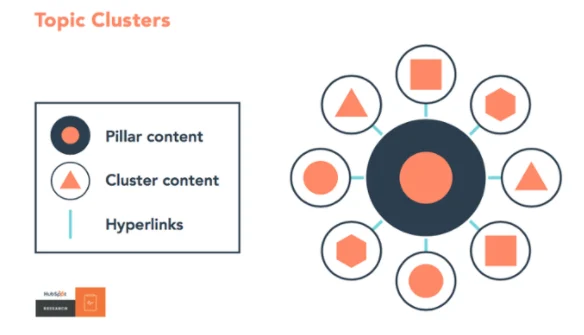
A cluster is not a page — it’s a content structure. The minimum viable structure that actually signals topical authority to Google is a pillar page (comprehensive, 3,000–5,000 words) plus 3–5 supporting articles that address specific sub-questions within the topic. Below this threshold, you have a few loosely related pages, not a cluster. Google doesn’t reward loose associations. It rewards dense, internally linked coverage that demonstrates you understand an entire topic domain, not just its most popular search queries.
In practice, I size clusters based on the complexity of the topic and the density of the competitive SERP. A simple product category — “robot vacuums under $300” — might support a 6–8 page cluster: one commercial pillar, 3 model-specific reviews, 2 comparison articles, and 1–2 informational supporting pieces about maintenance or features. A complex topic — “home automation protocols and smart home hubs” — might support 25–35 pages across multiple sub-clusters before you’ve achieved genuine coverage.
| Cluster Type | Pillar Page | Supporting Pages | Total Min. | Internal Links Required |
|---|---|---|---|---|
| Commercial Roundup (“best X” category) | “Best [Product Category] 2026” — full comparison | 3–5 individual product reviews + 1–2 alternatives pages | 5–8 | Every review → pillar; pillar → all reviews; cross-link comparisons |
| Brand vs Brand (comparison intent) | “[Brand A] vs [Brand B]: Full Comparison” | Individual “X review” pages for each brand + “X alternatives” page | 4–7 | All brand reviews ↔ comparison pillar; comparison → commercial roundup |
| Informational Hub (authority building) | “Complete Guide to [Topic]” | 5–12 specific how-to, explainer, or problem-solution articles | 6–14 | All hub articles → pillar; pillar → all; cross-link topically adjacent; link to commercial roundup |
| Problem/Solution (mid-funnel) | “How to Solve [Problem]” or “Why [Problem] Happens” | 2–4 specific solution articles + 1 product recommendation page | 4–6 | All solutions → pillar; pillar → product recommendation page; product recommendation → commercial roundup |
The Content Production Math
Let me run a realistic content production model for a new affiliate site launching in a mid-competition niche. Assume you’ve done your hybrid clustering workflow and identified 8 priority clusters based on RIC scoring. Average cluster size: 6 pages. Total pages needed for genuine topical authority in your priority clusters: 48 pages. At a production rate of 4 articles per week (reasonable for a solo operator or a small team using AI-assisted drafting), that’s 12 weeks to complete your initial cluster architecture. This is exactly how long properly clustered content typically takes to start showing measurable ranking improvements in informational clusters — 60–90 days.
The uncomfortable implication: if you’re publishing 2 articles per week and they’re scattered across 15 different topics, you’re not building clusters — you’re diluting your topical signal across too many battlegrounds simultaneously. Concentration is the strategy. Pick 2–3 clusters. Publish every piece of content in those clusters. Complete them before expanding to adjacent territory. This discipline is what separates the affiliate operators who build compounding authority from the ones who publish endlessly without ranking growth.
08 The Cannibalization Trap Nobody Warns You About
Keyword cannibalization — where multiple pages on your site compete for the same keyword, splitting ranking signals and confusing Google about which page is authoritative — is the most common structural pathology in affiliate sites, and it’s almost always a direct consequence of building content without a clustering framework. But there’s a specific version of cannibalization that clustering itself can create if you’re not careful, and almost nobody talks about it.
Call it intent-level cannibalization: two pages that target different keywords, are in separate clusters according to your tool’s output, but actually satisfy the same search intent at the same buyer journey stage. The clustering tool sees different keywords and different SERP results and dutifully creates two separate content targets. Google sees two pages competing for the same audience at the same moment in their decision process, and it can only rank one of them prominently. The other gets suppressed.
I’ve seen this happen most commonly with commercial review pages. An affiliate site builds “Best Smart Thermostat for Apartments” and “Best Smart Thermostat for Renters” as separate pages because the SERP-overlap tool shows they share only 2 URLs (below the grouping threshold). The keywords are genuinely different. But the intent is identical — apartment renter looking for a thermostat that doesn’t require C-wire installation. You end up with two nearly identical pages that compete internally and neither ranks as well as one consolidated page would.
The diagnostic test: before building any new cluster page, run a Google search for 3–4 of its primary keywords. Look at your site’s own pages in the results. If you see your own pages ranking on page 2–3 for those terms (displaced by your own other pages), you have intent-level cannibalization. The fix is consolidation: 301-redirect the weaker page into the stronger one, merge the content, update the internal links, and let Google re-evaluate the consolidated page’s authority signal over 6–8 weeks.
The year-variant cannibalization problem deserves special attention because it’s so common and so fixable. Every affiliate site that has been around for 2+ years has a version of this: “Best Standing Desks 2023,” “Best Standing Desks 2024,” “Best Standing Desks 2025,” and now “Best Standing Desks 2026” — four separate pages competing for essentially the same intent. The correct architecture is one evergreen URL (“/best-standing-desks/”) that gets updated annually, plus a redirect chain from all previous year variants. Never, ever create new year-specific pages in your primary commercial categories. Update in place. Redirect the variants. Consolidate the authority signal.
09 Clustering for the AI Mode Era — GEO Adjustments in 2026
The shift in search behavior since Google’s AI Overviews expansion has been faster and more severe than most affiliates anticipated. According to SparkToro’s 2024 zero-click research, 58.5% of Google searches in the US now end without a click. AI Overviews are linked to a 34.5% drop in click-through rates on top organic results where they appear, according to Search Engine Land analysis. AffiliateBooster’s 2026 State of Affiliate Marketing Report identifies 2026 as the year affiliates shift decisively from SEO-only strategies to Generative Engine Optimization (GEO).
This doesn’t change the case for keyword clustering — it strengthens it. But it changes what you’re optimizing clusters for. In the traditional model, you clustered keywords to rank pages in traditional SERPs. In the GEO model, you cluster keywords to build the depth of coverage and E-E-A-T signals that make your content citeable in AI-generated answers. Only authoritative, first-hand-experience content gets cited by AI. And the only way to build genuine topical authority that AI systems recognize is the same way Google has always evaluated it: comprehensive, interconnected, expert coverage of a topic domain.
The clustering adjustment for 2026 is primarily about answer depth within individual pages, not just topic breadth across the cluster. AI search systems like Google’s AI Mode use reasoning models and passage-level retrieval — they’re not pulling your entire article, they’re pulling specific passages that answer specific sub-queries. This means every individual article in your cluster needs to contain genuinely citable, specific, verifiable information — not just topical coverage. A “best smart thermostat” comparison that lists specs and prices but doesn’t include real testing data or specific recommendations won’t be cited. One that includes observed behavior at specific temperature settings, tested installation time in a real apartment, and quantified energy savings from monitoring a specific billing cycle will be.
Visitors arriving from AI search engines convert at approximately 14%, compared to 2.8% for traditional Google search — a nearly 5× conversion premium, according to AffiliateBooster’s 2026 State of Affiliate Marketing Report. This finding completely inverts the panic narrative around AI Overviews. The traffic that survives the AI Overview filter is higher-intent, more informed, and more ready to buy. Build for citation quality, not just traffic volume.
The Cluster-Level GEO Optimization Checklist
For each cluster you build, verify these signals exist across the cluster’s pages before publishing:
First, every commercial page in the cluster must include specific, verifiable product data — not manufacturer claims, but either personally tested observations or clearly attributed third-party test results with source and date. AI systems flag vague product descriptions as low-confidence sources. Second, your pillar page must contain a clearly structured FAQ section with concise, specific answers that match informational sub-queries within the cluster’s topic. Third, every informational page in the cluster must contain at least one quantitative claim that is specific, sourced, and useful — not “smart thermostats save energy” but “the Ecobee SmartThermostat Premium delivered measured savings of 12–23% in heating costs in a Department of Energy field study of 13,000 US homes, published 2023.” That kind of specificity is what gets cited. Fourth, the cluster’s internal linking structure must route clearly between informational pages and commercial pages — AI systems that retrieve content to generate purchase-guidance answers need to be able to follow a topical thread from education to recommendation.
10 Tool Comparison: What the 2026 Landscape Actually Looks Like
The keyword clustering tool landscape has consolidated significantly since 2023. The number of entrants has actually increased, but the gap between the functional leaders and the commodity tools has widened. Here’s an honest evaluation of the tools that actually matter for affiliate SEO, with specific attention to their affiliate-relevant strengths and limitations.
| Tool | Clustering Method | Affiliate Strengths | Key Limitation | Best For |
|---|---|---|---|---|
| Keyword Insights | Live SERP-based + ML intent classification | Automatic intent labeling; brief generation; GSC integration beyond native limits | Cost scales with volume; may over-rely on SERP in thin-niche situations | Agency / Multi-site operators |
| Keyword Cupid | Live SERP + unsupervised ML ensemble; geo + device targeting | Hierarchical mindmap output; geo-targeting for location-specific intent; March 2026 upgrade adds finer granularity | Standalone tool — no content brief generation; need supplementary workflow | Large-scale clustering projects; agencies |
| SE Ranking | SERP-overlap with accuracy slider (1–9) | Integrated rank tracking post-cluster; accuracy slider ideal for affiliate’s need to toggle between editorial and commercial cluster modes | Full suite pricing; overkill if you only need clustering | Affiliate sites already on SE Ranking |
| Semrush Keyword Strategy Builder | SERP-overlap + semantic relationships | Largest keyword database (~25B keywords as of 2025); integrated workflow; familiarity for existing Semrush users | Conservative clustering — creates broad, shallow clusters that miss long-tail nuance critical for affiliate conversions | Existing Semrush users; initial topical mapping |
| LowFruits | Competition-first SERP clustering | Clusters by weakness in competing pages — ideal for new affiliate sites finding uncontested entry points | Competition-focused, not revenue-focused — needs RIC scoring overlay to be useful for affiliate prioritization | New sites; niche entry strategy |
| Keyword Cupid (Free Tier) / Thruuu (Free) | SERP-based, limited volume | Valid methodology at zero cost; Thruuu allows 500 keywords free with brief generation | Volume limits force multiple runs; less accurate on smaller datasets | Testing / validation; budget operators |
My unpopular take on the tool question: the tool matters far less than your clustering logic. I’ve seen affiliate operators produce excellent cluster architectures using nothing but Ahrefs’ Parent Topic feature combined with manual SERP analysis. I’ve also seen operators with access to Keyword Insights produce unusable clustering reports because they skipped the intent-classification stage and treated the tool’s output as a finished content plan rather than a starting point. The tool automates the pattern recognition. The judgment has to be yours.
If you’re starting a new affiliate site and need to choose one tool: SE Ranking’s accuracy slider gives you the best combination of methodological control and integrated tracking at a reasonable price point for solo operators. For agencies managing multiple sites, Keyword Insights’ speed and brief-generation features justify the higher cost. For anyone who needs to handle 50,000+ keywords in a single run, Keyword Cupid’s enterprise capacity and the mindmap output for visual site architecture planning are genuinely hard to replicate elsewhere.
For a comprehensive post-clustering content quality check, the Content Evaluator Online tool can help you score individual articles before publishing — useful for ensuring each cluster page meets the depth requirements that both Google and AI systems now require. Similarly, before finalizing your cluster architecture, running your existing content through a structured content audit will surface cannibalization issues and topical gaps you might otherwise miss.
11 12-Week Execution Roadmap for a New Affiliate Site
Theory is useful. A specific, sequenced plan is better. Here’s the 12-week roadmap I now follow when launching a new affiliate site — adjusted to incorporate everything covered above.
12 Weeks to a Clustered Affiliate Site Architecture
- Weeks 1–2 — Keyword Harvest and Landscape Mapping: Identify 3–5 primary competitors. Run Ahrefs competitor gap analysis for each. Pull all keywords with volume above 100/month and KD below 60. Target a minimum of 400–600 keywords before proceeding. If you have GSC data from a related existing site, pull that too. Do not skip below 150 keywords — below this threshold, your clusters will be artificial and incomplete.
- Week 3 — Semantic NLP Clustering Pass: Run the full keyword list through your chosen tool at “medium” sensitivity. Review the output topically — does the cluster structure match your intuitive understanding of the niche’s subject areas? Flag any obvious intent mismatches for manual review. Do not create a content plan yet.
- Week 4 — SERP-Overlap Validation: Run each semantic cluster through SERP-overlap validation. Flag all clusters where fewer than 50% of the proposed keywords share 3+ SERP URLs. These require manual intent review. Identify any keywords across different semantic clusters that show unexpected SERP overlap — these are candidates for consolidation.
- Week 5 — Intent Classification and RIC Scoring: Manually review each validated cluster. Classify intent for every cluster (informational, commercial, comparison, transactional). Apply RIC scoring. Rank your clusters by RIC score. Your top 3–5 clusters by RIC score become your Phase 1 content priorities.
- Weeks 6–9 — Phase 1 Content Production (Commercial Clusters): Build your top 2–3 commercial clusters to completion before expanding. For each cluster: publish the pillar page first, then supporting pages, establishing internal links as you go. Every cluster page must link back to its pillar using anchor text that includes the pillar’s primary keyword. The pillar links forward to all supporting pages. Cross-link between topically adjacent pages within and across clusters.
- Weeks 10–12 — Phase 2 Expansion and Informational Cluster Foundation: Begin your informational cluster build to support the commercial clusters with topical depth. Prioritize informational pages that link directly into your commercial cluster pillars. Run a cannibalization audit before publishing any new commercial content. By week 12, you should have 35–55 published pages across 3–4 complete commercial clusters and 1–2 informational clusters in progress. Monitor rankings weekly and begin tracking RPM by cluster type.
One non-obvious point about this roadmap: internal linking during production — not after — is critical. Every time you publish a new cluster page, immediately update all existing related pages in that cluster to link to the new page with appropriate anchor text. Don’t batch the internal linking work for “after you finish the cluster.” By the time you finish the cluster, you’ll have forgotten which existing pages are the natural link sources, and you’ll miss 40% of the internal linking opportunities. Do it page by page, as you go.
Also: treat your cluster architecture as a living document, not a static deliverable. Search behavior changes. New products launch. Competitors enter your clusters. The topical map you build in week 5 will need revision at 6 months and again at 12 months. Set a calendar reminder. Update your SERP-overlap analysis quarterly. In fast-moving niches — consumer electronics, software tools, financial products — cluster structures can shift meaningfully in as few as 90 days as new products enter the market and reshape what Google serves for key purchase-intent queries.
For deeper analysis of how your content is performing against these cluster-level objectives, the post quality scoring tools at Content Evaluator Online provide structured feedback on content depth, readability, and optimization signals — useful for quality-checking cluster pages before they go live and for auditing existing content against the topical authority benchmarks described throughout this guide.
12 Frequently Asked Questions
External Resources Referenced in This Guide
Keyword Insights — Topical Cluster Documentation · Keyword Cupid — Semantic SERP-Based Clustering · Search Engine Land — Complete Guide to Topic Clusters · AffMaven — 2026 Affiliate Marketing Statistics · Whitehat SEO — 2026 SEO Ranking Factors Analysis · Digital Applied — SEO Content Clusters 2026 Guide