

Most SEO advice frames ranking drops as puzzles to solve. They’re not. They’re autopsies. And in 2026—after two core updates, a spam update, and a full AI Overviews rollout all within 12 weeks—the body count is higher than anyone is admitting publicly.
Let me correct something before we go any further, because the wrong framing is causing real damage.
“Ranking drops that happen overnight” — the phrase itself is the first lie. Rankings don’t collapse overnight. What happens overnight is that you notice the collapse. The structural failures that caused it were accumulating for weeks, sometimes months, quietly compounding below the threshold of your monitoring dashboards. By the time the traffic graph falls off a cliff, the verdict was written six months ago.
I’ve spent years auditing sites after algorithm updates. The pattern is almost always the same: the site owner is shocked, the agency is defensive, and somewhere in the crawl log from ninety days prior is the exact moment the deterioration started. Nobody saw it. Nobody acted. And now we’re doing an autopsy.
This is that autopsy.
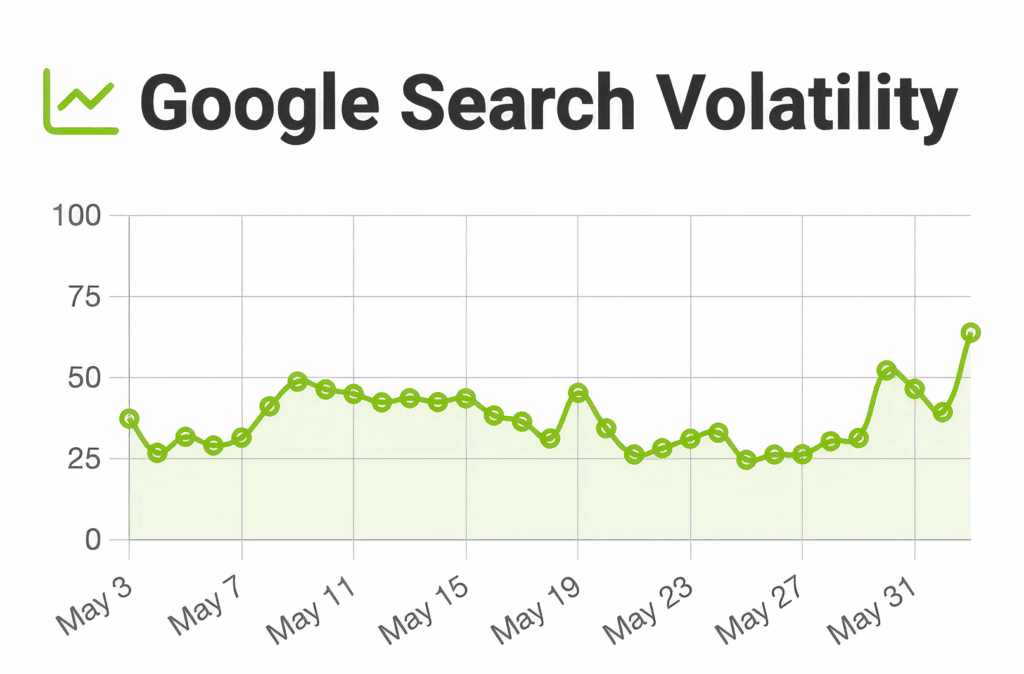
What follows is not a list of “tips.” It’s a forensic breakdown of the structural mistakes that are specifically killing sites in the current environment — an environment defined by two confirmed Google core updates (March and May 2026), a concurrent spam update, AI Overviews now appearing on roughly 20–25% of queries, and SERP volatility that SEMrush Sensor measured at a 9.5/10 peak in March — the highest recorded in 2026. More than 55% of websites saw ranking changes in the first two weeks of that update alone.
The stakes have changed. The tolerance has shrunk. The mistakes that were survivable in 2022 are fatal in 2026. Here’s exactly what they are.
00 The Misconception at the Centre of Every Panic
Here’s the mental model most SEOs carry around, and it’s fundamentally broken: they picture Google as a referee who issues yellow cards. Do something wrong, get a card. Enough cards, get penalised. Rankings drop because Google punished you.
That model is wrong, and Google itself has stated it clearly: most ranking drops are not penalties. They are reassessments. Core updates don’t punish past behaviour. They raise the quality bar. Sites that sat just above the old threshold find themselves below the new one — even if they changed nothing. Your competitors published better content, built stronger authority signals, earned AI Overview citations, and the baseline moved. You didn’t. The gap grew invisible. Then one Tuesday morning it became very visible.
This distinction matters enormously for diagnosis. If you believe you were “penalised,” you go hunting for the rule you broke. If you understand you were outcompeted, you start measuring what the winners are doing differently. Only the second approach leads anywhere useful.
The other misconception worth killing upfront: that there are “safe” tactics and “risky” tactics, and if you stick to the safe ones you’re protected. In 2026, Google runs what amounts to continuous background micro-updates — confirmed by Google in December 2025 — quietly shifting the ranking weight of signals between announced core updates. The “safe” lane is now just the lane everyone else is in. You don’t survive by avoiding risk. You survive by being genuinely better.
Google core updates are comparative, not corrective. A page drops not because it got worse, but because the competition got better. Every “overnight” collapse is actually a months-long drift in relative quality that finally crossed a visibility threshold.
01 SERP Blindness: Optimising for a Page That No Longer Exists
Let me start with the one that took me longest to really understand — and the one I see causing the most damage in audits right now.
Most SEO work is done looking at keyword rankings. Position 3. Position 7. Page 2. The implicit assumption is that position equals visibility equals traffic. In 2026, that assumption is comprehensively false, and the data behind it should disturb you.
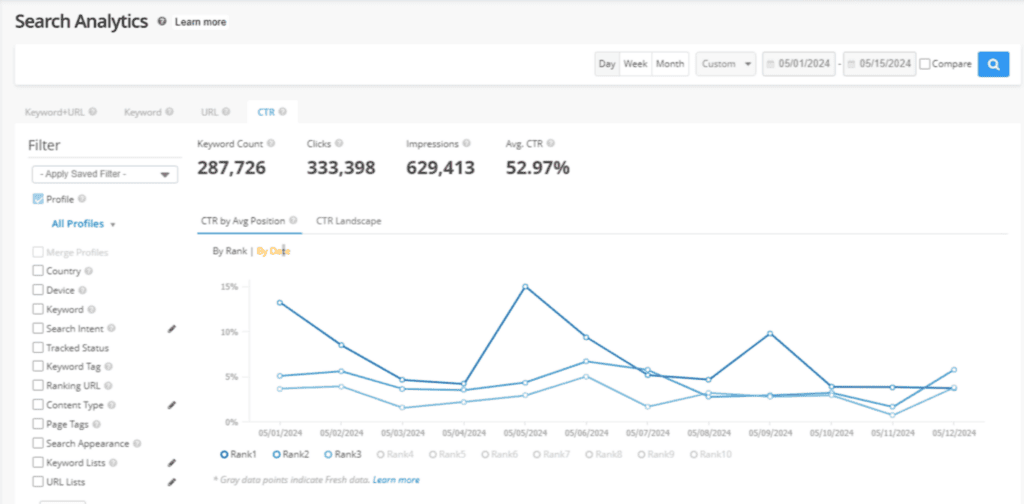
According to SEMrush’s analysis of 10M+ keywords, only 1.49% of Google first-page results appear without any SERP features. 98.51% of first-page SERPs now include AI Overviews, Featured Snippets, People Also Ask, Local Packs, or Knowledge Panels in some combination. Meanwhile, Ahrefs’ 300,000-keyword study (February 2026) found that AI Overviews reduce position-1 click-through rates by 58%. Not for all queries. Not uniformly. But for the informational queries that many content sites depend on for top-of-funnel traffic, the impact is severe and measurable.
The resulting pattern — which I’m calling SERP Blindness — is this: you’re watching your rankings hold steady in position 2 or 3, congratulating yourself, while your actual clicks have declined 30–40% because an AI Overview is resolving the query above you, and because Featured Snippets and PAA boxes are capturing whatever’s left.
The fix isn’t what most people think. It’s not to “optimise for AI Overviews” as a parallel task. It’s to audit your traffic composition by SERP feature type. In Google Search Console, filter by Search Appearance. Understand what proportion of your impressions come from query types where AIOs are heavily present. Then model your actual traffic exposure — not rank position — as the primary KPI.
The uncomfortable nuance here: being cited inside an AI Overview delivers 35% more organic clicks than not being cited on the same SERP, per Seer Interactive’s April 2026 data. So the goal isn’t to escape AIOs. It’s to be the source they cite. That requires structured content, verifiable claims, clear authorship, and factual precision. It requires the kind of content that gets cited in reference books, not the kind that gets scraped from other reference books.
Our technical breakdown of the performance signals that determine whether Google considers your page “page-experience qualified” for high-visibility SERP positions.
02 Intent Drift: The Invisible Mismatch That Compounds Over Years
Here’s something almost nobody talks about: intent drift. It’s not about publishing content that mismatches intent from day one. That’s obvious. Intent drift is when your content used to match intent perfectly, and then — over 18 to 36 months — the query evolved, user expectations shifted, and your content became subtly wrong without anyone touching it.
Consider a query like “best project management software.” In 2020, a comprehensive comparison article with affiliate links was exactly what ranked. In 2026, Google increasingly wants a page that reflects current pricing, AI-native features, integration with tools users are actually using now, and genuine first-hand testing — not a blog post last touched in 2022 that still calls Asana “up-and-coming.” The query hasn’t changed. The intent behind it has.
Google’s algorithm is now much better at detecting intent mismatch at scale. According to Google’s Helpful Content guidance, the system evaluates whether content “demonstrates first-hand expertise and depth of knowledge.” A page with stale examples, outdated statistics, and product descriptions that no longer match reality fails this test — quietly, persistently, and cumulatively.
The diagnostic test is brutally simple: go to the top 3 ranking pages for your target query today. Not when you wrote your content — today. Count how many of their features, examples, screenshots, statistics, and frameworks postdate your last update. If the answer is “most of them,” you have an intent drift problem. Your content is a time capsule in a live competition.
The fix requires more than updating a publication date and swapping in a new statistic. It requires revisiting the structure of the content — what it answers, what format it uses, what specificity level it operates at. Sometimes the right answer is to rebuild the page from a new brief, not to patch the old one.
03 Keyword Cannibalization Debt: When Your Site Competes Against Itself
I’ll admit something here that cost me rankings on my own content: I spent two years ignoring keyword cannibalization because I thought it was an advanced problem — something that only affected large sites with thousands of pages. It isn’t. I’ve seen three-page blogs eating their own rankings because they published a “What is X” page and then a “Guide to X” page and then a “How to do X” page, all targeting effectively the same query intent.
Keyword cannibalization happens when two or more of your pages compete for the same query. Google, unable to determine which page deserves authority, may rotate between them, split link equity between them, or rank neither of them particularly well. The result: no single page accumulates the authority needed to break into the top three positions.
“Sites that lost 70–80% of organic traffic in recent core updates did so by publishing at volume across topics outside their core expertise. But the quieter version of this failure — cannibalization across related topics within your niche — is just as damaging and far harder to see.”
— Observation from orangemonke.com post-update analysis, April 2026The Cannibalization Audit in Four Queries
The fastest diagnostic: open Google Search Console → Performance → Search Results. Click a target keyword. Switch to the Pages tab. If more than one URL appears for a single keyword, you have active cannibalization. The deeper version requires checking your top 20–30 commercial keywords systematically and mapping which URLs compete for which queries.
The resolution depends on severity. For minor overlap: add canonical tags pointing to the authoritative page. For significant content overlap: consolidate into one comprehensive page with 301 redirects from the weaker URL. For structural misalignment: rewrite each page to target a distinct, non-overlapping intent variant (informational vs. transactional vs. comparison).
From a SERP feature perspective, cannibalization is doubly harmful: Google won’t include a cannibalized page in Featured Snippets or AI Overview citations because it can’t establish which version is authoritative. Consolidated pages with clear canonical signals are far more likely to be cited as reference sources in AI-generated answers.
Technical stability issues (like CLS) compound cannibalization problems — Google’s page experience signals factor into which of two competing pages gets the ranking nod.
04 The E-E-A-T Facade: Performing Expertise vs. Demonstrating It
This is the mistake I see most often from technically competent SEOs, and it’s the hardest to argue about because the sites look right. They have author bios. They cite sources. They have “Written by [Name], [Credential]” boxes. They do everything the E-E-A-T checklists say.
And they still lose rankings, because Google in 2026 doesn’t evaluate the presence of E-E-A-T signals. It evaluates whether those signals are consistent with genuine expertise throughout the content itself.
A data point that should give you pause: industry tracking cited in post-update analysis found that 73% of top-ranking YMYL pages now display detailed author credentials — up from 58% before the most recent core update cycle. But the credential display alone isn’t sufficient. What matters is whether the writing itself reflects the kind of knowledge that only comes from direct experience: specific failure modes, edge cases, counterintuitive findings, the kinds of caveats that a true practitioner would add.
Compare these two framings:
| Signal | E-E-A-T Facade ✗ | Genuine E-E-A-T ✓ |
|---|---|---|
| Author bio | Generic “10 years in marketing” statement | Named person, verified bylines on named publications, specific domain history |
| Claims | Cites aggregator sources (“studies show”) | Primary source citations with specific methodology notes |
| Specificity | Recommends category (“use a good CRM”) | Describes specific tool decisions and the trade-offs encountered |
| Failure | No mention of what doesn’t work | Specific failure modes acknowledged, conditions under which advice breaks |
| Uncertainty | Authoritative tone on everything | Calibrated confidence — clear about what’s established vs. what’s the author’s interpretation |
| Update signal | Date changed, content identical | Content structurally updated to reflect current state, with notation of what changed |
There’s a practical implication for SERP feature visibility: pages without clear authorship signals, first-hand experience markers, and verifiable claims “hold their AI Overview citations worse” after core updates, per post-March 2026 analysis. If your content stops appearing in AI-generated answers after an update, treat it as the same quality signal as a ranking drop. The evaluation system is unified.
05 Core Web Vitals Triage Failure: Fixing the Wrong Metric
Something I’ve observed repeatedly in technical audits: teams run PageSpeed Insights, see a failing INP or LCP score, and immediately start optimising images and compressing JavaScript. Sometimes that’s exactly right. Often it’s treating the symptom while the structural cause goes untouched.
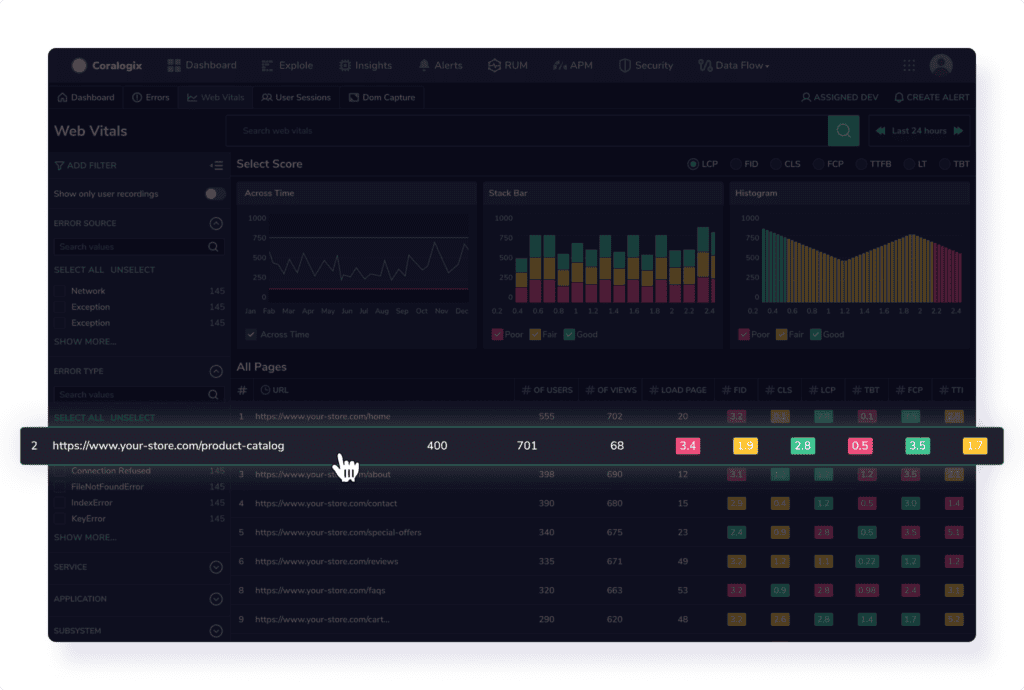
Google’s Core Web Vitals — Largest Contentful Paint (LCP), Interaction to Next Paint (INP), and Cumulative Layout Shift (CLS) — are part of the page experience signals that contribute to ranking. But their contribution isn’t linear, and the relationship between them is worth understanding carefully before you start making changes.
The triage failure I see most often: teams optimise LCP (which is visible and intuitive — it’s how fast the main content appears) while ignoring INP, which replaced FID in March 2024 and is now the most commonly failed vital on content-heavy sites. INP measures how fast your page responds to user interactions — clicks, taps, form inputs. On sites with heavy JavaScript, bloated WordPress plugins, or third-party chat widgets loading synchronously, INP scores can be catastrophic while LCP looks acceptable.
Audit priority order in 2026: start with INP using PageSpeed Insights field data, then CLS (which kills both UX and user trust simultaneously), then LCP. Technical fixes (crawl errors, canonical corrections, speed improvements) typically show ranking impact within two to four weeks — faster than content improvements, which take one to three months.
Our systematic approach to diagnosing and eliminating INP failures — the Core Web Vital most content sites are currently failing without knowing it.
06 The AI Content Trap: What’s Actually Getting Penalised
Here’s the unpopular take, and I’ll stand behind it: the problem with AI-generated content isn’t that it’s AI-generated. The problem is that most of it is designed to produce the appearance of coverage rather than actual coverage. That distinction is real, and Google’s systems in 2026 are measurably better at detecting it.
The evidence: AI content farms saw traffic drops of 50–90% following the 2025 Helpful Content updates. But the mechanism wasn’t “AI detection” in any simple sense. It was that content optimised purely for keyword coverage — regardless of whether a human or an AI wrote it — failed the comparative quality evaluation against content that contained original data, specific outcomes, genuine first-person observation, and honest acknowledgement of limitations.
Google’s own guidance states clearly: “Generating content at scale for the primary purpose of manipulating rankings is a violation of spam policies”. The key phrase is “for the primary purpose of manipulating rankings.” AI-assisted content that has been properly edited, enriched with original data or insight, and written for users first is not in violation. Mass-produced AI copy that exists to occupy keyword real estate — regardless of whether a human ghosted it or a model generated it — is.
The single most consistent loser across 2025–2026 core updates, per post-update analysis across hundreds of monitored sites: “Pages that summarize the top 10 results without original data, first-hand experience, or a unique perspective.” This describes approximately 70% of all content published by AI content operations. The description also applies to plenty of human-written content.
The nuance that most conversations miss: there’s a class of AI-assisted content that is genuinely performing well in 2026. It’s the content where a domain expert provides the frame, the original data, the specific experience, the counterintuitive finding — and AI assists with structure, phrasing, and completeness. The expertise leads; the tool assists. That’s not the AI content trap. The trap is inverting those roles.
07 Ignoring SERP Feature Economics: The Zero-Click Blind Spot
This is the mistake most relevant to the SERP feature hacking niche, and it’s the one most frequently misframed even by people who understand it intellectually.
The framing I see everywhere: “zero-click searches are bad for SEO.” The correct framing is: “zero-click searches have changed the value distribution within SEO, and most people are still optimising for a distribution that no longer exists.”
Here’s what the current data actually shows: nearly 60% of US Google searches end without a click to any external website, per SparkToro/Datos clickstream data. For AI Mode specifically, Semrush puts the zero-click rate at 93%. Those numbers feel devastating if your entire strategy is built around driving traffic to a page. They look completely different if you understand that being cited in an AI Overview earns 35% more organic clicks from that SERP than not being cited, and that branded queries with AI Overviews present actually see an 18% CTR increase compared to branded queries without them.
The SERP feature economics mistake is treating this as a binary: either you get the click, or you don’t. The actual strategic question is: who is Google citing in the feature that captures the non-click engagement, and how do you become that source?
Schema markup is the most underused SERP feature lever in content SEO. According to Semrush data from April 2025, 72% of first-page results use schema markup, and rich results capture 58% of clicks vs. 41% for non-rich results. Yet the majority of content sites still publish pages with zero structured data. That’s not a missed opportunity. It’s an unforced error.
Specific schema types worth prioritising in 2026: Article with author structured data (signals E-E-A-T to parsers), FAQPage (Google deprecated FAQ rich results in May 2026, but the value is now AI Overview extraction, not snippets — keep self-contained QA pairs), and HowTo for procedural content. Validate every implementation via Google’s Rich Results Test before deploying at scale.
08 The DRIP Framework: A Systematic Diagnostic for Ranking Collapses
After years of post-update autopsies, I’ve converged on a diagnostic order that catches the actual cause faster than any individual checklist. I call it DRIP: Detection, Root Cause, Isolation, and Prioritised Fix. It’s not revolutionary. But the order matters, and most people skip step one.
Cross-reference your traffic drop date with Google’s Search Status Dashboard (search.google.com/search-status). Determine whether the drop aligns with a confirmed core update, spam update, or an unconfirmed background shift. A drop tied to the March 2026 spam update (24–25 March) points to a policy issue — link schemes, scaled content. A drop tied to the core update (27 March–8 April) points to quality reassessment. The diagnosis differs. The fix differs. Don’t skip this step.
Run three parallel audits simultaneously: (1) Content audit — compare your top-5 dropped pages against current SERP competitors; identify gaps in depth, recency, SERP feature optimisation, and E-E-A-T signals. (2) Technical audit — Screaming Frog crawl for canonical errors, crawlability issues, INP/LCP failures, mobile rendering problems. (3) Authority audit — check for link profile toxicity via Ahrefs or Semrush, and verify no cannibalization is splitting your authority across multiple competing URLs.
Not all ranking drops are equal. Identify which pages lost the most impressions (not just clicks), because AI Overviews may be suppressing CTR while preserving position — and these are fundamentally different problems with different solutions. In Google Search Console, filter by page and compare impression-to-click ratio before and after the drop date. A falling click rate with stable impressions points to SERP feature displacement. Falling impressions point to ranking demotion. Treat differently.
Technical fixes (canonical errors, Core Web Vitals, crawl blocks) show impact in 2–4 weeks. Content improvements show impact in 1–3 months. Link-related recoveries and disavow processing take 3–6 months. Authority restructuring (consolidating cannibalized pages, building topical depth) takes 3–9 months. Don’t spend your first month on content rewriting when a broken canonical is the actual cause. Fix in sequence: Technical → Content → Authority → Structure.
09 The 48-Hour Audit Checklist: Where to Start
You’ve just noticed the drop. You have 48 hours before every stakeholder in your organisation starts demanding answers and proposing mass changes. Here is the exact order of operations that will (a) prevent panic changes from making things worse and (b) give you defensible diagnostic clarity.
Step 1: Confirm the Cause (First 2 Hours)
- Cross-reference drop date with Google Search Status Dashboard for confirmed update windows
- Check Google Search Console for any manual action notifications
- Distinguish: impressions stable + clicks falling = AIO/feature displacement. Both falling = ranking demotion
- Identify which specific pages and query clusters are affected — not just overall traffic
- Do NOT make any changes to content, meta tags, or canonicals during active update rollout
Step 2: Technical Health Baseline (Hours 3–12)
- Run PageSpeed Insights field data check on top 10 affected pages — flag any INP >200ms, LCP >2.5s, CLS >0.1
- Screaming Frog crawl to identify canonical tag errors, accidental noindex directives, broken internal links
- Check Google Search Console Coverage report for crawl errors, excluded pages, indexing failures
- Verify mobile usability — Google uses mobile-first indexing; a mobile rendering failure is a full-site ranking risk
- Check for keyword cannibalization via GSC Performance → keyword → Pages tab
Step 3: Content Competitive Gap (Hours 13–30)
- Manually review top 3 current ranking pages for each dropped query — note publication dates, schema types, content structure
- Identify intent drift: is the SERP showing a different content format or depth level than your page provides?
- Audit E-E-A-T signals: does your page have named authorship, primary source citations, first-hand experience markers?
- Check schema implementation via Google Rich Results Test — verify Article, Author, FAQPage markup is valid
- Review internal linking structure — do your most authoritative pages point to the pages that dropped?
Step 4: Decision and Prioritisation (Hours 31–48)
- Create a three-column fix list: Technical (2–4 week payoff), Content (1–3 month payoff), Authority (3–9 month payoff)
- Technical fixes: implement immediately. Content improvements: draft and schedule within 7 days. Authority: begin process, acknowledge to stakeholders this takes time
- Set up weekly GSC impression vs. click monitoring for affected queries — distinguish ranking recovery from CTR recovery
- Do NOT mass-delete content, bulk-change metadata, or disavow links without specific evidence — reactive bulk changes after core updates consistently cause additional damage
Core Web Vitals corrected, canonical errors resolved, crawl issues fixed, schema markup validated. First ranking signals visible in Search Console within 2–4 weeks of Googlebot re-crawl.
Intent-realigned pages, freshened data, improved E-E-A-T signals, cannibalization resolved via consolidation. Google re-evaluates content quality at next crawl cycle. Partial recovery begins.
Consolidated pages accumulate authority. Topical clusters deepened. AI Overview citation rate improves as content becomes more specific and verifiable. Full recovery visible — often at next confirmed core update reassessment.
Before deploying content improvements, run your revised pages through Content Evaluator to benchmark quality signals across depth, readability, structure, and SEO optimisation. Useful for pre-launch quality gating.
One final note that doesn’t fit neatly into a framework but matters: recovery from a core update is not guaranteed, and it rarely returns rankings to the exact previous position. Competing pages may have improved significantly during the period you were stable. The bar moves continuously. Improving your page to where it was six months ago may not be sufficient if the current top 3 pages are now materially better than they were six months ago. The question isn’t “how do I recover my old position?” The question is “what would have to be true about my page for it to be the single best answer available for this query?” That’s a harder question, and it’s the right one.
The Actual Question Nobody Wants to Ask
We’ve covered seven failure modes. We have a diagnostic framework, a recovery timeline, specific data on what’s happening to CTR, and a clear-eyed view of how the 2026 SERP has changed the game. If you’ve read this far, you have everything you need to run a serious audit.
But I want to leave you with the question that the entire industry systematically avoids: if your primary metric is rank position, and rank position is increasingly decoupled from traffic because of SERP feature expansion, and traffic is increasingly decoupled from revenue because of changing user journeys — then what exactly is it that you’re optimising for?
This isn’t rhetorical. The answer forces you to confront whether your measurement infrastructure is tracking the right things, whether your content strategy is aligned with where value is actually created in search in 2026, and whether the things you’re calling “SEO mistakes” are actually SEO mistakes — or whether they’re symptoms of a model that needs fundamental revision.
In 2026, the distinction between ranking well and being genuinely useful to users has essentially disappeared at the algorithmic level. That’s either a threat or a liberation depending on which of those you were optimising for all along.