

Product Page SEO
Google has said for years there’s no “duplicate content penalty” for reusing manufacturer copy. That’s true — and it’s also the least useful thing you can know about the problem. Here’s what’s actually happening to your rankings, and the specific, checkable work that fixes it.
The misconception: “duplicate content” means “penalty”
Search a few forums about this and you’ll find the same worried question, asked a hundred different ways: if I copy my supplier’s product description, will Google punish my store? The honest, slightly unsatisfying answer, straight from Google, is no — not in the way most people mean “punish.” There is no algorithmic penalty applied specifically because a paragraph of text also appears on ten other domains.
Google’s John Mueller has addressed this directly in Search Central office-hours sessions, and Search Engine Journal’s write-up of that exchange is worth reading in full: Mueller confirmed a store doesn’t need to link back to the manufacturer’s original copy to avoid consequences, and that a normal ecommerce site reusing stock descriptions isn’t treated as a spam violation.1 Google’s own developer documentation says the same thing in plainer terms: “some duplicate content on a site is normal and it’s not a violation of Google’s spam policies.”2
So if you stopped reading here, you’d walk away thinking the fix is “don’t worry about it.” That’s the misconception. Here’s the correction.
The correction: it’s not a penalty, it’s a filter — and you’re losing to it constantly
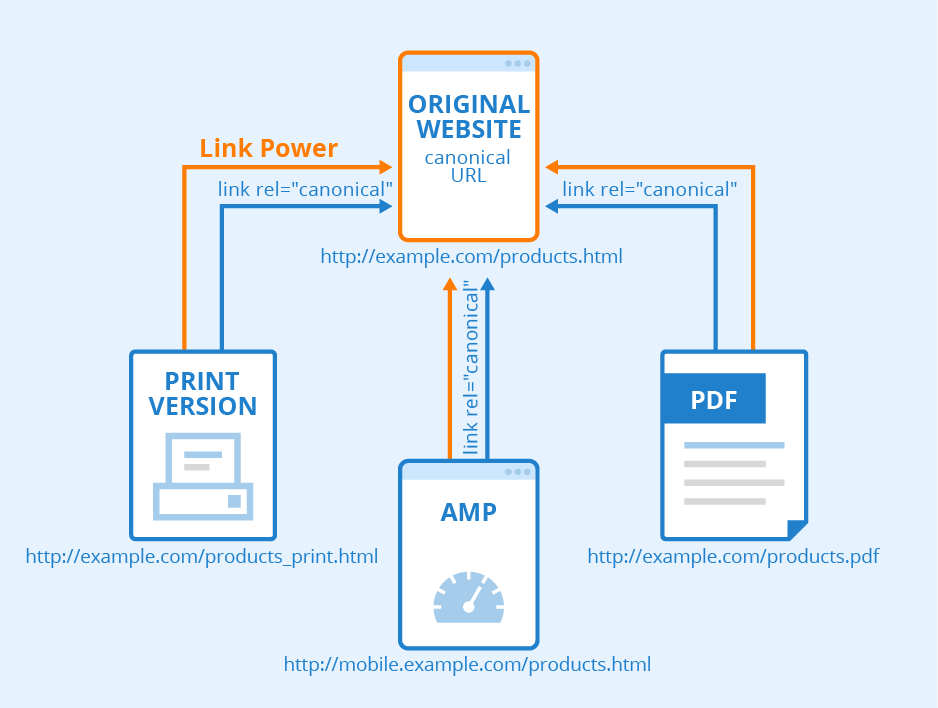
No penalty doesn’t mean no consequence. What actually happens is quieter and, in a way, worse: Google doesn’t punish the duplicate, it simply declines to show it. When Google’s indexing system finds a cluster of pages with substantially the same primary content — your product page and forty other resellers running the identical manufacturer paragraph — it groups them and picks one representative URL to rank. Google calls this canonicalization, and its own documentation is unambiguous about the mechanism: the system evaluates the pages in the cluster and “chooses the page that… is objectively the most complete and useful for search users, and marks it as the canonical.”2
Read that sentence again, because it’s the entire article in one line. You are not being penalized. You are being outcompeted inside a cluster you didn’t know existed, by whichever competitor’s page Google’s systems judged more complete. If that’s the manufacturer’s own page, or a bigger retailer with reviews, richer specs, and better internal linking, your identical page simply doesn’t surface — not because it broke a rule, but because it lost a bake-off you never entered on purpose.
EXHIBIT 1 — How Google resolves a duplicate-description cluster
Mechanism per Google Search Central’s canonicalization documentation. developers.google.com/search/docs/crawling-indexing/canonicalization
This distinction matters because it changes what you’re solving for. “Avoid a penalty” is a compliance question with a trivial answer (you’re already compliant). “Win the canonicalization bake-off” is a competitive question, and it’s the one that actually moves rankings and traffic.
The nuance: three separate problems hiding inside “duplicate description”
Most advice on this topic collapses three distinct problems into one. They need different fixes, and conflating them is why so many “just rewrite everything” projects burn weeks of writer time on the wrong pages.
PROBLEM 1 — Cross-domain duplication
Your description matches the manufacturer’s or a competing reseller’s, word for word. This is the canonicalization/clustering issue described above. It caps your ceiling in generic searches but rarely tanks a whole site.
PROBLEM 2 — Internal cannibalization
Your own color/size variants each get a near-identical description on their own URL. Now you’re competing against yourself for the same query, splitting links and relevance signals across pages that should be consolidated.
PROBLEM 3 — Thin content
The description isn’t just duplicate, it’s short: a title, a bullet spec list, nothing else. Even with zero external duplication, thin pages struggle because there’s little for Google — or a shopper — to evaluate.
Google’s own guidance on ecommerce URLs backs up the second point specifically: poor URL structures that generate near-identical pages for every filter and variant combination waste crawl budget on pages “retrieved multiple times, slowing crawling with no benefit” to a large catalog.2 A store with 12,000 SKUs and thin, duplicated variant pages isn’t fighting one battle, it’s fighting three at once, usually with a single “rewrite the descriptions” line item that only addresses Problem 1.
What the data actually says about product descriptions
Setting aside SEO mechanics for a moment: description quality is also a conversion problem, and this is where the evidence gets concrete rather than speculative. Baymard Institute’s product-page research — built on 200,000+ hours of usability testing across 344 top-grossing ecommerce sites — found that roughly 10% of large ecommerce sites provide product descriptions that are genuinely insufficient for shoppers’ needs, causing people to abandon the product, leave the site, or buy the wrong thing.3 Separately, Baymard’s broader product-page usability study found the large majority of sites carry multiple severe usability issues somewhere in the purchase-decision content.4
EXHIBIT 2 — Insufficient product descriptions, by site sample size
Source: Baymard Institute, Product Page UX research. baymard.com/blog/collections/product-page
Ten percent sounds small until you translate it into search behavior. A description that fails a shopper — no fit guidance, no material detail, no real answer to “will this work for me” — is also, structurally, a description that gives Google nothing distinctive to index. The same paragraph that makes a person bounce is the paragraph Google’s systems judge as low-value in the canonical cluster. UX failure and SEO failure share a root cause here, which is exactly why “just add unique words” rewrites so often underperform: they fix the duplication signal without fixing the underlying thinness.
A real example: what fixing this actually moved
Case studies in this space are frequently vague about mechanism, so it’s worth citing one that names the specific intervention. Digital marketing agency Affinco published a detailed account of a 412% organic traffic increase for an ecommerce client whose site had “almost zero backlinks pointed to product or category pages” and where “most product descriptions were duplicate content copied from manufacturers.”5 Their fix wasn’t a blanket rewrite — they added 150–250 words of original, use-case-specific copy per product page, restructured titles and meta descriptions around primary and secondary keywords, and added keyword-rich introductions to category pages, which had previously been thin, description-free grids.5
Two things about that case are worth pulling out. First, the volume: 150–250 words is a specific, achievable target, not “make it longer.” Second, the scope: category pages got attention too, which matters because — as ecommerce SEO consultancy Go Fish Digital has pointed out — category pages often have no unique content at all beyond a title and product grid, and adding a short original description near the top (not buried at the bottom, where content carries less weight) is a separate, often-skipped fix.6
WHAT TO TAKE FROM THIS
Treat “product description rewrite” and “category page description” as two separate line items on your audit. Most teams do the first and forget the second, then wonder why head-term category rankings never move.
The originality-threshold framework: when a rewrite is worth the writer-hours
Not every SKU deserves a bespoke description. With a 12,000-item catalog, “rewrite everything uniquely” is a fantasy budget line, and chasing it is how these projects die in month two. Below is a simple prioritization matrix — not a Google-sanctioned formula, just a practical triage built from the mechanics above — for deciding where original copy actually earns its keep.
| Signal | Low priority to rewrite | High priority to rewrite |
|---|---|---|
| Search demand for the exact product | Near-zero standalone search volume (obscure SKU, bundled accessory) | Meaningful branded or generic search volume on its own |
| Competitive cluster size | You’re the only retailer carrying it | 10+ resellers carry identical manufacturer copy |
| Margin / strategic weight | Low-margin, low-priority SKU | Hero product, flagship category, high margin |
| Existing description length | Already 150+ words of usable copy | Spec list only, under ~50 words |
| Traffic potential vs. writer hours | Diminishing returns confirmed by low impressions in Search Console | High impressions, low click-through — a content gap, not a demand gap |
If a SKU scores “low priority” on three or more rows, don’t rewrite it — canonicalize it or fold it into a parent product/variant structure instead. Writing 200 original words for a product nobody searches for is busywork; it doesn’t move the canonicalization outcome because there’s no competing cluster to win in the first place.
Fixing internal duplication: canonical tags and variant structure
For Problem 2 — your own variants competing with each other — the fix is structural, not editorial. Google’s guidance on specifying a canonical URL is explicit that consistency matters more than the tag itself: “Google recommends using the same preferred URL across canonical links, redirects, internal links, and sitemaps.”7 A rel="canonical" tag pointing every color variant back to a single parent URL, reinforced by internal links that consistently point to that same parent, does more for consolidation than any amount of unique variant copy.
<!-- On /products/hiking-boot-slate-gray (a variant) --><link rel="canonical" href="https://example.com/products/hiking-boot" /><!-- Product structured data: express variants via ProductGroup, not as unrelated standalone Products -->{ "@context": "https://schema.org", "@type": "ProductGroup", "name": "Trailhead Hiking Boot", "productGroupID": "TRB-118", "variesBy": ["color", "size"], "hasVariant": [ { "@type": "Product", "sku": "TRB-118-SLT-9", "color": "Slate Gray" } ]}Google’s structured-data documentation is worth reading directly here: it recommends ProductGroup markup specifically so Google can understand “which products are variations of the same parent product,” rather than treating each color as an unrelated item competing for the same query.8 This is one of the highest-leverage technical fixes in this whole topic, and it’s almost always cheaper than a copywriting project.
A HONEST LIMITATION
Canonical tags are a strong signal, not a binding instruction. Google’s own troubleshooting documentation states plainly that “even if you explicitly designate a canonical page, Google might choose a different canonical for various reasons, such as the quality of the content or technical signals.”9 If the page you’ve marked non-canonical is actually more complete, better linked, or faster, Google can and sometimes will override your preference. Fix the underlying signals; don’t treat the tag as a lever you pull once and forget.
Where this sits in 2026: structured data and AI-driven shopping surfaces
Two developments this year change the calculus slightly, and both reward accurate, well-structured product pages over thin duplicated ones. First, Google expanded Merchant Listing structured data in July 2026 to include a formal category property and a Sale Duration set of properties, closing a gap between what’s declared in a Merchant Center feed and what’s actually marked up on the page — Search Engine Journal’s coverage frames this as Google giving merchants “a page-level way to express” data that previously lived only in the feed.10 If your schema and your feed disagree, that’s now a more visible inconsistency, not a smaller one.
Second, AI-driven shopping surfaces are a real, if still modest, part of the picture: one 2026 ecommerce SEO analysis estimates AI Overviews now appear on roughly 14% of shopping-related queries.11 That’s not a majority, and treating it as an emergency would be overreacting to a still-developing surface — but it does raise the cost of thin, duplicate descriptions a notch further, because the same structured, well-sourced, product-specific content that helps you win a canonicalization contest is also the content AI systems can most easily extract and cite. Product schema, according to Google’s own documentation, “powers Google Shopping eligibility and product disambiguation across the entire web” — the same underlying markup does double duty.8
Options compared: rewrite, canonicalize, consolidate, or leave it
Four responses to a duplicate-description problem show up repeatedly in audits. None is universally correct — the table below scores them on effort, and on the two things that actually matter: whether it fixes cross-domain duplication, and whether it fixes internal cannibalization.
| Approach | Fixes cross-domain duplication | Fixes internal cannibalization | Writer effort | Best for |
|---|---|---|---|---|
| Rewrite with unique, use-case copy | Yes | No | High | High-demand hero SKUs, flagship categories |
| Canonical + ProductGroup structure | No | Yes | Low (dev time, not writing) | Color/size variants, near-identical SKUs |
| Feed manufacturer copy to shopping feeds only, unique copy on-site | Partial | No | Medium | Catalogs mid-migration, limited writer budget |
| Leave manufacturer copy as-is | No | No | None | Low-demand, low-margin, single-retailer SKUs |
The eCommerce-SEO consultancy Go Fish Digital makes a version of this same point from the other direction: give manufacturer descriptions to third-party shopping feeds where uniqueness barely matters, and reserve genuinely original copy for your own website, where it does.6 That’s a reasonable default for teams without the budget to rewrite a full catalog at once.
What I got wrong on this, the first time
For what it’s worth: the first time I audited a duplicate-description problem at scale, I treated it as one project — “rewrite the descriptions” — and burned a freelance copywriting budget on SKUs that had almost no search demand at all, while leaving a handful of high-traffic hero products with thin, 40-word manufacturer text untouched, because they were “already indexed and ranking fine.” They weren’t. They were ranking for branded queries only, and losing every generic query to a competitor with 300 words of original buying-guide-style copy on the same product. The lesson wasn’t “write more,” it was “check Search Console impressions before you write anything” — the framework above exists because of that mistake, not despite it.
When not to bother rewriting at all
This is the part most guides skip, and it’s the honest caveat the framework above is built on: rewriting descriptions is not free, and it is not always worth it.
- Zero-demand SKUs. If Search Console shows near-zero impressions for a product’s core terms, no amount of original copy will generate demand that doesn’t exist. Spend the hours elsewhere.
- You’re the sole retailer. If nobody else sells the exact item, there’s no duplicate cluster to lose. The manufacturer’s copy isn’t hurting you in that specific case, even if it’s still thin.
- Regulated or spec-critical categories. Pharmaceuticals, medical devices, and some safety equipment have compliance reasons to keep manufacturer-approved language intact. Check with legal before “improving” that copy for SEO reasons.
- You can’t maintain it. Original copy that goes stale — wrong specs after a manufacturer revision, discontinued variants left live — actively damages trust. If there’s no process to keep it current, thin-but-accurate can beat rich-but-wrong.
A practical audit sequence
- Pull impressions and average position by product URL from Search Console. This tells you which duplicate pages are already losing, not just which are duplicate.
- Cluster your catalog by manufacturer-description similarity (a simple text-similarity script or an SEO crawler’s duplicate-content report works) and cross-reference against the impressions data from step 1.
- Sort into the five-signal matrix above. Anything scoring “high priority” on three or more signals goes into the rewrite queue, ranked by impressions.
- Fix variant structure first. Canonical tags and
ProductGroupmarkup are dev work, not writer work, and they resolve internal cannibalization faster than any copy project. - Write category-page intros for your top-traffic categories before starting on individual products — this is the most commonly skipped step and often the highest-leverage one per hour spent.
- Re-check Search Console 8–12 weeks later. Canonicalization and re-crawling take time; judging results after two weeks will make a working fix look like a failure.
Frequently asked questions
Does Google actually penalize duplicate manufacturer descriptions?
No. Google has repeatedly said there’s no penalty specifically for reusing manufacturer copy, and its own documentation describes ordinary duplicate content as normal and not a spam violation.1,2 The real cost is competitive, not punitive: your page is grouped with others and only one gets shown as canonical.
Will adding a canonical tag alone fix duplicate manufacturer descriptions?
Not the cross-domain problem. A canonical tag consolidates signals between pages you control (your own variant URLs). It has no effect on a separate domain’s copy of the same manufacturer text — Google will still cluster your page against outside competitors and choose independently which one to show.
How many words does a product description need to avoid being “thin”?
There’s no official minimum. Google explicitly avoids specifying a word count for this. What the case data supports is a practical range: the 150–250 original words used in the Affinco case study5 is a reasonable working target for a genuinely under-described product page, not a rule to apply everywhere.
Should I rewrite every product description in my catalog?
Almost never, for large catalogs. Use the priority matrix above — search demand, cluster size, margin, current length, and Search Console impressions — to find the subset actually worth writer time. Rewriting a zero-demand SKU produces no ranking benefit because there’s no competing cluster to win.
Do I need unique descriptions for color and size variants?
Generally no, and Google’s own guidance backs this up for pure variant differences. The fix for variants is structural — canonical tags plus ProductGroup markup — not a unique paragraph per color.
Can I give manufacturers’ descriptions to my affiliates and still rank?
Not well. eCommerce SEO consultancy Go Fish Digital specifically recommends the opposite: keep your own site’s unique descriptions off your affiliate feeds, and give affiliates the same generic feed you’d give any third-party vendor, so your own copy isn’t duplicated by your own affiliate network.6
What about category pages — do they have the same duplicate-content risk?
Category pages have a related but distinct problem: many have no unique content at all beyond a title and a product grid, which isn’t technically duplicate content but caps their ranking potential the same way thin content does. Adding a short, original description near the top of the page (not the bottom) is a separate, frequently skipped fix.6
How long does it take to see ranking movement after fixing duplicate descriptions?
Give it at least 8–12 weeks before judging results. Canonicalization re-evaluation and re-crawling aren’t instant, and Google’s own troubleshooting guidance recommends checking the URL Inspection tool to confirm which page Google is currently treating as canonical before concluding a fix has failed.9
Is structured data a substitute for original description copy?
No — they solve different problems. Structured data (Product, Offer, ProductGroup) helps Google and AI systems parse and disambiguate what’s on the page; it doesn’t make thin or duplicated prose more distinctive in a canonicalization cluster. You need both: accurate markup and genuinely differentiated content.
Does this advice change for marketplaces like Amazon versus my own website?
The canonicalization mechanics described here apply to Google’s organic index of independent websites. Amazon and other marketplaces run their own internal search and ranking systems with different rules — a separate topic. If you sell on both, treat your own site’s product pages as the place original copy matters most for Google visibility.
Sources
- Roger Montti, “Google on Using Duplicate Manufacturer Product Descriptions,” Search Engine Journal. searchenginejournal.com
- “What Is URL Canonicalization,” Google Search Central Documentation. developers.google.com
- “10% of E-Commerce Sites Have Product Descriptions That Are Insufficient for Users’ Needs,” Baymard Institute. baymard.com
- “Product Page Usability Report and Benchmark,” Baymard Institute. baymard.com
- “How We Grew Organic Traffic 412% for an E-Commerce Brand,” Affinco. affinco.com
- “Thin & Duplicate Content: SEO Guide for eCommerce Sites,” Go Fish Digital. goinflow.com
- “How to Specify a Canonical with rel=canonical and Other Methods,” Google Search Central Documentation. developers.google.com
- “Intro to Product Structured Data on Google,” Google Search Central Documentation. developers.google.com
- “Fix Canonicalization Issues,” Google Search Central Documentation. developers.google.com
- Matt Southern (via SEJ coverage), “Google’s New Merchant Listing Structured Data Improves SEO,” Search Engine Journal, July 2026. searchenginejournal.com
- “Ecommerce Product-Page SEO 2026 Optimization Guide,” Digital Applied. digitalapplied.com