

https://www.contentevaluator.online/2026/07/04/affiliate-content-strategy/
https://www.contentevaluator.online/2026/06/10/zero-click-searches/


Zero-click content strategy is no longer optional. With AI Overviews now slashing organic CTR by up to 61% and the zero-click rate crossing 65% of all queries, chasing clicks is a losing game for most publishers.
The winning play is to become the source Google’s AI cites — not just a page it ranks. That requires a different content architecture, a different measurement model, and a blunt acceptance that some of your content’s job is to build brand trust rather than drive sessions.
This guide shows you exactly how to build, execute, and measure that system step by step.
Should You Even Do This?
Zero-click content strategy is not right for every site or situation. Run through this gate before committing resources.
- Publishing informational or educational content at scale
- A B2B brand where awareness drives pipeline (not immediate conversions)
- An e-commerce or SaaS brand with significant informational blog traffic that has dropped in the past 12 months
- A publisher seeing declining CTR but stable or rising impressions in Search Console
- Already ranking top-10 but getting fewer clicks per position than 18 months ago
- A pure e-commerce site where product pages are the only revenue lever
- A local service business (your GMB and local pack matter far more)
- A startup with zero domain authority — fix the fundamentals first
- Measuring solely on last-click attribution with no capacity to change reporting
- Unable to invest in content updates for at least 6–12 months
What Actually Changed in Search — The Data
The shift is not gradual anymore. Three forces collided between 2024 and early 2026 to fundamentally break the old traffic model.
The Seer Interactive study — the most rigorous available, covering 3,119 informational queries across 42 organizations and 25 million organic impressions — found that organic CTR dropped from 1.76% to 0.61% for queries with AI Overviews. That is not a rounding error. That is an existential shift for content-first businesses.
Yet here is the nuance most coverage misses: search volume is growing. Google processes roughly 9–14 billion queries daily in 2026, up from 8.5 billion in 2024. More people are searching. Fewer of them are leaving. The SERP is increasingly the destination, not the gateway.
“The search results page is no longer a gateway — it’s the destination.”
— Limor Barenholtz, Similarweb, May 2025
The second nuance: the damage is not uniform. Large, high-authority brands with strong direct and branded traffic saw modest or even positive shifts. Mid-sized publishers dependent on informational SEO traffic took the hardest hits — some reporting 40–80% declines. If your site is in that middle tier, zero-click strategy is not a nice-to-have. It is survival architecture.
The Core Idea: Visibility Over Traffic
Most content strategy is built on a traffic-first assumption: create content → rank → capture clicks → convert. Zero-click strategy inverts the first step. The new model is: create content → earn SERP visibility → build brand recognition → capture intent when it peaks.
From SERP Impression to Pipeline
- Impressions — Your content surfaces in AI Overviews, featured snippets, or People Also Ask for relevant queries
- Brand Recognition — Users see your brand name consistently in your topic area, building implicit authority
- Intent Amplification — When the user moves from research to action, they search your brand directly or arrive as direct traffic (dark social)
- High-Intent Click — The click that does happen converts at a higher rate because the user already trusts you
- Attribution Gap — This journey is nearly invisible to last-click analytics, which is why most teams underinvest in it
The evidence for this model is not theoretical. Research from Chad Wyatt’s 2026 analysis of zero-click content shows that users who click through after consuming zero-click content have already pre-qualified themselves. Conversion rates on that traffic are measurably higher than cold organic traffic. You are trading volume for quality — not losing.
The harder truth: this only works if your brand is actually appearing in that SERP visibility layer. Which brings us to the step-by-step execution.
Step-by-Step Zero-Click Content System
- 01
Audit Your Impressions vs. Clicks Gap in Search Console
Go to Search Console → Performance → Web. Sort by impressions, filter for queries where your position is 1–5 but CTR is below 2%. These are your zero-click exposure pages — already ranking, not getting credit. As of June 2025, Search Console also surfaces AI Overview performance data. Check it. If you have high impressions and near-zero CTR on informational queries, your content is being used by Google’s AI without attribution.
- 02
Identify Your AI Overview Citation Gaps
Manually search your 20 highest-value informational queries in incognito mode. Note which trigger AI Overviews. Note whether your site is cited. If you rank top-5 but are not cited, your content likely lacks structural extractability — it is ranked but not quotable by Google’s AI. This is a content architecture problem, not a keyword problem.
- 03
Reformat for Extractability — The 130-Word Answer Block
Research from Citedify (2026) shows that content scoring highly on semantic completeness is 4.2× more likely to be cited in AI Overviews. The structural requirement: open every article and every major section with a direct, complete answer in 130–160 words. That block must contain the claim and supporting evidence and stand alone without context. This is not a summary. It is a self-contained answer that Google can lift cleanly.
- 04
Target Fan-Out Queries, Not Just Primary Keywords
A Surfer SEO analysis of 10,000 keywords found that pages ranking for both the primary query and at least one “fan-out query” (related sub-intent) were 161% more likely to earn an AI Overview citation. A fan-out query for “zero-click content strategy” might include “how to measure zero-click success,” “zero-click content for B2B,” or “featured snippet vs AI Overview difference.” Build one comprehensive piece that covers the cluster, rather than separate thin articles for each keyword.
- 05
Earn Cited Backlinks From Trusted Publications
Research from AuthorityTech (2026) confirms that earned media placements in trusted publications account for the vast majority of AI Overview citations. Brand-owned content alone is rarely cited at scale. This is the single most important investment, and the most often skipped. You need other authoritative sites to mention your brand and content in context — not just link to you, but quote or reference your data and frameworks by name.
- 06
Add Schema Markup for FAQ, Article, and HowTo Content
Schema does not guarantee AI Overview citations. It does reduce ambiguity in machine understanding and improves extractability for FAQs, how-tos, and definitions — the exact content types most likely to trigger informational AI Overviews. Use Article + FAQPage schema together. Validate with Google’s Rich Results Test. The key requirement: schema must match the visible text on the page exactly.
- 07
Build a Topical Authority Cluster, Not a Keyword List
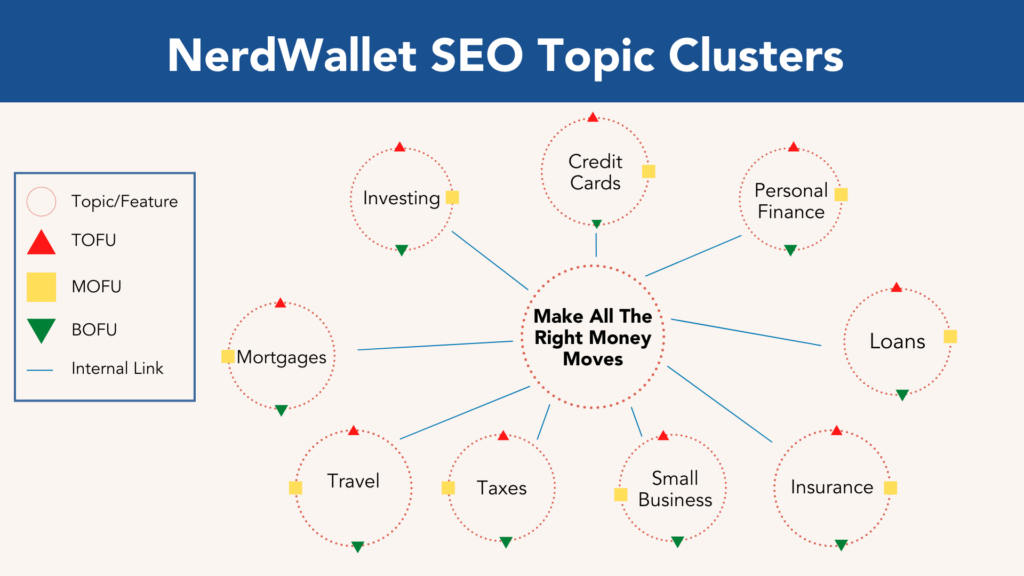
A narrow article targeting one keyword is structurally disadvantaged in AI-first search. Google’s AI Overviews pull from multiple sources across a topic, and they preferentially cite sources that demonstrate depth across the subject. Map your content to cover the full topic ecosystem: definition articles, comparison articles, how-to guides, constraint and limitations pieces, measurement guides. Then link them aggressively — internally, with contextual anchor text.
- 08
Demonstrate Experience — Not Just Expertise
After Google’s March 2026 core update, the Experience signal in E-E-A-T became the dominant authority indicator, elevated above traditional link equity and topical breadth. Write in first person about things you have actually tested. Include specific outcomes with real numbers. Add author bios with credentials and LinkedIn links. Date every article and update it regularly — AI systems reward demonstrable recency of expertise, not just publication dates.
- 09
Distribute Zero-Click Content on Platform Channels
SERP visibility is one channel. LinkedIn, X, YouTube, and newsletters are separate zero-click environments where your content can build recognition without requiring a click. The mechanics are the same: deliver the core insight inside the platform’s native experience. The goal is brand recall, not traffic. This content generates dark social — word-of-mouth and direct searches that will never appear in your referral data but absolutely influence pipeline.
- 10
Update Content on a Quarterly Cadence — Minimum
Stale content decays faster in AI-first search than it did in traditional SEO. AI systems reward demonstrable recency. Set a quarterly content review for your top-20 zero-click exposure pages. Add new statistics, update outdated claims, refresh internal links, and note the update date clearly. The Digital Bloom AI Visibility Report found that adding recent statistics increased AI citation probability by 22%.
How This Actually Works Together
The ten steps above are not independent tactics. They form a compounding system. Here is the workflow in sequence, with the integration points that matter most.
From Audit to AI Citation
| Phase | Action | Tool / Method | Integration Type |
|---|---|---|---|
| 1. Discovery | Impressions vs. CTR gap audit | Google Search Console | Native |
| 2. Gap Analysis | Manual AI Overview citation check | Incognito search + GSC AIO report | Manual |
| 3. Cluster Mapping | Fan-out query research | AnswerThePublic, People Also Ask, Semrush | Semi-automated |
| 4. Content Build | Extractable answer blocks + schema | CMS + Google Rich Results Test | Manual |
| 5. Authority Build | Earned media and citation outreach | Journalist outreach, HARO/Connectively, PR | Manual |
| 6. Distribution | Native platform zero-click content | LinkedIn, Newsletter, X | Manual / Semi-automated |
| 7. Measurement | Brand search volume + impression tracking | GSC + Google Trends + Semrush Brand Monitor | Semi-automated |
| 8. Update Loop | Quarterly content refresh | CMS + content calendar | Manual |
The friction point most teams hit: Steps 4 and 5 are not connected in most organizations. Content teams produce extractable, well-structured articles. PR and comms teams earn media placements. Neither knows what the other is building. The result is that good content never gets cited externally, and earned media placements link to pages that are not optimized for AI extraction. Close this gap by sharing your target topic clusters with PR explicitly, so media pitches and content releases align.
The 80% Solution Stack
You do not need 20 tools. In most workflows, this stack handles 80% of the zero-click execution.
Use tools beyond this list if you are: managing 500+ pages, running a dedicated PR programme, or operating in a highly competitive YMYL niche where authority signals matter at a granular level. For most mid-sized content operations, this stack is sufficient for the first 12 months of zero-click execution.
How to Measure Success Without Click Data
This is where most zero-click strategies collapse. Teams report to stakeholders using traffic metrics, show declining sessions, and get the budget cut — despite the strategy working exactly as intended. You need a different measurement model before you start, not after.
| Metric | What It Measures | Tool | Lag Time |
|---|---|---|---|
| Branded search volume | Long-term brand recall from zero-click exposure | Google Trends + GSC | 3–6 months |
| SERP impressions | Visibility without requiring clicks | Google Search Console | Real-time |
| AI Overview citations | Direct AI extraction authority | GSC AIO report + manual | 1–4 weeks |
| Direct traffic trend | Proxy for dark social and brand recall | GA4 | 1–3 months |
| Conversion rate on organic sessions | Quality of clicks that do arrive | GA4 | 1–3 months |
| Share of voice in AI tools | Citation frequency in ChatGPT, Perplexity, Gemini | Manual spot checks / Semrush AI Brand Monitor | Ongoing |
Limitations & What People Get Wrong
1. Zero-click content alone does not build pipeline
Visibility creates awareness. It does not close deals. You still need a conversion layer — email capture, high-intent product pages, demos — for when the aware user is ready to act. Zero-click strategy fills the top of funnel; it does not replace the middle and bottom.
2. It is possible to build a large audience that never converts
As Chad Wyatt’s 2026 analysis notes: it is entirely possible to accumulate large impressions and social engagement while the audience never takes a commercial next step. The risk is higher in B2C and in topic areas where information satisfies need entirely. Build in regular conversion opportunity testing, not just visibility tracking.
3. AI Overview citations are volatile
Semrush’s 2025 study tracked AI Overviews peaking at 25% of queries in July before dropping to 15.69% in November. Volatility is structural in this environment. A site that earns prominent AI citations in March may lose them in May after a model update. Do not build your entire content ROI case on AI citation frequency. It is a valuable but unstable signal.
4. Dark social attribution may never be fully solved
The attribution gap between zero-click exposure and eventual conversion is real and, for most teams, permanent. Branded search growth is the best proxy available, but it is imprecise. If your business requires clean ROI attribution on every content investment, zero-click strategy will be frustrating to defend. Price that into the decision.
5. This strategy favors established brands over new entrants
AI Overviews disproportionately cite sites with existing domain authority and third-party editorial mentions. A new site with excellent content structure and zero backlinks will struggle to earn AI citations regardless of content quality. For new entrants, earned media and partnerships need to come first.
FAQ
Does appearing in an AI Overview actually drive any traffic?
Yes, but less than ranking #1 used to. A 2026 analysis by AuthorityTech found that 46.5% of AI Overview-cited URLs rank outside the top 50 in standard organic results — meaning citation can generate traffic even without a top-10 ranking. The volume is lower than traditional position-1 traffic but the quality is typically higher, since users clicking through an AI citation are usually seeking depth beyond the summary.
Is optimizing for featured snippets still worth it if AI Overviews are replacing them?
They serve overlapping but not identical purposes. Featured snippets still appear independently of AI Overviews, particularly for specific instructional queries. More importantly, the content structures that win featured snippets — direct answers, structured headers, numbered steps — are the same structures that improve AI Overview citation probability. Optimize for one and you largely optimize for both.
How long does zero-click strategy take to show results?
Structural changes (extractable answer blocks, schema, cluster depth) can improve AI citation rates within four to eight weeks. Branded search volume growth — the more meaningful business signal — typically takes three to six months to become statistically visible. Earned media citations are the long-pole item; a consistent PR programme often takes six to twelve months before it meaningfully shifts domain authority and AI citation frequency together.
Should I stop trying to get clicks entirely and go fully zero-click?
No. Zero-click strategy optimizes the top of the funnel. You still need click-generating content — product pages, comparison guides, pricing pages, conversion-focused landing pages — that serve users with transactional intent. The portfolio shift is in proportion: invest more in authority-building informational content, while keeping your commercial content tightly optimized for conversion. The ratio depends on your business model, but for most content-first businesses, a 60/40 split (informational to commercial) is a reasonable starting point.
Does social media zero-click content help with Google AI Overviews?
Not directly. Social platform content does not feed Google’s index. However, high-performing social content often generates earned links and brand mentions when others write about your ideas — and those third-party citations are exactly what feeds AI Overview authority. Treat social zero-click content as an indirect input to SERP authority, not a direct ranking signal.
Final Thoughts — The Uncomfortable Truth
Here is what most zero-click guides will not tell you: the strategy works best for brands that never needed SEO traffic to survive in the first place.
Established brands with strong direct audiences, email lists, and recognizable names will absorb the zero-click transition with modest disruption. Mid-sized publishers and newer content businesses that built their entire model on informational SEO traffic face a harder reckoning. Zero-click strategy helps, but it does not fully replace the traffic lost to AI Overviews — at least not in the short term.
The harder strategic question is whether the next two years of zero-click investment will compound into a durable brand asset, or whether AI search continues to evolve in ways that further reduce the value of even high-authority citations. The honest answer is that no one knows with certainty.
What is knowable: brands that optimize content purely for traffic clicks are already losing ground to brands that optimize for SERP authority and multi-channel brand presence. The direction of travel is clear, even if the pace is uncertain.
The brands that win zero-click search are not the ones that game the algorithm. They are the ones that become the obvious source — cited by others, structured for machines, and trusted enough that users search for them by name.
You can start building that today. The steps are not secret. The barrier is patience, consistency, and a willingness to measure success in impressions and brand recall before it shows up in sessions and revenue.
That patience is, in 2026, a genuine competitive advantage.
Primary Sources
- Seer Interactive (2025): Google AI Overview Study — SEO & PPC CTR Impact. Analysis of 3,119 queries across 42 organizations. seerinteractive.com
- Semrush (December 2025): AI Overviews Study — What 2025 SEO Data Tells Us About Google’s Search Shift. Analysis of 10M+ keywords. semrush.com
- Digital Bloom IQ (October 2025): 2025 Organic Traffic Crisis: Zero-Click & AI Impact Report. Publisher traffic analysis. thedigitalbloom.com
Secondary Sources
- AuthorityTech (March 2026): How to Get Featured in Google AI Overviews. Fan-out query citation analysis. authoritytech.io
- Contently (May 2026): How to Get Cited in Google AI Overviews: 2026 Tactics That Work. contently.com
- Chad Wyatt (December 2025): Zero-Click Content in 2026: What Is It and How to Use It. Dark social and attribution analysis. chad-wyatt.com
Related Articles
Last Updated: May 2026 · Next Review: August 2026
Statistics and data sourced from third-party research published between Q2 2025 and Q2 2026. AI Overview prevalence and zero-click rates are subject to ongoing change as Google updates its systems. Check cited sources directly for the most current figures.
https://www.contentevaluator.online/2026/06/01/zero-click-content-strategy/
https://www.contentevaluator.online/2026/06/07/ultimate-guide-to-zero-click-seo/
https://www.contentevaluator.online/2026/06/19/brands-grow-without-website-clicks/
https://www.contentevaluator.online/2026/05/22/affiliate-seo-content-systems/
https://www.contentevaluator.online/2026/05/30/broad-authority-sites/
https://www.contentevaluator.online/2026/05/28/brand-keyword-search/
https://www.contentevaluator.online/2026/06/04/zero-click-content-strategy-2026/
https://www.contentevaluator.online/2026/02/13/seo-in-2026/
https://www.contentevaluator.online/2026/06/26/optimizing-content/
https://www.contentevaluator.online/2026/06/29/traditional-seo-is-dying/