

https://www.contentevaluator.online/contact-us/
https://www.contentevaluator.online/about-us/
https://www.contentevaluator.online/privacy-policy/
https://www.contentevaluator.online/2026/06/10/zero-click-searches/
https://www.contentevaluator.online/terms-and-conditions/
SEO Strategy · Expert Guide
Organic traffic is down. Google answered the question before your user did. Here is what actually works now—and why most zero-click advice misses the real opportunity entirely.
Sources: SparkToro/Datos, BrightEdge 2025 cross-industry study (1,200 websites), NAV43 April 2026
The 90-Second Version
Zero-click SEO is not about “surviving” fewer clicks. It is about becoming the source that AI and Google trust enough to quote—so that when someone eventually does search, buys, or needs to verify, your brand is already inside their mental shortlist. The tactics that work in 2026 fall into five buckets: answer formatting, entity authority, schema infrastructure, click-worthy long-tail targeting, and branded search cultivation. Everything else is noise.
Should You Even Do This?
Decision Gate — Zero-Click SEO Investment
Invest heavily if you are:
- A B2B brand with long sales cycles
- A SaaS or services company where brand trust precedes the click
- Publishing educational or thought-leadership content
- Seeing AI Overviews appear on your top 20 keyword queries
- Competing in a space where brand recall drives deal wins
Deprioritize if you are:
- Running pure e-commerce where clicks = product pages
- Chasing news/trending content with 48h shelf life
- Monetizing 100% through ad impressions on your site
- A local business whose customers never google your category
A useful diagnostic: open Google Incognito and search your five highest-traffic non-branded queries. Count how many trigger an AI Overview or Featured Snippet. If the answer is three or more, zero-click tactics are not optional—they are the new baseline.
Why Zero-Click Is Not the Problem You Think It Is
The panic is understandable. Research from SparkToro and Datos puts roughly 58–60% of all Google searches in 2026 ending without a click to any external website. For AI Overview–triggered queries, that figure climbs to 83%. For Google’s newer AI Mode, Semrush clocks the zero-click rate at 93% per session.
But here is the finding that rarely appears in the same paragraph: visitors who arrive from AI citations convert at approximately 23 times the rate of traditional organic search visitors, according to a BrightEdge cross-industry study of 1,200 websites in 2025. The mechanism is not mysterious—when an AI Overview answers the surface question, only the high-intent researcher clicks through to verify, compare, or buy. Casual browsers are pre-filtered out. You lose volume. You gain quality.
“It’s now evident that traffic metrics alone no longer tell the story. Visibility, citations, brand mention lift, and assisted conversions are becoming the real KPIs.” — SEOFOMO Organic Search Trends Report, January 2026
The strategic shift, then, is from traffic chasing to entity authority. Clicks are a lagging signal. Citation frequency, branded search volume lift, and AI answer inclusion rate are the leading signals. The brands that adapted earliest are already building compounding advantages that are structurally hard to reverse-engineer.
Only 12% of URLs cited inside AI Overviews rank in Google’s top 10. AI citation and organic ranking are now two separate games. You need a strategy for each—and they require different tactics.
The 5 Effective Zero-Click Tactics (Ranked by Impact)
1. Answer-Block Formatting (Highest Immediate Impact)
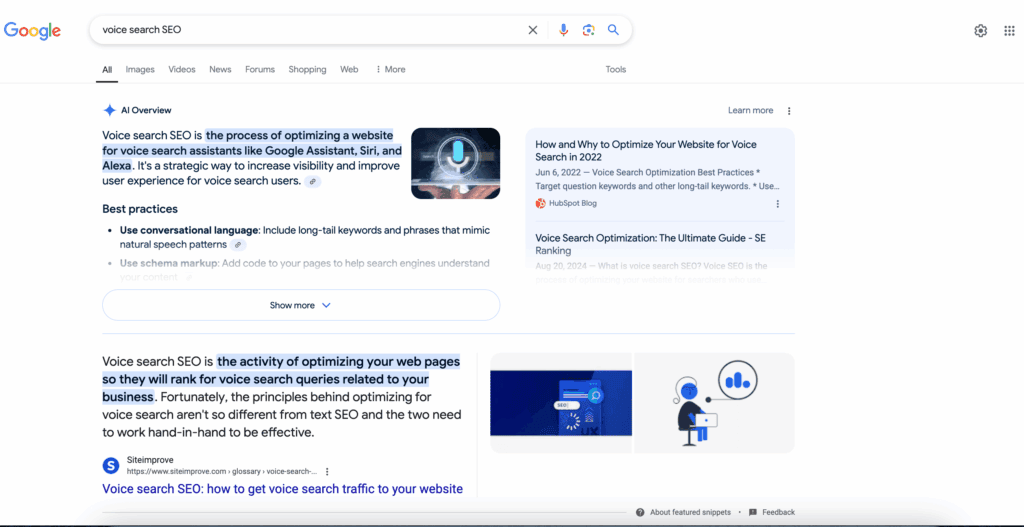
The single most reliable way to get cited in AI Overviews and Featured Snippets is to answer the exact question in the first 40–60 words of the relevant section, then expand. This is not a style choice—it is a structural requirement for machine extraction.
Google and LLMs extract “answer blocks” that are concise, factually precise, and syntactically clean. Content that buries its answer in paragraphs three and four is functionally invisible to the extraction layer, regardless of how authoritative the rest of the article is.
The 3-Layer Answer Architecture
Direct Answer (40–60 words)
Lead with a complete, self-contained answer to the implied question. Write it as if it will be read aloud by an AI voice assistant with nothing else around it.
Supporting Context (100–200 words)
Add the mechanism, conditions, and nuance. This is what earns a click from the high-intent reader who wants to go deeper than the snippet.
Depth Layer (remaining section)
Frameworks, examples, counter-arguments, data. This is the section that builds your E-E-A-T score and backlink potential—not your snippet eligibility.
For comparison tables, the same principle applies: structure them so the AI can parse rows independently. Tables where the key decision criterion is in column one and the answer is in column two score highest for Featured Snippet extraction.
2. Entity Authority and Knowledge Panel Ownership
Google’s ability to cite your brand inside AI Overviews is gated by whether its knowledge graph has a clear, verified entity record for you. This is structural, not editorial. No amount of good writing compensates for a thin or ambiguous entity footprint.
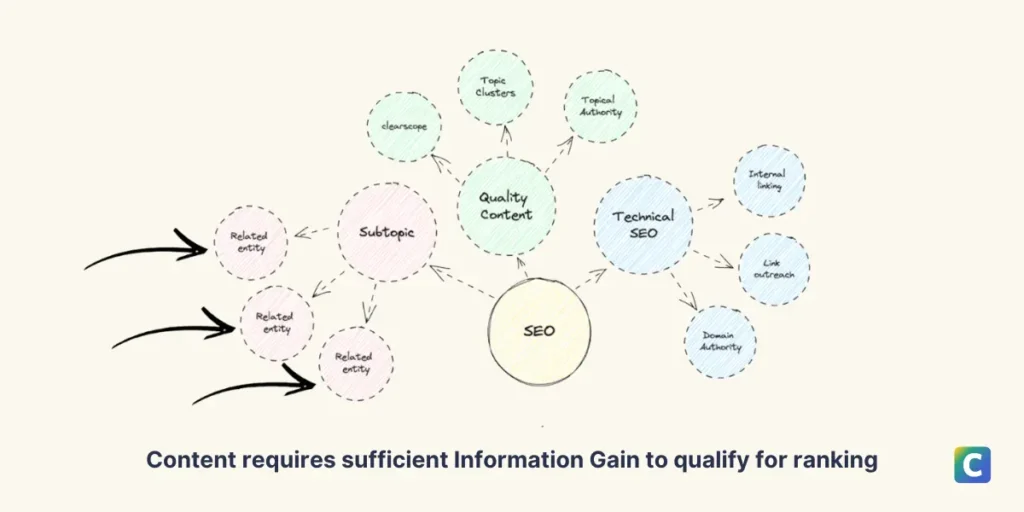
In practice, entity authority requires building what SEOs are calling an Entity Web: a network of cross-linked, consistent mentions across sources that LLMs treat as “truth nodes”—Wikipedia, Wikidata, government databases, Crunchbase, LinkedIn, and major industry directories. When your About page links to your Crunchbase profile, which links to your LinkedIn company page, which is consistent with your Google Business Profile and Wikipedia entry, AI systems can triangulate your identity and credibility.
Most mid-size brands have three to six conflicting entity records across the web—different address formats, inconsistent founding dates, varying descriptions. Before building new signals, run an entity audit. Conflicting signals reduce your extraction score even if individual records look clean in isolation.
Strong Organization, Person, and Author schema on your site closes the final loop, giving AI systems the structured signal they need to verify your credibility programmatically.
3. Schema as Infrastructure, Not an Afterthought
Schema markup in 2026 is not a “nice to have” for rich results. It is the communication layer between your content and AI extraction systems. The schemas that matter most in a zero-click context are distinct from classic SEO usage.
| Schema Type | Zero-Click Use Case | Priority |
|---|---|---|
FAQPage | Marks question-answer pairs for direct extraction into People Also Ask and AI answer panels | Must Have |
Speakable | Originally for voice; now signals to AI Overviews which sections are concise enough for synthesis | Must Have |
HowTo | Step-by-step processes extracted as numbered answers in AI Overviews | Must Have |
Organization + sameAs | Connects your site entity to external records; core to Knowledge Panel establishment | Must Have |
Article + Author | Signals author identity and E-E-A-T to both Google and LLM crawlers | Must Have |
ClaimReview | Marks fact-checked or corrected information; increases trust score in AI extraction | High Value |
Dataset | Marks original research data; signals information gain to Google’s quality systems | High Value |
An often-overlooked implementation detail: add an llms.txt file to your site root (modeled after robots.txt) specifying which pages and sections you want AI crawlers to access, prioritize, and cite. This is becoming standard practice in GEO (Generative Engine Optimization) and is worth implementing early.
4. Long-Tail and Deep-Intent Keyword Targeting
Here is the zero-click paradox that most guides obscure: not all queries are equally zero-click-prone. Simple informational queries (“what is DNS propagation”, “capital of France”) are almost entirely zero-click. Complex, nuanced, or niche technical queries—where AI Overviews lack sufficient training depth to answer confidently—still drive substantial click-through.
The implication for keyword strategy is significant. Traditional keyword research optimized for search volume. Zero-click SEO must optimize for both volume and click-through potential. Queries with commercial intent, multiple decision variables, or specific product/service comparison needs retain far higher CTR than generic informational queries.
| Query Pattern | Zero-Click Probability | Your Strategy |
|---|---|---|
| “What is [X]” / “Define [X]” | Very High (80–90%) | Optimize for citation, not the click. Build brand exposure. |
| “How to [simple task]” | High (65–80%) | Lead with answer block + add depth that earns clicks from power users. |
| “Best [X] for [specific use case]” | Medium (40–55%) | Decision-heavy content. Strong click-through potential—prioritize this tier. |
| “[Tool A] vs [Tool B]” | Low–Medium (30–50%) | High commercial intent. Clicks are likely. This is core territory to own. |
| Technical/niche deep dives | Low (15–35%) | AI can’t summarize these well. Highest-value click-through content in 2026. |
5. Branded Search Cultivation as a Revenue Signal
The downstream effect of zero-click visibility that almost nobody measures correctly: when your brand appears consistently in AI Overviews and Featured Snippets, branded search volume increases—even if no one clicked. Studies suggest that sites receiving consistent AI citation see approximately 28% higher branded search volume within 30 days, along with a 34% lift in direct traffic.
Branded search is high-intent, high-conversion, and zero-click-resistant by definition—your brand is the query. Cultivating it is the long game that makes zero-click search a structural advantage rather than a threat.
In practice, this means creating content designed not just to rank, but to be cited—and then tracking whether those citations move the branded search needle. This is where the new KPI framework (covered below) becomes operationally critical.
How It Actually Works Together
The five tactics above are not independent levers. They form a compounding flywheel. Here is the integrated workflow, including where it can break.
Build the Entity Foundation
Audit and reconcile all entity records. Implement Organization + Author schema with sameAs links. Create or claim your Knowledge Panel. Integration type: manual, one-time with quarterly maintenance.
Structure Content for Extraction
Retrofit existing high-traffic pages with 3-layer answer architecture. Implement FAQPage, Speakable, and HowTo schema on all question-intent content. Add llms.txt. Friction point: this requires editorial + dev alignment; most teams bottleneck here.
Target High-CTR Long-Tail Queries
Run a zero-click probability audit on your current keyword portfolio. Shift content investment toward comparison, decision, and deep-technical queries. Deprioritize “what is” content that AI handles without you. Data flow: keyword tool → Ahrefs SERP analysis → content calendar.
Publish Original Research and Proprietary Data
This is the tactic that creates the widest information gain moat. AI systems actively seek data they cannot synthesize from existing sources. Original surveys, benchmarks, and case-study data with Dataset schema signal maximum extraction priority. Integration: semi-automated via data feeds; manual for analysis layer.
Measure, Adjust, and Compound
Track AI citation rate, branded search volume, and direct traffic on a monthly cadence. Feed findings back into content prioritization. This loop is where the compounding begins. Tools: Otterly.ai / Peec AI for citations; GSC for branded query trends; BrightEdge or Semrush for AI Overview impression share.
The most common failure mode is executing tactics 2–4 without fixing tactic 1. If Google cannot resolve your entity cleanly, it will cite a competitor whose entity structure is cleaner—regardless of content quality. Entity foundation work is unglamorous but non-negotiable.
The 80% Solution Stack
You do not need seven platforms. This stack handles the overwhelming majority of zero-click SEO execution for teams of one to ten.
What to Measure Instead of Traffic
If your weekly SEO report still leads with organic sessions and keyword rankings, you are flying with instruments calibrated for an earlier era. The 2026 measurement framework needs four layers.
| Layer | Metric | Why It Matters | Tool |
|---|---|---|---|
| Visibility | AI Answer Inclusion Rate (AAIR) | % of tested AI prompts where your brand appears in the generated answer | Otterly.ai, Peec AI |
| Visibility | Featured Snippet + PAA share | Traditional SERP feature presence; still drives significant brand impressions | Semrush, Ahrefs |
| Brand Impact | Branded search volume (MoM) | Proxy for brand recall driven by AI citation exposure | Google Search Console |
| Brand Impact | Direct traffic trend | AI visibility frequently manifests as direct traffic, not attributable referrals | GA4 |
| Revenue | Conversion rate by source (AI vs organic) | Quantifies the quality advantage of AI-referred visitors | GA4 + UTM discipline |
| Competitive | AI citation share vs. competitors | Relative position in AI answer space; the new “page 1 share” | Peec AI, Promptmonitor |
Building a clear chain from AI citation impression → branded search lift → direct traffic → revenue is the evidence base you need to defend SEO investment internally when organic session counts are declining. Without this chain, finance teams will correctly conclude that SEO is failing. With it, you can demonstrate that SEO is evolving—and delivering better-quality outcomes at lower volume.
Real Limitations Nobody Tells You About
Most zero-click SEO content presents a uniformly optimistic picture. Here is what gets left out.
Entity work takes time that most content calendars ignore. Building a clean, verified Knowledge Panel typically takes three to six months of consistent signal building. There are no shortcuts. Brands that deprioritize it in favor of publishing volume consistently underperform on AI citation metrics, regardless of content quality.
Schema without content depth is hollow. FAQPage schema on thin answers will get extracted—once. Google’s quality systems are increasingly sensitive to whether the cited content actually serves the user well. Thin content with good schema is a short-term arbitrage that degrades over time as it accumulates negative engagement signals.
AI citation monitoring tools are immature. The category is evolving rapidly. Tools that track citation frequency across AI platforms currently have inconsistent methodologies, limited query coverage, and pricing models that are changing quarterly. Treat your AI citation data as directional rather than precise. Use multiple tools to triangulate, not one tool to conclude.
The 23× conversion rate is an average, not a guarantee. This figure comes from a broad cross-industry study. Verticals with complex B2B sales cycles, high-consideration purchases, and established brand preference will see higher multipliers. Commodity products and price-sensitive consumer categories will see lower ones. Know your category before using this number to justify investment.
Zero-click SEO optimizes for outcomes you cannot directly observe (AI impressions, brand recall) using metrics that are proxies at best. You are making a bet on long-term compounding visibility rather than short-term measurable traffic. If your business requires demonstrable ROI within 90 days, set that expectation explicitly—or this program will be defunded before it compounds.
FAQ
Does appearing in AI Overviews actually help my business if no one is clicking?
In many workflows, yes—but the mechanism is indirect. Consistent brand citation in AI answers builds recognition that converts into branded searches, direct traffic, and higher-intent visits later in the buying cycle. The businesses where zero-click presence delivers least direct value are those with extremely low awareness and no other touchpoints: if users see your brand cited but have no other way to find or verify you, the impression evaporates. Pair AI visibility with strong direct channels (email, social, community) to capture the lift.
Is it worth optimizing for AI Overviews if Google keeps changing how they work?
The underlying signals that drive AI Overview citation—structured content, entity authority, E-E-A-T, schema—are the same signals that drive traditional ranking and Featured Snippet eligibility. Optimizing for citation eligibility is not a bet on one feature; it is a bet on the direction of the entire search ecosystem. The risk is not that the optimization becomes useless; it is that the specific surface (AI Overviews vs. AI Mode vs. future formats) shifts. Build for the signal, not the feature.
What is the difference between zero-click SEO and AEO (Answer Engine Optimization)?
AEO is a subset of zero-click SEO focused specifically on formatting content to win direct-answer positions in AI-generated responses. Zero-click SEO is broader: it includes AEO, but also entity authority work, branded search cultivation, schema infrastructure, and the strategic choice of which queries to target based on click-through potential. Think of AEO as the content-level execution layer within a larger zero-click strategy.
How do I know if my content is being cited in AI Overviews?
Google Search Console now surfaces some AI Overview impression data, but coverage is limited. Third-party tools—Otterly.ai, Peec AI, and Promptmonitor—offer more granular citation tracking by running structured AI queries and recording which sources appear. None of these tools has complete coverage of all AI Overview triggers, but combined with branded search volume trends in GSC, they provide a usable directional signal.
Does this strategy work for small sites or only established domains?
Entity authority builds proportionally to your existing domain authority, but it is not exclusively a large-brand advantage. In many workflows, niche authority on a specific topic cluster outperforms broad authority from a generalist domain. A focused B2B software site with clean schema, strong author signals, and consistent entity records in its niche often achieves AI citation in that topic cluster faster than a large generalist publication that covers the same topic shallowly.
Final Thoughts: The Uncomfortable Trade-Off
Zero-click SEO is genuinely a better-for-users, worse-for-vanity-metrics discipline. When you do it well, Google and AI systems serve your audience faster and more accurately. You get less credit on the dashboard. You get more in the deal room.
The brands that are most resistant to this shift are the ones that built large teams, large budgets, and large egos around organic traffic volume as the primary measure of SEO competence. That measure is not coming back. The infrastructure of search has changed structurally, not cyclically.
The hard decision here is not which tools to use or which schema to implement. It is whether your organization can accept a performance framework where the outcomes you care about most—brand authority, deal flow, revenue—are several inferential steps removed from the tactical inputs you control. If you can make that leap, zero-click SEO becomes one of the highest-ROI investments in your marketing stack. If you can’t, you will keep optimizing for a metric that is actively becoming less meaningful—and wondering why results feel disconnected from effort.
Primary Sources
- DigitalApplied — 60% Zero-Click Searches: The 2026 SEO Crisis Strategy (BrightEdge cross-industry study, 1,200 websites)
- ClickVision — 50+ Zero-Click Search Statistics for 2026 (Datos, SparkToro, Similarweb synthesis)
- NAV43 — AI SEO KPIs in a Zero-Click Search Environment (April 2026)
Secondary Sources
Related Articles
https://www.contentevaluator.online/2026/05/28/brand-keyword-search/
https://www.contentevaluator.online/2026/06/04/zero-click-content-strategy-2026/
https://www.contentevaluator.online/2026/06/13/traffic-with-a-zero-click-content-strategy/
https://www.contentevaluator.online/2026/06/01/zero-click-content-strategy/
https://www.contentevaluator.online/2026/06/07/ultimate-guide-to-zero-click-seo/
https://www.contentevaluator.online/2026/06/26/optimizing-content/
https://www.contentevaluator.online/2026/06/29/traditional-seo-is-dying/