

https://www.contentevaluator.online/2026/03/27/seo-tips-2026/
https://www.contentevaluator.online/2026/07/06/seo-content-framework-for-affiliates/
https://www.contentevaluator.online/2026/07/01/affiliate-seo/
https://www.contentevaluator.online/2026/06/19/brands-grow-without-website-clicks/
https://www.contentevaluator.online/2026/06/23/rise-of-zero-click-content/
https://www.contentevaluator.online/2026/06/07/ultimate-guide-to-zero-click-seo/
https://www.contentevaluator.online/2026/06/10/zero-click-searches/
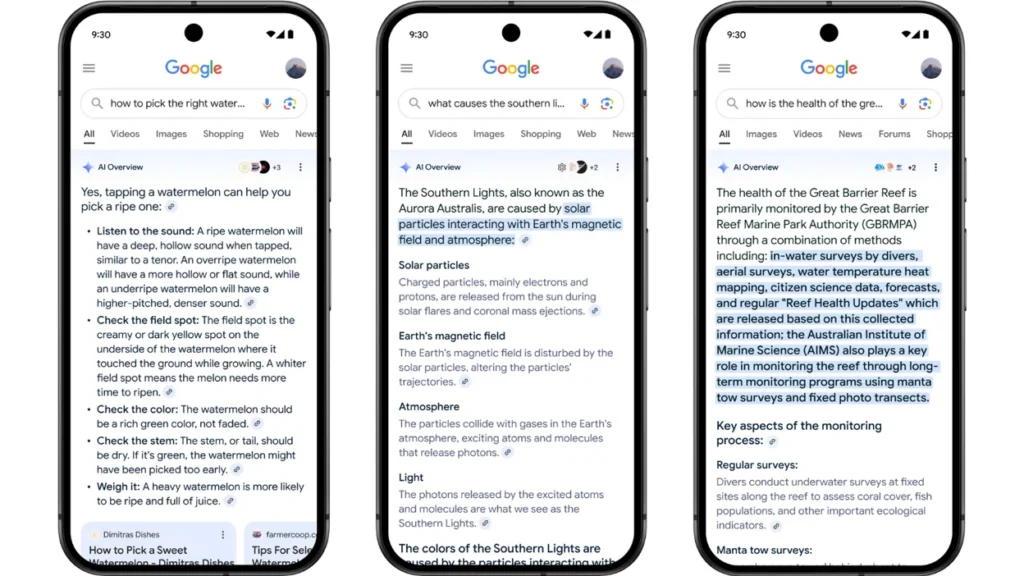
Google now answers before anyone clicks. Sixty percent of searches end on the results page. AI Overviews have cut organic CTR by 61%. This is not a trend. It is the new operating reality — and most SEO playbooks are still solving the wrong problem.
TL;DR
What follows is not another listicle of “quick wins.” It is a structured analysis of what broke, why it broke, how to measure the damage, and what the functional replacement strategy looks like — with real data and clear decision models attached to every claim.
Should You Even Rethink Your SEO Strategy?
| Your Situation | Verdict | What to Do |
|---|---|---|
| Traffic stable or growing despite algorithm updates | Monitor | Add citation tracking. Do not overhaul what works. |
| Rankings unchanged but CTR declining month on month | Act Now | Classic Great Decoupling signature. Start AEO layer immediately. |
| Heavy reliance on informational / how-to content | High Risk | These query types are most AI Overview-targeted. Restructure or diversify. |
| B2B brand with complex, purchase-intent queries | Opportunity | Deep buying-stage content resists AI summarisation. Double down on it. |
| Local services (legal, medical, trades) | Resilient | Users still need to contact providers. Traditional local SEO remains core. |
| News / publisher site | Critical | Sector-wide structural loss. Revenue model rethink required alongside SEO. |
The Mechanism: How Google Stole the Click
Zero-click search is not a Google mistake. It is a deliberate, commercially rational architectural choice. Every answer delivered on the results page is a reason for a user to stay inside Google’s property — where Google serves ads, collects behavioural data, and controls the next query.
The infrastructure that enables this has been layered in methodically since 2016: Knowledge Panels, Featured Snippets, People Also Ask, Local Packs, Shopping carousels, and — since mid-2024 — AI Overviews (formerly Search Generative Experience). Each layer took more answers off the web and kept them on Google.
The acceleration in 2024–25 was not gradual. AI Overviews grew from appearing on 3.93% of queries in January 2025 to 27.43% by November 2025 — nearly sevenfold in ten months. By February 2026, BrightEdge documented AI Overviews triggering on 48% of all tracked queries. The direction is not ambiguous.
What is critically underappreciated is that this affects queries without AI Overviews too. Seer Interactive’s data shows even non-AIO queries lost 41% of their click-through rate year-on-year. The expectation of an instant on-page answer has changed user behaviour at a structural level — not just when AI intervenes, but as a general disposition toward search results.
The Great Decoupling — Impressions Up, Traffic Down
“At one of my last jobs we lost 50% of our traffic despite our average position going up by two positions. Google is keeping traffic for themselves.”
— SEO practitioner quoted in Onely industry survey, 2025
The Great Decoupling is the name for a phenomenon that is now nearly universal in Search Console data: impressions climbing while clicks fall. One documented analysis showed impressions rising 49% year-on-year while CTR declined 30% across the same period. Your content is being seen — sometimes more than ever. It is simply not being clicked.
This matters strategically because traditional SEO has no answer for it. Getting to position one, earning a higher CTR, building more links — none of these mechanics address a SERP architecture that answers the question before the user reaches your blue link.
The worst-case examples are instructive
HubSpot — widely regarded as one of the most sophisticated content marketing operations in the world — fell from approximately 13.5 million monthly organic visits in November 2024 to under 6 million by early 2025. A 55% collapse in under four months, at a company that did everything the traditional SEO playbook demands. Its CEO publicly acknowledged that AI Overviews were delivering answers that previously required a click to HubSpot.
The pattern held at scale: Washington Post lost 40% of traffic, NBC News 42%, Mail Online 44%. Wikipedia — the most cited source in AI Overviews with over 1.1 million mentions — still saw an 8% decline in human pageviews year-on-year. Being cited heavily does not automatically translate to equivalent traffic. But the brands that are not being cited are faring much worse.
What Specifically Died (and What Didn’t)
Broad declarations that “SEO is dead” are lazy and wrong. The more honest framing is that specific types of SEO have become materially less valuable, while others have become more important than ever. This distinction determines budget allocation, team structure, and content strategy.
| SEO Activity | Status (2025) | Reason |
|---|---|---|
| Informational “what is / how to” content targeting top-of-funnel keywords | Dying | AI Overviews answer these directly. CTR from position 1 below 3%. |
| Chasing featured snippet position for definitional queries | Largely Dead | AI Overview has replaced the featured snippet as the primary answer surface. |
| Thin cluster content built purely for ranking velocity | Dying | AI synthesises and provides the overview. Thin content gets cited or ignored, never clicked. |
| Deep expertise content, original research, proprietary data | Growing | This is what AI cites. Domain authority is the top predictor of AIO citation (SE Ranking, 2.3M pages study). |
| Technical SEO (indexability, Core Web Vitals, structured data) | Essential | Google uses the same eligibility signals for AIO as for ranking. Foundation still matters. |
| Branded search and product-intent content | Resilient | Users intent on a specific brand or product still click through. Google’s AI doesn’t replace brand consideration. |
| Conversion-stage, comparison, and review content | Shifting | Partially vulnerable. Human nuance and specific use-case detail still drives clicks at bottom of funnel. |
The New Model: From Rankings to Citations
The emerging practice has several names — Answer Engine Optimisation (AEO), Generative Engine Optimisation (GEO), AI Visibility Optimisation. The naming debate is real but secondary to the underlying shift in goal: you are no longer competing exclusively for a ranked position. You are competing to be the source that the AI references when it builds its answer.
This changes almost everything about how content gets written, structured, and measured.
Before writing any piece of content in 2025, run it through this filter:
- Is this query type AI-vulnerable? Definitional, how-to, comparison overviews → assume AI will answer it. Write for citation, not for the click you used to expect.
- Can you provide something AI cannot synthesise? Proprietary data, first-hand experience, original research, quantified case studies → write these. They become primary sources for AI systems.
- Is the content structurally extractable? AI systems prefer: clear H2/H3 hierarchy, concise answer-first paragraphs, schema markup, defined entities. Write for machine comprehension, not just human readability.
- Does the brand entity signal authority on this topic? AI citation correlates with domain authority and topical depth. Thin coverage of a topic gets ignored; comprehensive coverage gets cited.
- What is the post-citation conversion path? A citation in an AI Overview drives some users directly to your site. That landing experience needs to justify the journey. Optimise conversion, not just traffic volume.
The metrics that now matter
If you are still measuring SEO success exclusively through organic sessions and keyword rankings, you are flying blind. The full picture in 2025 requires tracking:
- AI Share of Voice — how often your brand is mentioned in AI-generated answers across Google, ChatGPT, Perplexity, and Copilot for target query clusters.
- Citation frequency and accuracy — are AI systems citing you correctly? Wrong entity associations damage brand reputation invisibly.
- SERP Presence Score — the proportion of target SERPs where your brand appears in any surface: organic, AIO citation, People Also Ask, Featured Snippet, or Knowledge Panel.
- Direct traffic from AI halo effect — brands cited in AI Overviews see 91% higher paid CTR and measurable uplift in direct sessions. Segment this out.
- Traditional organic as a baseline — it still matters. The floor has dropped, not collapsed entirely.
How This Actually Works Together
Most articles on this topic describe AEO or GEO as a separate “layer” to add on top of existing SEO. That framing creates siloed workflows that break under execution. The more accurate model is an integrated system where each component feeds the next.
Clean indexability, Core Web Vitals, structured data (JSON-LD for FAQPage, HowTo, Article, Organization schemas), and entity disambiguation. Google uses identical eligibility signals for AI Overviews as for organic ranking. Integration type: native — this is table stakes, not optional.
Separate your keyword universe into: (A) AI-vulnerable informational queries, (B) commercial/comparison queries, (C) branded/navigational queries, (D) local/transactional queries. Apply different strategies to each. Do not treat all content the same. Integration type: manual — requires human judgment on search intent.
For Type A queries (informational), rewrite to answer-first structure: concise, direct answer in the first 40–60 words, followed by depth. Use Q&A format. Include authoritative citations within the content itself — AI systems are more likely to cite content that itself cites credible sources. Integration type: semi-automated with editorial oversight.
Stop spreading thin content across hundreds of topics. AI citation correlates with topical depth and domain authority. Choose 3–5 core topic clusters where you can build genuine comprehensive coverage. Link between them. Earn external links to pillar content. Depth of coverage on fewer topics outperforms breadth across many.
Google AI Overviews, Perplexity, ChatGPT, and Microsoft Copilot each have different citation patterns. Perplexity rewards recency and outbound citations. ChatGPT surfaces heavily within its training data — meaning older, well-cited content has an advantage there. Build presence across platforms, not just Google.
Track AI Share of Voice weekly. When a competitor is cited instead of you, analyse their content structure, authority signals, and schema. Update your content. This is now an ongoing discipline, not a quarterly audit. Friction point: there is no single tool that tracks all AI platforms simultaneously. Plan for a dashboard that aggregates multiple sources.
The 80% Solution Stack
You do not need a 20-tool infrastructure. In many workflows, the following combination covers the essential operational requirements of zero-click-era SEO:
Tool landscape evolving rapidly. Verify current pricing and features at vendor sites before committing budgets.
Limitations and Honest Trade-offs
This shift is not without genuine difficulties, and most guides in this space understate them significantly.
The measurement problem is not solved
As of June 2025, Google Search Console includes AI Mode and AI Overview clicks under the standard “Web” search type — but does not allow filtering them separately. You cannot yet cleanly attribute traffic to AI citations versus traditional organic results within native Google tooling. Third-party platforms fill parts of this gap, but it remains an imprecise measurement environment.
Being cited does not equal being visited
Wikipedia is cited in over 1.1 million AI Overview responses and still saw an 8% decline in human page views. Citation builds brand awareness and authority signals — it does not automatically generate proportional traffic. Businesses that need click-through volume to survive financially cannot simply replace that with citation metrics.
The strategy favours incumbents
Domain authority is the top predictor of AI citation. This advantages large, established sites over newer competitors regardless of content quality. The barrier to entry for visibility in AI-mediated search is arguably higher than it was for traditional SEO. Smaller and newer brands need to find niche authority clusters rather than competing directly against category leaders.
The landscape is still unstable
Google’s AI Overview coverage swung from 3.93% of queries to 27.43% in ten months, then various rollbacks and recalibrations occurred. Perplexity, ChatGPT, and Copilot each surface content differently. Any specific tactical recommendation today carries a shorter shelf life than SEO guidance did in 2018. Principles (authority, depth, structure) are more durable than specific tactics.
FAQ
Final Thoughts
The honest, uncomfortable truth is this: for a large category of content — the generic, informational, “explain this thing” material that made up the core of many content marketing programmes — the value has not shifted. It has largely evaporated. Google has built a machine that serves that content back to users at the query layer, without sending them to the sites that created it. That model is not reversing.
What remains — and what the data consistently confirms — is that depth, authority, and genuine expertise are being rewarded more, not less. The sites gaining ground in 2025 are not gaming a new algorithm. They are doing things that are hard to commoditise: publishing original research, building real topical authority, producing content that a generative AI cannot synthesise because it requires actual experience or proprietary data.
The practical trade-off every team faces is this: you cannot have both high volume and high depth with the same resources. The zero-click era forces a genuine strategic choice — broader, thinner coverage that fuels an AI’s answer but drives no traffic, or narrower, deeper coverage that earns citations, direct traffic, and bottom-of-funnel conversions from users who already trust you before they arrive.
Most organisations that are struggling right now made the wrong bet without realising there was a bet being made. The ones succeeding made it deliberately.
Primary Sources
- Seer Interactive — AIO Impact on Google CTR: September 2025 Update
- Onely — Zero-Click Search Is Evolving Into Zero-Search Discovery (2025)
- The Digital Bloom — 2025 Organic Traffic Crisis: Zero-Click & AI Impact Report
Secondary Sources
Related Articles on ContentEvaluator.online
Last updated: May 2026 · ContentEvaluator.online
https://www.contentevaluator.online/2026/06/01/zero-click-content-strategy/
https://www.contentevaluator.online/2026/06/04/zero-click-content-strategy-2026/
https://www.contentevaluator.online/2026/06/16/zero-click-seo-tactics/
https://www.contentevaluator.online/2026/06/26/optimizing-content/
https://www.contentevaluator.online/2026/06/13/traffic-with-a-zero-click-content-strategy/