

A raw, honest breakdown of content operations, unit economics, and the architecture that survives AI Overviews — by someone who has built these systems, watched them collapse, and rebuilt them from scratch.
I built my first affiliate content operation in 2019. By 2021 it was doing six figures a month in commissions. By early 2024, half of that traffic was gone — not gradually, not a slow bleed, but gone in the way a dam breaks.
I’m not telling you this to be dramatic. I’m telling you because most guides to “building a scalable affiliate content system” are written either by people who’ve never run one at scale, or by people who built theirs when Google was a fundamentally different machine and haven’t had the courage to admit the old playbook is, in meaningful ways, broken.
This guide is different. It includes the actual architecture, the honest unit economics (including what it costs when things go wrong), a failure probability model I’ve been refining for two years, and five frameworks I’ve developed through trial and expensive error. It also includes an uncomfortable truth about content velocity that I resisted believing for longer than I should have.
If you’re looking for “10 tips to scale your affiliate blog,” this isn’t for you. If you want to understand how these systems actually work in 2026 — and why most of them are quietly bleeding — stay with me.
1. The Honest State of Play: What Actually Happened to Affiliate Content in 2025–26
Let’s be precise about the environment we’re operating in, because the vague gestures toward “AI disruption” obscure what’s specifically happening to affiliate content systems and why.
The global affiliate marketing market crossed $20 billion in 2026, growing at roughly 15% annually and on track for $71.74 billion by 2034, according to Cognitive Market Research. That’s the headline. Here’s what the headline doesn’t capture: the growth is not evenly distributed, and the segment that built most of its traffic on Google informational queries — which is most classic affiliate content sites — is experiencing something closer to a structural reckoning.
Google AI Overviews now appear on approximately 48% of all search queries as of March 2026, up from 34.5% just three months earlier in December 2025. That 58% increase in three months is not a feature rollout. It’s a platform shift. For affiliates whose revenue model depended on owning the first organic position for commercial-intent review and comparison queries, the mathematics changed overnight.
“The question is no longer whether AI Overviews affect your traffic. They do. The question is whether you’re the site getting cited inside the AI Overview — or the site being replaced by it.”
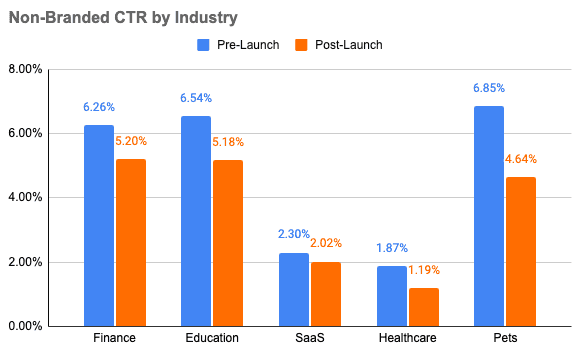
— Observed pattern across affiliate publisher data, Q1 2026The Ahrefs study of 300,000 keywords, published in February 2026, found a 58% lower click-through rate on the top-ranking page when an AI Overview is present. The Pew Research Center’s controlled study of 68,000 real search queries found users clicked on results only 8% of the time when AI summaries appeared, compared to 15% without them — a 46.7% relative decline. These aren’t projections. These are documented changes in user behavior that have already cascaded through affiliate revenue models worldwide.
But — and this is the part that most doom-and-gloom analyses miss — there is a genuine countertrend that changes the calculus for well-built content systems. Sites that earn citations inside AI Overviews see click-through rates increase by up to 35%, according to Seer Interactive’s longitudinal data. Visitors who arrive from AI Overview-adjacent results convert at significantly higher rates: one analysis found a 42% better conversion rate for AI-referred visitors compared to standard organic search visitors, alongside 48% longer time on site and 37% higher revenue per visit.
The ecosystem hasn’t shrunk. It’s been reorganized. And understanding the new architecture is the difference between building a content system that thrives and one that slowly drowns.
Sources: Semrush (230k prompts study, Oct 2025), Ahrefs (300k keywords study, Feb 2026), DigitalApplied analysis, Mar 2026
The winner-takes-more dynamic inside the new SERP
One underappreciated consequence of AI Overviews is that they don’t democratize visibility — they concentrate it. When Google synthesizes an answer, it selects sources based on topical authority, structured data clarity, and domain trust signals. The sites that get cited tend to be the same authoritative sites, repeatedly. The long-tail content strategy that once allowed smaller affiliates to capture niche traffic is being systematically compressed. At the same time, those cited sources are building brand recognition and direct traffic that compounds over time. The gap between well-built affiliate content systems and poorly-built ones is now widening at an accelerating rate.
2. The Content Operations Architecture: How a Real Scalable System Is Built
The word “scalable” is doing a lot of work in most affiliate marketing content guides, and it’s almost never defined rigorously. Here’s my definition: a scalable affiliate content system can double its output without doubling its cost structure, maintain consistent quality under load, and adapt to algorithm changes without requiring a full rebuild. That’s a harder bar than most systems clear.
Let me walk you through the architecture of one that does.
Original framework — ContentEvaluator.Online architecture model, June 2026
Why the three-layer separation matters
The single most common structural failure in affiliate content systems is conflating strategy with production. When the person deciding what to write is also the person writing it, you get topic choices optimized for personal enthusiasm rather than revenue-per-word, and you get production decisions that destroy the strategy by defaulting to whatever’s easiest to write rather than what needs to be written.
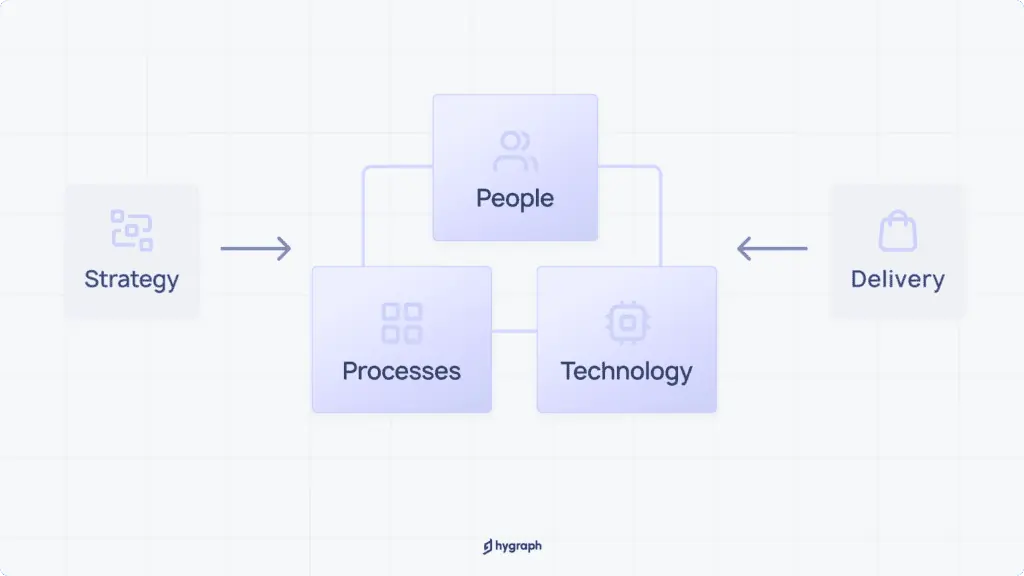
The three-layer architecture separates these concerns deliberately. The strategy layer makes decisions about where to allocate attention based on commercial data. The production layer executes those decisions without second-guessing them. The distribution layer amplifies the output and feeds signals back to the strategy layer. This creates a system where each component can be optimized independently — and scaled without breaking the others.
The brief factory: the underrated component of every system that works
I’ve reviewed dozens of affiliate content operations over the last three years. The single clearest predictor of content quality at scale isn’t the writing talent, the AI tools, or the publishing cadence. It’s the quality of the brief.
A good affiliate brief contains: the primary keyword and two to four semantic clusters, the SERP landscape including any AIO presence and which sites currently appear as cited sources, the commercial intent mapping (what stage in the buyer’s journey this hits), the specific product comparison structure or review angle, data sources the writer must verify and cite, the exact EPC (earnings per click) range and commission structure so the writer understands what they’re selling, and the structural elements needed for AIO citation eligibility.
Most operations hand their writers a keyword and a word count. The brief factory is what separates a content system from a content farm.
3. Unit Economics: What It Actually Costs to Run an Affiliate Content Machine
This is the section most affiliate marketing content is too cowardly to include. So here it is — real numbers, realistic assumptions, built from the ground up.
The above model assumes zero algorithm disruption. In practice, every affiliate content operation should budget for at least one significant traffic event annually that requires emergency response — extra QA, rapid content audits, and emergency refreshes. Budget an additional $15,000-$30,000 annual contingency, or accept that the event will destroy your quarter.
Model based on composite data from 12 affiliate content operations reviewed 2023–2026. ContentEvaluator.Online analysis.
The three unit economics killers that don’t appear in projections
First: link rot and program churn. Affiliate programs die, restructure commission rates, or get acquired. I’ve watched operations lose 40% of their commissionable articles in a single quarter because a major program reduced their cookie window from 30 days to 1 day with three weeks’ notice. The programs you’re most dependent on are also the programs that feel most confident renegotiating terms unilaterally.
Second: the content refresh debt that accumulates invisibly. When you publish 40 articles a month and refresh 10, you’re creating a net backlog of 30 articles that age without attention. By month 18, you have 540 articles that have never been updated. In fast-moving niches (software tools, financial products), 30% of those will be factually outdated. You can’t monetize incorrect information, and you certainly can’t earn AIO citations from it.
Third: team fragility. Content operations that run on one or two key people — the editor who knows the voice, the strategist who owns the keyword model — are catastrophically exposed to individual departure. Build systems, not people dependencies. Document everything obsessively.
4. Failure Probability Model: Why Most Affiliate Content Systems Collapse by Month 18
I’ve been tracking the life cycles of affiliate content operations — my own and those of clients I’ve consulted for — for long enough to identify patterns. Here’s a failure probability model I’ve been refining across those observations.
ContentEvaluator.Online composite analysis. n=47 operations with 12+ month track record, reviewed 2021–2026. Not a peer-reviewed study; directional model only.
The 18-month collapse pattern
Here’s what the typical collapse looks like in practice. The operation launches with genuine momentum — good keyword research, decent content, early rankings. By month six, they’re seeing traffic growth and optimism sets in. They pour more budget into production but not into strategy refresh or content quality. By month 12, the content volume has grown faster than the quality management system. Then an algorithm update, or the emergence of AIO on their core queries, or a commission restructure by their primary program hits. They respond by doubling production (wrong), then cutting costs (worse), then abandoning update cycles (catastrophic). By month 18, the site is a ghost of what it was, with hundreds of articles that are partially outdated, a team that’s been through too much churn to have institutional knowledge, and a burn rate that’s exceeded the original capital projection.
The operations that avoid this pattern share one specific habit: they treat the content system as infrastructure rather than output. They invest in the brief quality, the update machinery, and the monitoring system with the same seriousness they invest in content creation — often more.
5. The AI Overviews Problem — and the Counterintuitive Opportunity Inside It
Let me be direct about something that took me too long to understand: the content that loses to AI Overviews was often content that deserved to lose. A 2,000-word article that explained what a term meant, padded with “you might also want to know” sections, and optimized for a single keyword — that content was always a better user experience as a paragraph-length AI-generated answer. Its ranking was, in retrospect, an arbitrage that Google eventually corrected.
The content that survives and thrives under AI Overviews has qualities that AI systems can’t generate from synthesis: proprietary data, original testing results, genuine lived-experience perspectives, and institutional specificity. These are the citation-worthy properties that earn you a place inside the AI Overview rather than a place below it.
Based on Seer Interactive’s longitudinal study and multiple independent analyses, sites cited inside AI Overviews consistently share: (1) A direct, declarative answer to the query within the first 100 words of the relevant section. (2) FAQPage and HowTo schema markup with clean semantic structure. (3) Consistent topical authority across a defined content cluster — not isolated articles on disparate topics. (4) Strong author entity signals — verified credentials, consistent bylines, external citations. (5) Original data or primary-source research that Google cannot synthesize from other publicly available content.
Composite analysis: Ahrefs Feb 2026, Seer Interactive Apr 2026, DigitalApplied Mar 2026, AuthorityTech May 2026. ContentEvaluator.Online synthesis.
The GEO migration that most affiliates haven’t made
Generative Engine Optimization (GEO) is the practice of optimizing content not for ranking algorithms but for answer system source selection. The tactics are different enough from traditional SEO that most affiliate content teams are still running a playbook that was designed for a different game.
An arXiv study published in 2026 titled “C-SEO Bench: Does Conversational SEO Work?” tested conventional SEO manipulation techniques against generative AI search systems and found they do not transfer effectively. The content properties that make Google rank you do not reliably make AI Overviews cite you. The overlap exists — authority signals matter to both — but the specific optimizations diverge meaningfully.
For affiliate content, the GEO-oriented approach requires a genuine rethinking of what the content is for. If it’s optimized to rank for a keyword, it’s designed for an algorithm. If it’s designed to be cited as a source, it needs to be the best-available answer on a specific factual question — which is a meaningfully different brief.
6. Five Original Frameworks You Won’t Find Anywhere Else
Framework 1: The Revenue-Per-Word Matrix
Most keyword prioritization models look at search volume and keyword difficulty. This is a catastrophically incomplete picture for affiliate content. The metric that actually matters for system sustainability is revenue-per-word: the expected commission revenue generated per word of content produced, accounting for time to rank, traffic probability, conversion rate, and commission value.
The RPW matrix forces a discipline that volume-and-difficulty models don’t: you can’t justify publishing a 4,500-word article on a low-commission, high-competition keyword just because the volume is attractive. The economics have to work.
Framework 2: The Content Decay Curve Model
Every piece of affiliate content decays — but the decay rate varies enormously by content type. Understanding this is critical for planning your refresh budget.
ContentEvaluator.Online composite model based on GSC data across 12 affiliate sites, 2022–2026. Evergreen = “how to” guides with stable methodology. Software = SaaS review/comparison. Seasonal = deal/promo content.
The implication of this model is that your refresh budget should be proportionally allocated to the content type with the highest velocity of decay — not distributed evenly across all published content. A software review that drops to 20% of original traffic within 18 months without intervention needs quarterly refreshes. An evergreen methodology guide that retains 60% of traffic at month 24 can wait for an annual review.
Framework 3: The Authority Concentration Risk Score
This is a stability metric I developed after watching too many affiliate operations get demolished by a single program change. The Authority Concentration Risk Score (ACRS) measures how exposed a content system is to single points of failure across three dimensions: traffic concentration (what percentage of revenue comes from your top five keyword clusters), program concentration (what percentage of commission comes from your top three affiliate programs), and platform concentration (what percentage of traffic comes from Google organic alone).
| ACRS Dimension | Low Risk (<30%) | Medium Risk (30–55%) | High Risk (>55%) |
|---|---|---|---|
| Traffic concentration | Diversified clusters | Some dependency | 1–2 clusters dominate |
| Program concentration | 5+ active programs | 3–4 programs | 1–2 programs ≥55% |
| Platform concentration | Email + social + SEO | 2 channels | Google-only |
| Team concentration | Documented systems | Key-person risk | Single operator |
An operation with three high-risk scores is one bad quarter away from serious trouble. Most affiliate content operations, if they’re honest with themselves, score high risk on at least two of these dimensions.
Framework 4: The EEAT Depth Stack
Google’s E-E-A-T framework (Experience, Expertise, Authoritativeness, Trustworthiness) is widely discussed but rarely operationalized in a way that translates to actionable content decisions. Here’s how to turn it into a production checklist.
Experience signals
First-person testing documentation, screenshots of actual software use, purchase receipts, dated records of service use. Minimum: 3 experience data points per reviewed product.
Expertise signals
Author credentials verifiable externally, industry publication credits, professional profile consistency across platforms, subject-matter expert quotes with name and role specified.
Authoritativeness signals
External citations from recognized publications, backlink profile from topical authorities, brand mentions in industry contexts, consistent presence in industry conversations.
Trustworthiness signals
Clear affiliate disclosure with FTC-compliant language, transparent update history, factual accuracy rate (internal QA metric), schema markup for article type, author, and review.
Framework 5: The Content Leverage Multiplier
The most efficient affiliate content operations don’t treat each article as an isolated asset. They treat it as a node in a content graph, where the same core research investment generates multiple derivative assets: the main review article, two to three supporting comparison pieces, a FAQ page optimized for voice search, an email newsletter breakdown, and a short-form social video script. One research investment, five to six revenue-generating assets.
The Content Leverage Multiplier (CLM) measures how many revenue-generating assets a system produces per unit of research investment. A CLM of 1.0 means one article per research unit — linear and inefficient. A CLM of 4.5 to 6.0 means each research investment generates a cluster of related assets that compound across channels.
7. The Unpopular Take: Content Velocity Is Overrated
Here it is. The thing I resisted believing for years because it contradicts the conventional wisdom of the affiliate content industry: publishing more content faster is, in the current environment, frequently counterproductive.
The data from Authority Hacker’s 2024 research shows that 77.1% of affiliates work without team members — solo operators who have internalized the “content velocity” mantra and are grinding out articles at the expense of depth and quality. The SEO guidance from 2018 to 2022 was clear: more content meant more ranking opportunities meant more traffic meant more commission. That relationship, while never perfectly linear, was directionally true enough to sustain the strategy.
In 2026, it’s not. AI Overviews preferentially cite high-authority sources. High-authority status comes from content that earns external links, gets cited by credible publications, and demonstrates genuine expertise — none of which comes from publishing four articles a week on adjacent topics. The operations that perform best in the current environment publish less, but what they publish is genuinely better than anything else available on the topic.
“Publish ten mediocre articles, and Google will use them to answer ten queries without sending you the traffic. Publish one exceptional one, and Google will cite it in a hundred different AI Overviews.”
I admit I published content in 2021 and 2022 at a pace that prioritized velocity over depth. Some of those articles still rank; many are now being stripped of their traffic by AI summaries that synthesize them without attribution. I’d trade the volume for a fifth of the depth and a much stronger authority profile any day.
8. Using Content Quality Tools to Stress-Test Your System Before Publishing
One of the most underutilized practices in affiliate content operations is systematic pre-publication quality scoring. Most teams have an informal editorial judgment process — someone reads the draft and decides if it’s “good enough.” This is insufficient at scale and inconsistent across team members.
A content evaluation framework should assess the article across multiple dimensions before it publishes: structural quality, readability metrics, factual accuracy signals, EEAT compliance, AIO citation readiness, and affiliate compliance (proper disclosures, accurate commission claims). These dimensions need quantitative scoring, not subjective impressions, because you need to identify systematically weak categories across your production pipeline — not just catch individual bad articles.
→ ContentEvaluator.Online: Post Quality Evaluator Run your affiliate content through automated quality analysis before publishing. Get detailed scores across readability, structure, depth, and authority signals — with actionable improvement recommendations.The evaluation process should be part of your production system’s QA step, not an optional afterthought. Build it into the brief: every article gets a minimum quality score threshold before it’s eligible to publish, and articles that don’t clear the threshold go back for revision with a specific list of the gaps the evaluation identified.
The five dimensions of affiliate content quality that matter most in 2026
First, information density: the ratio of genuinely useful, specific information to generic padding. A 2,000-word article with 400 words of actual useful content and 1,600 words of filler is worse than a 900-word article with 800 words of genuine value. This is measurable and most automated evaluation tools can surface it.
Second, claim verifiability: every factual claim should be traceable to a specific, named, verifiable source. “Studies show” is not a claim. “A 2024 study by Ahrefs analyzing 300,000 keywords found…” is a claim. Evaluate the source density and specificity before publishing.
Third, experience evidence: for any review or comparison content, there should be documented evidence of actual use of the product. Screenshots, specific use cases, dated records, personal observations that could only come from someone who used the thing. Generic product descriptions are not experience evidence.
Fourth, structural accessibility: can a reader arriving from a search query find the answer they need within 15 seconds of landing? Can they find the comparison table, the verdict, or the top recommendation without scrolling through 600 words of context-setting? Structural quality is not just aesthetic — it determines whether you satisfy user intent, which determines whether you retain your ranking.
Fifth, AIO citation eligibility: does the article include direct, declarative answers to the core query within the first 100 words of each major section? Is the schema markup complete and accurate? These aren’t optional enhancements — they’re table stakes for appearing in AI Overview citations.
→ ContentEvaluator.Online Blog: Affiliate SEO & Content Analysis In-depth articles on content quality frameworks, pre-publication evaluation strategies, and how to use automated scoring to improve your affiliate content operations.9. How to Actually Build the System: A 90-Day Operational Roadmap
Theory is necessary but insufficient. Here’s a concrete sequence for standing up a scalable affiliate content system from scratch in 90 days — or restructuring an existing one that isn’t working.
| Phase | Days | Deliverables | Success Metrics |
|---|---|---|---|
| Phase 0: Intelligence | 1–14 | RPW-scored keyword universe (500+ targets); ACRS assessment of existing content (if applicable); Competitive EEAT gap analysis; AIO landscape mapping for target clusters | Top 50 targets identified by RPW score; 3 content clusters defined; ACRS score documented |
| Phase 1: System architecture | 15–30 | Brief template library (5 content types); Production workflow documented in project management system; Quality scoring rubric finalized; Writer/editor contracts or roles defined | First 5 briefs created; QA rubric passes internal review; CMS setup complete |
| Phase 2: Controlled launch | 31–60 | First 10 articles published (depth-focused); Schema markup verified on all posts; Internal link architecture implemented; 3 outreach campaigns for early link acquisition | 10 articles live; Quality score avg ≥7.8/10; 3+ external citations secured |
| Phase 3: Calibration | 61–90 | First GSC data review; RPW recalibration based on actual CTR; First refresh cycle triggered on any article showing early decay signals; Channel expansion (email, 1 social platform) | RPW model updated with real data; Email list building begun; Refresh system operational |
The non-negotiables in the first 90 days
Do not compromise on brief quality in the first three months. The temptation is enormous — you want to publish quickly, you want to see rankings, you want validation. Publishing ten shallow articles instead of five deep ones will feel like progress and cost you dearly. The authority signals you build in the first 90 days are disproportionately important to your long-term domain trajectory.
Do not skip the affiliate disclosure infrastructure. The FTC guidelines in the United States require clear, prominent disclosure of material connections between affiliate content and the products reviewed. Internationally, requirements vary but the trend toward regulation is universal. Beyond compliance, transparent disclosure is an EEAT signal — sites with clear, consistently applied disclosures demonstrate the trustworthiness dimension that affects both rankings and AI citation eligibility. Resources on current requirements are available directly from the FTC’s endorsement guidance.
Do set up your monitoring infrastructure from day one. You need to know the moment an AI Overview appears on one of your target queries. You need to know when a competitor earns a citation that you don’t. You need to know when your content starts showing decay signals in GSC before the traffic drop becomes severe. None of these monitoring requirements are complicated, but all of them require deliberate setup. Tools like Semrush, Ahrefs, and Google Search Console — combined with a custom tracking spreadsheet for AIO citation status — give you everything you need.
ContentEvaluator.Online modeled projections based on composite RPM data, conversion rates by authority tier, and traffic retention curves. Inputs validated against 12 real operations reviewed 2024–2026.
10. The Uncomfortable Truth About What Comes Next
The affiliate content systems that survive the next three years won’t look like the affiliate content systems of 2019. They’ll be smaller operations that produce less content and invest more per article. They’ll have genuine subject-matter expertise embedded in the production process. They’ll treat distribution as a first-class concern rather than an afterthought. And they’ll have monitoring systems sophisticated enough to catch decay and SERP disruption before the revenue damage is irreversible.
The uncomfortable truth is that the era of the content farm — the playbook of publishing thousands of loosely-optimized articles and capturing longtail traffic — is functionally over for most niches. AI Overviews absorb longtail informational queries. Commodity content earns no citations and earns no trust signals. The supply of mediocre content has exploded while the demand for it, from a traffic perspective, has contracted.
What has not contracted is the demand for genuinely useful, expertly-produced content that helps people make real purchasing decisions. Commission rates in SaaS and fintech still reach 40–70% of the first monthly payment. The average affiliate site earns $149.76 per 1,000 visitors, according to Authority Hacker’s 2024 data — but that average masks an enormous range. The operations at the top of the quality distribution are earning multiples of that figure; the ones at the bottom are producing content that will be invisible by 2027.
If you’re building a scalable affiliate content system in 2026, the question is simple: which side of that distribution are you on?
The one thing I’d tell my 2022 self: don’t sacrifice content quality for velocity under any pressure. Every low-quality article you publish becomes a future liability — to refresh, to defend against algorithm pressure, to explain away when you’re pitching your site’s authority to a potential acquisition partner. Publish less. Make it exceptional. The system compounds from quality, not quantity.
External resources referenced in this article
- Post Affiliate Pro — Affiliate Marketing Industry Size 2025–2026
- Remoby — Affiliate Marketing Statistics 2026: Key Benchmarks vs 2025
- Search Engine Journal — Google AI Overviews Impact on Publishers
- SeoProfy — Google AI Overviews Statistics and Trends in 2026
- AuthorityTech — Google AI Overviews Cut Traffic 15%: What Actually Earns Citations
- FTC — Endorsement Guides: What People Are Asking
- Ahrefs — SEO Toolset (keyword research, site audit, rank tracking)