

https://www.contentevaluator.online/2026/06/26/optimizing-content/
https://www.contentevaluator.online/2026/04/04/the-4-types-of-content-evaluation/
https://www.contentevaluator.online/2026/06/13/traffic-with-a-zero-click-content-strategy/
https://www.contentevaluator.online/2026/04/19/build-an-seo-strategy/
https://www.contentevaluator.online/2026/07/06/seo-content-framework-for-affiliates/
https://www.contentevaluator.online/2026/05/26/ai-resistant-niches-strategy/
https://www.contentevaluator.online/2026/04/08/how-i-10xd-organic-traffic/
https://www.contentevaluator.online/2026/06/10/zero-click-searches/
https://www.contentevaluator.online/2026/06/04/zero-click-content-strategy-2026/
https://www.contentevaluator.online/2026/05/22/affiliate-seo-content-systems/
https://www.contentevaluator.online/2026/07/01/affiliate-seo/
Affiliate SEO · Deep Strategy · June 2026
Most affiliate strategies are built on a definition of “content” that Google has spent three years quietly destroying. Here’s what the wreckage taught me — and what actually works in a world where AI Overviews eat your clicks before you ever earn them.
In this article
- The Wrong Definition That Kills Most Affiliate Sites
- The 2026 Market Reality You Probably Haven’t Priced In
- The CARE Framework: A New Mental Model for Affiliate Content
- Unit Economics: What a Single Article Actually Has to Earn
- Content Architecture: The Cluster Nobody Teaches Correctly
- Commission Math by Niche: Which Verticals Make Sense
- Writing for the AI Era Without Surrendering to It
- The Uncomfortable Truth About “Passive” Income
- The Operational Stack for a Serious Affiliate Operation
- What Separates the Sites That Are Still Standing
The Wrong Definition That Kills Most Affiliate Sites
Affiliate content is not a review.
I know that sounds obvious. But read that sentence again, because the entire architecture of how most people build affiliate sites collapses the moment you take it seriously. When I started building content sites a few years ago, I treated “affiliate content” and “product review” as synonyms. I published hundreds of articles that were, structurally, just product spec sheets with a star rating bolted on. Traffic came in. Some commissions landed. Then came the Google helpful content updates, the AI Overviews rollout, and a very quiet disappearance of most of that revenue.
The correct definition — one I had to arrive at the hard way — is this: affiliate content is decision-support infrastructure. It exists to shorten the cognitive distance between a reader’s problem and the right solution, in a way that the product manufacturer’s own page cannot. If your article reads like a reworded press release with an affiliate link, you’re not creating decision-support infrastructure. You’re creating something Google’s AI can summarize in two sentences and render invisible.
This distinction isn’t academic. It determines every structural, editorial, and commercial choice you make downstream.
The core distinction
A product review describes what something does. Decision-support content resolves a specific comparison, constraint, or confusion the reader has that the product page won’t acknowledge. One can be summarized by AI. The other cannot — because the insight only exists because you did the work.
The 2026 Market Reality You Probably Haven’t Priced In
Before we get into strategy, let’s sit with some numbers that should change how you think about the opportunity — and the risk.
(Forrester)
(Ahrefs, March 2026)
(Pew Research, 68k queries)
(Whitehat SEO)
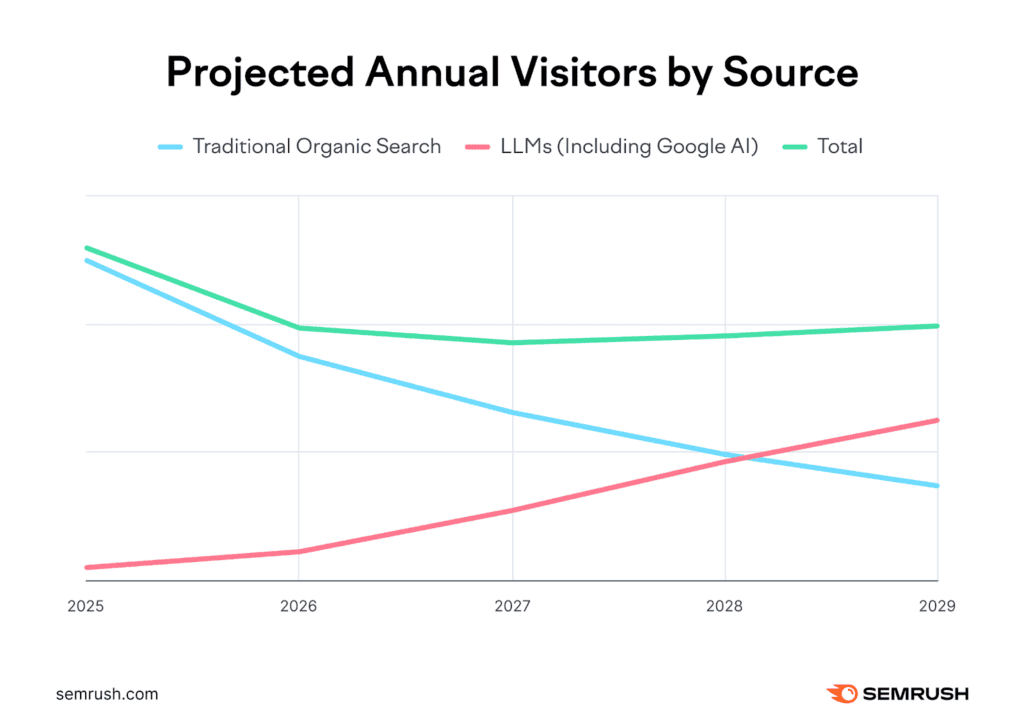
Let me be direct about what those four numbers mean together. AI Overviews now appear on roughly 48% of all Google queries, up from 6.49% in January 2025. That’s not a gradual shift — it’s a structural rewiring of how information gets delivered. The Pew Research Center’s controlled study of 68,000 real search queries found that users clicked results 8% of the time when an AI Overview was present versus 15% without one — a 46.7% relative decline. And the December 2025 core update hit affiliate sites harder than any other content category: 71% impacted, per Whitehat SEO’s analysis.
But here’s the nuance that most doom-and-gloom takes miss: visitors who click through from AI Overview-affected pages convert at dramatically higher rates than standard search visitors. Google has essentially moved itself up the funnel, qualifying intent before it ever sends you traffic. If you adapt to that dynamic, you get fewer but better visitors. If you don’t, you get nothing.
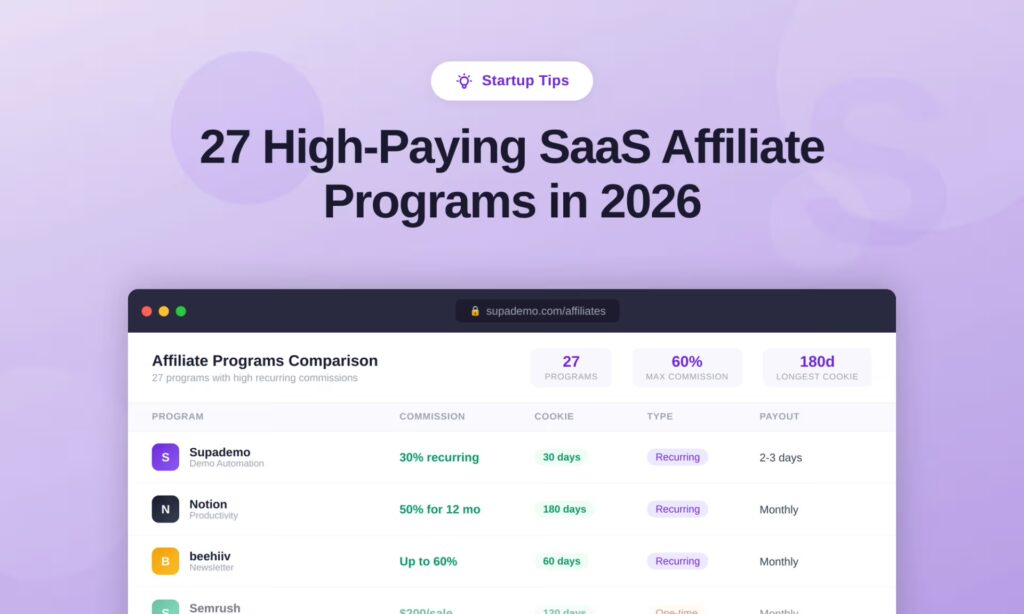
The channel is simultaneously growing and consolidating. Global affiliate spend reached $19.4 billion in 2026, up from $17.1 billion in 2025, tracking toward $22 billion by 2027. SaaS affiliate specifically — the best-structured model in the game — grew 34% year-over-year on PartnerStack-tracked programs versus 11% for e-commerce affiliate. The money is still there. It’s just getting concentrated in operators who understand what they’re actually building.
Fig. 1 — Google AI Overview CTR Impact by Position (2026)
Being cited inside an AI Overview delivers higher CTR than even a non-AIO position #1 — the new prize is citation, not ranking alone.
The CARE Framework: A New Mental Model for Affiliate Content
Every framework I’ve encountered for affiliate content planning optimizes for the same thing: keyword volume and commercial intent score. That’s fine as far as it goes, but it misses the dimension that determines whether a piece earns commissions at scale or just attracts visitors who bounce after 40 seconds.
After rebuilding my content evaluation process from scratch following the 2025 core updates, I arrived at a four-axis model I call CARE. It stands for Conversion Distance, Authority Fit, Replaceability, and Earning Ceiling. Each axis rates a content idea before you invest a word in it. Let me walk through what each means in practice.
C — Conversion Distance. How many clicks, decisions, and days sit between a reader arriving at this article and money changing hands? A “best project management software for remote teams” article has a conversion distance of roughly 1–3 days and 2–4 decisions. A “what is project management?” article has a conversion distance of potentially months. Low-distance content earns faster; high-distance content needs to do different work.
A — Authority Fit. Can you, specifically, produce something more credible than the top three results on this topic right now? Not “can you write it?” — can you add something that couldn’t exist without your direct experience, proprietary data, or access? If the answer is no, you’re competing purely on domain authority and link budget, which is a losing strategy for most operations.
R — Replaceability. How easily can an AI Overview render this content unnecessary? Anything whose full value can be expressed in 200 words loses. Articles where the insight only exists because you did the hands-on work — tested the product, ran the comparison, interviewed the user — can’t be fully replaced. Score this ruthlessly.
E — Earning Ceiling. What’s the maximum realistic commission this article can generate per 1,000 visits? (Use the unit economics model in Section 4 to calculate.) A topic that earns $18/1k visits needs 10× the traffic of one that earns $180/1k visits to produce the same income. This sounds obvious. Almost nobody runs this calculation before publishing.
CARE is intentionally a scoring system, not a checklist. Rate each axis 1–5. Total below 12? Rethink the topic before investing 20 hours of content production. Total above 16? That’s a priority piece. This prevents the most common and expensive mistake in affiliate content: building volume when you should be building depth.
I’ll be honest about where I went wrong here. Early in my content operation, I published dozens of articles with beautiful CARE scores on the Conversion Distance and Earning Ceiling axes but scored 1 on Replaceability. The content was technically good — comprehensive, well-structured, properly linked. Google’s AI ate it alive in 2025 because every insight I had written could be summarized in a paragraph. The lesson wasn’t “write longer.” It was “write things that can only exist because you did something other people haven’t.”
Fig. 2 — CARE Framework Scoring Matrix: Content Priority Decision Map
Plot every content idea here before writing. The bottom-right quadrant (high earning, low replaceability) is where commissions compound.
Unit Economics: What a Single Article Actually Has to Earn
Nobody teaches this. They teach keyword research, they teach E-E-A-T, they teach internal linking. Nobody sits down and says: here is what a specific article — not your whole site, not your category, this specific URL — needs to generate per 1,000 visitors to justify its existence in your content calendar.
Let me build the model out in full. The variables are: monthly organic traffic (T), affiliate click-through rate (CTR_a), merchant conversion rate (CR), average commission per sale (C_avg), and article production cost (P). The earning model for a single article over a 12-month horizon is:
Unit Economics Formula
Annual Revenue = T × 12 × CTR_a × CR × C_avg
Break-even Traffic Required = P ÷ (CTR_a × CR × C_avg) ÷ 12
Where: T = monthly organic sessions · CTR_a = affiliate link CTR (typically 2–8%) · CR = merchant conversion rate (1–5%) · C_avg = average commission per sale
Let’s run this for three real scenarios to show how dramatically niche choice and commission structure affect viability.
Fig. 3 — Unit Economics: Annual Revenue per Article by Niche (at 2,000 Monthly Visits)
Assumptions: 5–6% affiliate CTR for most content; CR from industry benchmarks (PartnerStack, Awin, Tapfiliate 2026 data). Recurring SaaS shows year 2 compounding when existing referrals continue paying commissions without new content investment.
The gap between an Amazon physical product article and a finance lead-gen article — at identical traffic levels — is a factor of 36×. This is the number nobody talks about when they say “pick a niche you’re passionate about.” Pick a niche you can be authoritative in. Then pick the one with the highest earning ceiling you can credibly serve. Passion matters, but it doesn’t pay hosting bills.
There’s another number in those calculations that deserves its own paragraph: the 24-hour cookie window on Amazon Associates. Amazon Associates still drives an estimated $4.2 billion in attributed sales — roughly 22% of the entire global affiliate channel — because Amazon’s conversion infrastructure is unmatched. But a 24-hour attribution window at 1–4% commission versus a 90-day window at 20–30% is a structural disadvantage that cannot be overcome with content quality alone. I build Amazon content for volume and brand-building. I build SaaS and finance content for income.
Content Architecture: The Cluster Nobody Teaches Correctly
Topical clusters have become the mandatory vocabulary of any SEO conversation. Everyone nods when you say “hub and spoke.” Very few people actually build them in a way that creates compounding affiliate income rather than just organized content.
The standard model is: pillar page on the broad topic → cluster posts on subtopics → internal links flowing up and down. That’s correct as far as it goes. The issue is that most affiliate operators use this structure but don’t align their commercial depth with where in the cluster they need it. They put their most conversion-focused content at the top of the cluster (too early in the reader’s journey) and their most informational content at the bottom (too late for monetization).
Here’s what I call the Inverted Funnel Cluster — a restructuring of the standard model that specifically serves affiliate income:
Layer 1 — The Educative Pillar (Top): A comprehensive, citation-worthy piece that ranks for broad informational terms and attracts links. Zero commercial intent. Maximum expertise signals. This page earns your domain the authority to rank the lower layers. Example: “How to choose project management software: what actually matters.” No affiliate links here — or minimal, tasteful ones. This page’s job is trust, not clicks.
Layer 2 — The Comparison Middle (Highest Priority for Production): Direct comparison and “vs.” pieces targeting readers who have already moved past awareness into evaluation. These have the highest conversion distance score (low distance = close to purchase). Example: “Asana vs Monday.com for agencies: 3 months with both.” Every insight should be irreplaceable. CARE scores here should be 16+.
Layer 3 — The Decision Bottom: Ultra-specific articles targeting readers one step from clicking “subscribe.” “Is [Tool X] worth it if you only have 3 people?” “What happens after your [Tool X] trial ends?” These convert at 2–3× the rate of comparison pieces because the reader’s question is essentially: confirm my decision. Shorter, more direct, more personal. Internal links flow UP from here to Layer 2.
Layer 4 — The Use-Case Satellites: Problem-specific articles that bring in readers at the awareness stage via long-tail problem queries. Internal links flow to Layer 2 (not Layer 1). Example: “Why is my project always late? 4 causes and one system that fixed it.” The content solves a real problem, mentions relevant tools naturally, and passes traffic toward the comparison layer.
The key insight here that most cluster models miss: the highest-commission content isn’t at the top of the cluster, it’s in Layer 2. The pillar earns authority for the cluster to rank. The satellites bring in traffic at scale. The decision-layer pieces convert. And the comparison middle is where the money lives — it captures readers who are already in buying mode, who have done their research, and who need an expert to confirm or sharpen their decision.
This structure also survives AI Overviews better than a flat review model. Informational pillar content can be summarized by AI — but your Layer 2 comparisons, grounded in hands-on testing and honest trade-offs, provide the specific, experiential information that AI systems cite rather than summarize.
Fig. 4 — The Inverted Funnel Cluster: Affiliate Content Architecture
Traffic enters at all layers. Layer 2 comparison content is the commercial core — build it first, before satellites. Internal links from satellites and Layer 3 funnel readers upward into evaluation mode, not downward into more education.
Commission Math by Niche: Which Verticals Actually Make Sense
Let me give you the unromantic version of niche selection — not the “follow your passion” version, not the “find low-competition keywords” version, but the version that starts with economics and works backward to content strategy.
Across the four largest affiliate networks, median e-commerce commissions held at roughly 8.4% of order value while SaaS recurring commissions reached 22.5% of first-year revenue in 2026. Finance lead-gen pays an average $52 flat bounty per qualified lead, and B2B services average $187 per qualified lead. These numbers from aggregated Awin, Impact, PartnerStack, and ShareASale data are the actual benchmark, not the curated success stories you see in affiliate marketing courses.
| Niche | Typical Commission | Cookie Duration | Avg. Conv. Rate | Est. EPC | Barrier |
|---|---|---|---|---|---|
| SaaS / Software | 20–30% recurring | 60–90 days | 2.0–3.5% | $1.80–$4.20 | Medium |
| Finance / Fintech | $50–$200 CPA | 30–60 days | 5–10% (leads) | $3.50–$12 | High (authority req.) |
| E-commerce / DTC | 8–15% per sale | 14–30 days | 1.5–3% | $0.60–$1.80 | Low–Medium |
| Amazon Associates | 1–4% (category-dep.) | 24 hours | 4–9% | $0.15–$0.70 | Low |
| Travel | 4.2% median | 30–60 days | 1–2% | $0.80–$2.40 | Medium (volatile) |
| B2B Services / Consulting | $187 avg/lead | 90+ days | 2–5% (leads) | $4.50–$14 | High (niche authority) |
| E-learning / Courses | 15–30% per sale | 30–60 days | 1–3% | $1.20–$3.50 | Medium |
Sources: Awin Power 100, PartnerStack 2026 data, Tapfiliate benchmarks (2,600+ programs), Affninja niche analysis 2026. EPC = estimated earnings per 100 clicks.
Two things jump out when you stare at this table long enough.
First, Amazon’s EPC — the actual earnings generated per click to a merchant — is 10–20× lower than SaaS or B2B services even when its conversion rate is higher. The 24-hour cookie and low commission rates are structural, not negotiable. Amazon content is a volume play, not a margin play.
Second, finance and B2B services pay dramatically higher per qualified lead, but “qualified” is doing real work in that sentence. A $187 average per B2B lead means the merchant has extremely high customer lifetime value and an extremely specific definition of who counts as a lead. Traffic that converts at 8% for an Amazon purchase converts at maybe 1.5% for a B2B services inquiry — because the commitment threshold is much higher. The EPC numbers account for this, which is why they’re the metric to optimize around, not raw commission percentage.
The SaaS Compounding Effect — understand this before choosing a niche
In programs that pay on renewals, 70% of all commission events are renewal payments. PartnerStack’s 2026 industry data shows 71% of SaaS affiliate programs now pay recurring commissions. An affiliate who has been consistently referring customers for three years is earning from 2023, 2024, and 2025 referrals simultaneously — regardless of whether they publish new content. That income persists. No other affiliate structure compounds this way. Programs with recurring commissions also see 38% higher affiliate retention than one-time payment models. The math strongly favors SaaS for anyone thinking beyond a 12-month horizon.
Writing for the AI Era Without Surrendering to It
I want to be careful here, because this section can easily collapse into either panic or blind optimism, and neither is useful.
The reality is nuanced. Top-ranked pages now lose an average of 34.5% of their CTR when an AI Overview appears above them. Pages built on easily summarized specs and surface-level comparisons get hit hardest. But — and this is the number that changes how you should feel about your strategy — pages that earn a citation inside the AI Overview itself can see CTR lifts of up to 35%. Multimodal pages combining text, original images, video, and proper schema achieve 317% higher selection rates in AI Overviews.
Being cited in an AI Overview is now more valuable than ranking #1 without a citation. This isn’t a marginal difference — it’s a structural shift in what SEO is actually optimizing toward.
So what does “citation-worthy” content look like for an affiliate site? It looks like content that:
- Contains specific, verifiable claims that couldn’t have been generated without hands-on testing or original research
- Uses structured data (FAQPage and HowTo schema have 3.2× higher AI Overview citation rates according to Pepper Content’s analysis)
- Has a named, credentialed author with a documented editorial process
- Makes a specific recommendation with a specific reason, not a hedge
- Acknowledges what a product or service is NOT good for — honest limitation disclosure is a strong E-E-A-T signal
That last point is worth dwelling on. The single edit that most improved the conversion rate and citation frequency of my comparison content was adding a section called “Who should NOT buy [Product X].” Not who it’s perfect for — who it fails. That content is irreplaceable because it requires honesty, it requires real usage, and it’s the exact kind of nuanced judgment that a manufacturer’s own page will never provide and that AI can’t invent from thin air.
You should also understand what Google’s content evaluation standards actually measure in 2026 — not just keywords and links, but whether your content demonstrates genuine first-hand experience with the thing you’re writing about. The September 2025 Quality Rater Guidelines expanded E-E-A-T criteria to 182 pages precisely because Google is trying to surface signals of real expertise rather than performed expertise.
Fig. 5 — Affiliate Content Survivability vs. AI Overviews by Content Type
The Uncomfortable Truth About “Passive” Income
Here is the take I’ve gotten the most pushback on, so let me say it clearly: affiliate content income is not passive. It is deferred-labor income.
The word “passive” is the most misleading term in the affiliate marketing vocabulary. It implies that once you produce an article, it earns indefinitely without additional work. This was never quite true. In 2026, it’s genuinely false.
Consider what maintaining a real affiliate content operation actually requires. Every Google core update — there were four in 2025 — creates some articles that need review, restructuring, or outright replacement. Commission rates change: Amazon notoriously slashed rates in 2020, and similar cuts happen across networks periodically. Products get discontinued, rebranded, or repriced. A comparison article written 18 months ago may now recommend a product that’s been acquired, dropped a feature, or raised prices by 40%.
There’s also the competitive dimension. Every niche I’ve worked in has seen the same pattern: a piece I publish ranks, earns, and then attracts competitors who publish something more recent, better-researched, or just better-linked. Without active maintenance — quarterly content audits, annual full rewrites of top-performing pieces, link-building campaigns — even the best content decays.
What affiliate income actually is: high-leverage deferred-labor income. You invest work now. That work earns for 18–36 months with light maintenance. At month 18, you’re earning from work you did 18 months ago, and new work is earning for the future. That’s genuinely valuable — more valuable than an hourly wage for the same effort. But it requires continuous investment, not a one-time sprint. The affiliate operators I’ve watched fail most consistently are the ones who treated their content calendar as a “build phase” that ends. There is no build phase. There’s just the rate of building versus the rate of decay.
The sustainable model is what I think of as a 1:3 ratio: for every three new pieces you publish, one existing piece gets a meaningful update. At scale, this means you’re never more than 12 months behind on your most important content. Below this ratio, your earnings from existing content decay faster than new content can compensate.
Fig. 6 — Affiliate Content Earnings Lifecycle: Decay Without Maintenance vs. Active Management
Conceptual model based on observed affiliate content lifecycle patterns, Google update cadence (4 core updates in 2025), and competition curves in mid-competition niches. Actual decay rate varies by niche competitiveness and content type.
The Operational Stack for a Serious Affiliate Operation
Everything above is strategy. Now here’s the machinery. I’m not going to give you a tools list with affiliate links to the tools (I’m aware of the irony) — I’m going to give you the functional architecture and name actual tools where they’re genuinely the best option.
Content Intelligence
Before writing anything, you need competitive intelligence at the topic level. Ahrefs or SEMrush for keyword research and competitor gap analysis. Neither is cheap; both are necessary if you’re operating at scale. What you’re looking for isn’t keyword volume — it’s keyword-to-CARE-score mapping. A keyword with 8,000 monthly searches and a Replaceability score of 1 is worthless to you. A keyword with 800 monthly searches and a Replaceability score of 5 at a $180/1k visit earning ceiling is a priority piece.
Content Quality Evaluation
I’ve been using Content Evaluator Online as part of my pre-publication review process — specifically for flagging structural weaknesses in draft content before it goes live. The feedback on readability, depth signaling, and structural balance catches things that a fresh-eyes editorial pass misses. For SEO-specific content grading, pair it with a keyword coverage audit to ensure you’re hitting the semantic terms that cluster pieces need to rank.
Link Management
Use a link management plugin or middleware from day one. Not because you’re planning to switch merchants — but because you will switch merchants. Commission rates change, programs shut down, better deals emerge. If every affiliate link in your content is hardcoded to a specific URL, swapping merchants costs you 40 hours of editorial work. If they’re managed through a redirect layer, it costs 20 minutes. ThirstyAffiliates for WordPress, Lasso if you want deeper analytics and comparison tables. Both are worth their costs within the first commission payment.
Content Refresh Tracking
Build a content audit dashboard. The minimum viable version is a Google Sheet with: URL, publish date, last major update, monthly traffic (pulled via Search Console API), monthly affiliate revenue, and a “next review date” set to 12 months from publish or 6 months from last update. Sort by revenue × days-since-update and you have your maintenance priority queue. This is what a 1:3 ratio looks like in practice — the spreadsheet tells you which existing pieces need attention before you commission new ones.
Attribution and Commission Tracking
Every merchant has their own affiliate dashboard. Most are terrible. Build a unified view manually — weekly revenue by program, tracked against the content that’s driving it (using UTM parameters on your affiliate links). Without this, you’re operating blind on which content pieces actually earn and which are traffic-without-commission. The data is usually surprising: often 20% of your articles drive 80% of commissions, and those pieces are rarely the ones with the most traffic.
Fig. 7 — Affiliate Content Operations Stack: Full Workflow
What Separates the Sites That Are Still Standing
I’ve watched enough affiliate sites rise and collapse over the past several years to have a pretty clear pattern in my head of what distinguishes the ones that compound from the ones that crater.
It’s not domain authority. It’s not budget. It’s not even content quality in isolation. It’s a specific combination of structural honesty, economic clarity, and operational discipline that most content operations never achieve because they never articulate what they’re actually building.
The sites that survived 2024–2025 and are growing through 2026 share three characteristics:
They earn authority before they extract income. Every piece of content that builds trust, attracts links, and demonstrates genuine expertise creates the conditions under which commercial content can rank. Sites that tried to monetize everything immediately — every article with three affiliate link blocks above the fold, every comparison transparently biased toward the highest-commission product — burned their E-E-A-T signals faster than they could earn from them.
They understand their unit economics at the article level. Not at the site level. Not at the category level. They know, for each major piece, what it needs to earn per 1,000 visits to justify existing, and they monitor that number. When it drops below the threshold, that’s a content maintenance signal, not an accident.
They make specific recommendations and stand behind them. The generic “it depends on your needs” affiliate piece is algorithmically invisible in 2026. Google, and increasingly the AI Overviews that shape what traffic reaches you at all, rewards content that makes a call. “If you have fewer than 10 people and you’re not in software, I recommend Tool X over Tool Y, and here’s the specific reason I’d feel differently if that changed.” That’s the kind of sentence that converts and gets cited. Hedging doesn’t convert and doesn’t get cited.
There’s one more thing, and it’s the part I find hardest to systematize: genuine curiosity about the products you’re reviewing. The affiliate sites that have most impressed me in terms of conversion performance are written by people who are actually interested in the problem they’re solving — not as a strategy, but as a real orientation. That interest produces the specific details, the surprising observations, the “I didn’t expect this to matter but it does” moments that make content feel authored rather than manufactured. You can’t fake that. You can, however, choose niches that you find genuinely interesting, which makes everything upstream — the research, the testing, the writing — feel less like production and more like thinking out loud.
Affiliate content that ranks and earns consistently isn’t a content type. It’s a practice. And the question that will matter most to your operation in the next 18 months isn’t “how do I rank?” — it’s “what can I build that AI can’t replace and competitors can’t easily copy?”
I don’t have a perfect answer to that question for your niche. Nobody does. But I do know what the answer isn’t: another roundup post based on specs you pulled from manufacturer pages, published by an author whose name doesn’t appear anywhere else on the internet.
If the real value in affiliate content comes from irreplaceable experience — from doing the thing, using the tool, making the mistake — then what happens to the sites that never did the thing in the first place, and have been earning commissions for years on content that only ever described it?
Fig. 8 — 36-Month Commission Income Trajectory: Three Operator Profiles
Illustrative model based on observed commission trajectories and decay rates across affiliate operations. Profile C assumes SaaS recurring commissions compounding, CARE-scored content prioritization, and a disciplined 1:3 content refresh ratio. Individual results vary significantly by niche, domain authority, and content quality.
Fig. 9 — The 2026 Affiliate SEO Ecosystem: Where Value Is Created and Captured
Every node in this ecosystem exerts force on the central content asset. Ignoring any one — commission economics, E-E-A-T signaling, decay risk, cluster architecture — creates structural vulnerabilities in the income model.