

https://www.contentevaluator.online/2026/07/04/affiliate-content-strategy/
https://www.contentevaluator.online/blog/
Expert Guide · 2026 Edition
Nearly two-thirds of all Google searches end without a visit to any website. Here is the complete framework for building authority, capturing AI citations, and turning invisible impressions into measurable revenue.
TL;DR — Four Things That Actually Matter
- Ranking #1 is no longer the goal. Being cited inside the AI Overview is — because that is where the traffic premium now lives.
- The websites that lose are those still measuring success by session volume. The ones that win measure brand share of voice, citation rate, and branded search lift.
- AI Overviews pull from positions 21–100 as often as from the top 10. Topical authority beats single-page ranking in this environment.
- The visitors who still click through convert at 14.2% on average versus 2.8% for traditional organic — because they already passed the research stage before clicking.
Should You Even Rethink Your Strategy?
Not every site is in crisis. The impact of zero-click search varies dramatically by industry, query type, and business model. Before you reconstruct your entire content operation, run this diagnostic.
Zero-Click Strategy Decision Gate
✓ Adapt your strategy if…
- More than 40% of your content targets informational queries
- Your top-performing pages are “what is,” “how to,” or comparison queries
- You are in health, education, finance, or tech — verticals where AI Overviews trigger on 70–80% of queries
- Your organic traffic has declined despite stable or improving rankings
- You have no audience outside of Google (no email list, no community)
↩ Lower priority if…
- Your primary traffic comes from navigational or transactional queries
- You operate a local business primarily found through Google Maps / Knowledge Panels
- You sell a product or service where comparison-shopping drives the click regardless
- You already have 60%+ of traffic from direct, email, or social channels
If you fall into the left column, read every section. If you fall cleanly into the right column, skip to the 80% Solution Stack for a lighter-touch approach.
What Actually Changed — and Why Now
Zero-click search is not a new concept. Rand Fishkin and SparkToro were documenting the trend as far back as 2019, when roughly half of searches already ended without a click. What changed between 2024 and 2026 is the rate of acceleration — and its cause.
Google’s AI Overviews, first introduced as Search Generative Experience at Google I/O in May 2023, expanded globally across more than 200 countries and 40 languages through 2025. The effect on click behaviour was immediate. The zero-click share climbed from 55% in early 2024 to 64.82% by 2026 — the largest two-year jump in the metric’s history. But the mechanism is important to understand: when an AI Overview answers a query completely — a definition, a step-by-step explanation, a comparison — there is no remaining intent that demands a website visit. The user got what they came for. From Google’s perspective, that is the product working exactly as designed.
“The goal is no longer just ranking for clicks. It’s to become the trusted source that powers Google’s answer.”
— Semrush AI Overviews Study, December 2025
The uncomfortable implication: Google’s business model is now partially in competition with publishers’. More searches, more AI summaries, more ad opportunities — all without the traffic that once sustained the open web. That tension is not going to resolve in your favour by waiting. Adapting is the only productive response.
Anatomy of a Zero-Click SERP in 2026
Understanding what you are competing against is the first step to competing well. A modern Google SERP for any moderately informational query typically stacks in this order:
What Sits Between the User and Your Blue Link
- AI Overview — now averages over 1,200 pixels in height (BrightEdge, Feb 2026); often expandable with additional source citations buried in a toggle
- Sponsored results — positioned immediately after the AI Overview, before any organic result
- Knowledge Panel — for branded, entity, or local queries; answers completely without a click
- People Also Ask — dynamically expands, satisfying adjacent intent on-page
- Featured Snippet (where no AIO appears) — still triggers on ~19% of queries alongside AI Overviews; optimising for snippets remains the highest-leverage path to AIO citation
- Standard organic results — now rank 6th or lower in the visual hierarchy for most informational queries
The critical insight from BrightEdge’s February 2026 research: only about 17% of AI Overview citations come from the traditional top-10 organic results. The majority pull from pages ranking between positions 21 and 100 — and in many industries, the bulk of citations come from sources that do not rank in the top 100 at all. Ranking and citation eligibility are increasingly decoupled. You can be invisible in traditional organic results and still be the source Google’s AI quotes to millions of users.
The CTR Data You Need to Know
Three major studies published between mid-2025 and early 2026 give us the clearest picture yet. The headline numbers are alarming in isolation; in context, they reveal a more nuanced opportunity.
| Study | Scale | CTR Without AIO | CTR With AIO | Change |
|---|---|---|---|---|
| Pew Research, Mar 2025 | 68,879 real queries | 15% | 8% | −46.7% |
| Seer Interactive, Sep 2025 | 25.1M impressions, 42 orgs | 1.76% | 0.61% | −61% |
| Ahrefs, Dec 2025 | 300,000 keywords | Position-1 baseline | Position-1 −58% | Impact thins below P3 |
| Seer — cited brands | Same dataset | 0.52% (uncited) | 0.70% (cited) | +35% vs. uncited |
The final row is where the strategy lives. Being cited inside the AI Overview does not recover all lost traffic. But it delivers 35% more organic clicks than appearing in the same SERP without a citation — and it builds brand recall that converts later through direct and branded search channels.
Visibility Over Clicks: The New Measurement Framework
Traditional SEO reporting — organic sessions, rankings, CTR — measures the world that existed before AI Overviews. It tells an increasingly incomplete story. If 64% of users who see your brand on the SERP never click, sessions are not capturing that value.
What to Measure Instead (or In Addition)
- AI Overview citation rate — How frequently your content is cited across a defined set of target queries. Track via Semrush AI Toolkit, manual sampling, or BrightEdge if enterprise budget allows. Report monthly.
- Brand impression share — Total SERP appearances (with and without clicks) for your target keyword universe. Google Search Console Impressions is the cheapest proxy; combine with a rank tracker for accuracy.
- Branded search lift — When your brand appears regularly in AI Overviews, users who never clicked will later search for your brand directly. Monitor branded query volume over 90-day rolling windows.
- Post-AIO conversion rate — The visitors who do click through after an AI Overview are high-intent. Segment these in GA4 by query type and measure conversion rate separately. If your site-wide conversion rate is 2%, AI-search visitors may convert at 10–14%.
- Share of voice vs. competitors — For your ten most strategic queries, which brands are consistently cited? Citation density by competitor tells you where the topical authority gap is and how wide it is.
In practice, most mid-size content teams should run a monthly manual audit: pull 20–30 target queries, fire them in a fresh private browser, note which sources the AI Overview cites, log the data in a simple spreadsheet. That single habit will tell you more about your true competitive position than any rank tracker.
Content Architecture for AI Citation
The question has shifted. Featured snippet optimization once asked: How do I write the single best answer? AI Overview optimization asks: How do I become so authoritative on this topic that AI cannot answer the question without citing me? These are fundamentally different problems, and the content architecture required to solve them is different too.
The Hub-and-Spoke Architecture
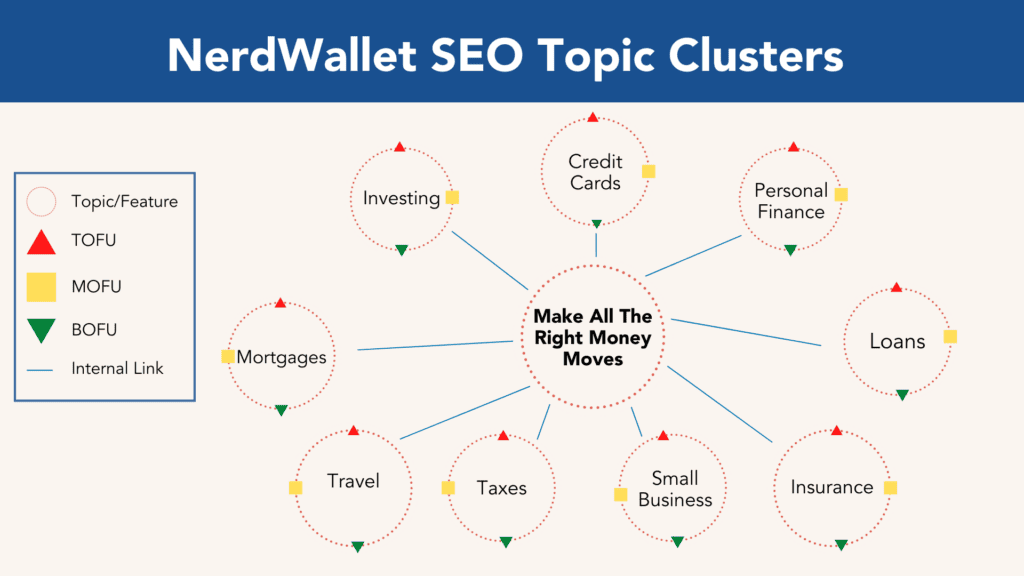
Google’s AI systems evaluate whether a website demonstrates genuine depth on a subject — not merely whether a single page matches a query. A hub-and-spoke cluster gives AI systems multiple connected data points on a single topic, making citation more likely. Here is how to build one that actually works in this environment.
Building a Hub-and-Spoke That AI Wants to Cite
- Pillar page (hub) — Comprehensive, end-to-end treatment of the core topic. Should answer every major question a reader could have, with sections clearly structured under H2/H3 headings that mirror common search queries. Aim for 3,500–6,000 words. This is the page Google’s AI will cite most often.
- Supporting cluster articles (spokes) — 8–15 pages, each targeting a specific sub-topic at depth. Link back to the pillar with descriptive, entity-focused anchor text. These expand the total surface area of AI-citable content around your topic.
- FAQ compilation page — Structured answers to the 20–40 most common questions in the topic area. Use FAQ schema. This is the highest-leverage single page for People Also Ask and AI Overview inclusion.
- Original data or research page — Even one proprietary study, survey result, or data analysis dramatically increases citation probability. Content featuring original statistics sees 30–40% higher visibility in AI responses (analysis of 36M AI Overviews, Averi.ai, April 2026).
- Implementation or how-to guides — Ordered list structures within how-to content trigger featured snippets more reliably than any other format in 2026. Featured snippet pages have measurably higher AI Overview citation rates.
Formatting That AI Systems Actually Prefer
LLMs used to generate AI Overviews are 28–40% more likely to cite content with clear, semantically unambiguous formatting. This is not about gaming an algorithm — it is about reducing friction for a system that is trying to understand, extract, and attribute your answer accurately.
The Content Freshness Factor
Freshness remains a measurable factor in AI citation eligibility. Content with a last-updated date within 12 months is meaningfully more likely to be cited than equivalent content that has not been touched in two years. This does not mean rewriting from scratch — adding a new data point, updating a statistics table, or adding a section on recent developments counts as a freshness signal. Build a quarterly content refresh cycle into your editorial calendar as standard practice.
How This Actually Works Together
The components above are not independent tactics. They function as a connected system. Here is the end-to-end workflow for a content team adapting to the zero-click environment.
From Audit to AI Citation in 8 Steps
- Query audit — Pull your top 100 queries from Google Search Console. Flag every query where impressions are rising but clicks are flat or falling. These are your zero-click exposure candidates. Tool: GSC + a rank tracker to identify AIO presence. Native. No integration friction.
- AIO trigger check — For each flagged query, manually check whether an AI Overview appears. Sort queries into: (a) AIO present, your brand cited; (b) AIO present, competitor cited; (c) AIO present, no one from your site cited. Category (b) is your highest-priority attack surface. Semi-manual. Monthly cadence.
- Topical gap analysis — For categories (b) and (c), identify which aspects of the topic you do not currently cover. These gaps are why you are not being cited. Map each gap to a content asset to create or expand. Tool: Ahrefs Content Gap or Semrush Topic Research. Manual synthesis required.
- Cluster build or expansion — Create or restructure content into a proper hub-and-spoke cluster around each priority topic. Ensure the pillar page answers the full query spectrum; ensure spokes link back with entity-rich anchor text. Native to your CMS. No third-party dependency.
- Answer-layer formatting — Reformat existing cluster pages so each section opens with a direct, 40–60 word answer before elaborating. Add FAQ schema. Add original data points where possible. Semi-automated with a schema plugin; content formatting is manual.
- Off-site authority building — Pursue citations in analyst reports, industry publications, and journalist queries (HARO, Qwoted). Each external citation of your brand on an authoritative domain strengthens the off-site signals Google’s AI uses to validate expertise. Manual. Ongoing.
- Off-Google audience capture — Every informational article that attracts AI Overview-suppressed traffic should include a genuine, high-value email capture offer. The email list is the only audience that does not depend on Google continuing to send you traffic. Native to your email provider. One-time integration.
- Monthly visibility reporting — Replace the traffic-first dashboard with the five-metric visibility framework above. Share branded search lift, citation rate, and AI-search conversion rate alongside session data. This reframes performance conversations internally and with clients. Manual sampling + GSC + your rank tracker. Native data sources, no new tools required.
The data flow is linear: GSC audit → manual AIO check → gap map → content build → schema formatting → off-site signals → email capture → monthly reporting. Each step has a clear output that feeds the next. The biggest friction point in practice is step 2 — manually checking AIO presence at scale is time-consuming. At 50+ target queries, invest in Semrush’s AI Visibility Toolkit or a similar monitoring layer to automate the sampling.
The 80% Solution Stack
You do not need a complex enterprise toolkit to execute a solid zero-click strategy. This stack covers 80% of the use cases for a small-to-mid content team at reasonable cost.
Pricing last checked: May 2026. Confirm current plans directly with each provider.
Limitations and What People Get Wrong
Citation is not traffic — yet
Being cited inside an AI Overview delivers 35% more organic clicks than not being cited, according to Seer Interactive’s data. That is not nothing, but it is also not a substitute for the traffic you lost. Do not report AI Overview citations as equivalent to traditional top-10 rankings. They are a brand-building mechanism with a long conversion tail, not a direct traffic driver.
Topical authority cannot be faked or rushed
Creating fifteen thin cluster articles in a week does not build topical authority. Google’s systems — and the LLMs that power AI Overviews — evaluate genuine depth. Sparse spokes with 400-word summaries can actually dilute hub page authority if they lack substance. Every cluster article should be worth reading on its own merits. In many workflows, a focused cluster of five genuinely excellent pieces outperforms a sprawling one of twenty mediocre ones.
Schema markup is necessary but not sufficient
Adding FAQ schema does not guarantee AI Overview inclusion. Schema signals intent and structure; authority signals determine whether Google trusts the content enough to cite it. Sites with strong E-E-A-T signals (demonstrated experience, verifiable expertise, third-party endorsement) consistently outperform technically correct but editorially thin sites, even when the thin site has better schema implementation.
Not every query should target zero-click visibility
Comparison pages, pricing pages, case study pages, and decision-stage content should still be optimised to earn the click. Applying zero-click tactics to your highest-intent pages is a strategic error. The framework above is for informational, awareness-stage content. Protect your conversion-stage pages from over-optimisation for on-SERP answers.
FAQ
Does being cited in AI Overviews require ranking in the top 10?
No — and this is the most important structural change in modern SEO. BrightEdge’s research found that only 17% of AI Overview citations come from the traditional top-10 organic results. Pages ranking between positions 21 and 100 are cited regularly. Topical authority and content structure matter more than raw ranking position for AI citation eligibility.
Should I still optimise for featured snippets if AI Overviews are replacing them?
Yes. Research from Digital Applied (March 2026) shows a strong correlation between pages previously selected as featured snippets and pages cited in AI Overviews. Optimising for featured snippets is still the highest-leverage path to AI Overview citation — not a competing strategy. Featured snippets still appear on 19% of queries, and the formatting that wins snippets (direct answers, clear structure, question-based headings) is the same formatting AI Overviews prefer.
How do AI search visitors compare to traditional organic visitors in terms of conversion?
Substantially higher. A cross-industry study by BrightEdge covering 1,200 websites in 2025 found AI search visitors convert at an average rate that is approximately 23 times higher than traditional organic search visitors. Ahrefs research found that AI search visitors — while often representing less than 1% of total traffic — can drive up to 12% of all sign-ups. The mechanism is self-selection: users who click through after reading an AI Overview are already past the awareness stage.
How often should I refresh existing content to maintain AI citation eligibility?
A quarterly review cycle is the practical standard. Freshness is a measurable citation factor, but wholesale rewrites are rarely necessary. Adding an updated statistics table, a new section addressing recent developments, or a revised FAQ block is sufficient to signal freshness without disrupting proven content. Prioritize pages where competitors have recently been cited in AIOs at your expense.
Final Thoughts
The uncomfortable truth about the zero-click era is that the content most likely to get you cited is exactly the kind of content that used to drive clicks: genuinely comprehensive, expertly structured, crisply formatted, and specific enough to be quotable. The optimization principles have not changed as dramatically as the traffic outcomes have.
What has changed is the business model implication. If your revenue depends on session volume from informational content, you are in a structurally deteriorating position. The response is not to produce more content — it is to produce content that builds an audience, not just a ranking. An email subscriber who found you through a Google citation today is worth ten anonymous visitors who clicked a blue link three years ago.
The hardest decision most content teams face is not which schema to use or how long a cluster article should be. It is whether to continue optimising a channel that is being systematically closed off, or to divert some of that effort into audience assets that no algorithm can take away. The answer is not binary — but the longer teams delay the second half of that decision, the more exposed they remain to the next AI Overview expansion, the next core update, the next structural shift that Google does not need your permission to make.
“Stop thinking about winning a single result. Start thinking about becoming part of the authoritative source network that AI systems draw from.”
— Averi.ai, Analysis of 36M AI Overviews, April 2026
Primary Sources
- Pew Research Center — “AI Overviews and Search Click Behavior,” tracking 68,879 real queries, March 2025
- Seer Interactive — “AI Overviews CTR Impact Study,” 25.1M impressions across 42 organizations, September 2025. seerinteractive.com
- Ahrefs — “Position-One CTR Decline with AI Overviews,” 300,000 keywords, December 2025. ahrefs.com/blog
Secondary Sources
- BrightEdge — AI Overview citation source analysis, 1,200 websites, 2025–2026. brightedge.com
- Semrush — “AI Overviews Impact on Search 2025,” 10M+ keywords. semrush.com
- Digital Applied — “Zero-Click Search Statistics 2026.” digitalapplied.com
- Search Engine Journal — “AI Overviews Impact on Publishers,” October 2025. searchenginejournal.com
Related Articles on ContentEvaluator.online
Last updated: May 2026 · Author: ContentEvaluator Editorial Team · contentevaluator.online
External Resources & Further Reading
Curated links to authoritative sources, tools, and studies referenced or related to this guide.
Research & Data
- Pew Research Center — AI Overviews and Search Click Behavior (Mar 2025)
- Seer Interactive — AI Overviews CTR Impact Study (Sep 2025)
- Ahrefs Blog — Position-One CTR Decline with AI Overviews (Dec 2025)
- BrightEdge — AI Overview Citation Source Analysis (2025–2026)
- Semrush Blog — AI Overviews Impact on Search 2025
Tools & Platforms
- Google Search Console — Free query-level traffic & impression data
- Google Analytics 4 — Segment AI-search traffic & conversion tracking
- Semrush — AI Visibility Toolkit & topic research
- Ahrefs — Content gap analysis & backlink data
- Yoast SEO — Schema markup implementation for WordPress
Industry Publications
- Search Engine Journal — AI Overviews Impact on Publishers (Oct 2025)
- SparkToro — Rand Fishkin’s zero-click search research
- Digital Applied — Zero-Click Search Statistics 2026
- Google Search Central — Creating Helpful, Reliable Content
Community & Learning
- HARO (Help A Reporter Out) — Earn journalist citations & backlinks
- Qwoted — Expert source platform for PR & SEO
- Schema.org — Official structured data vocabulary reference
- Google FAQ Schema Docs — Implementation guidelines for FAQ markup
rel="noopener noreferrer nofollow" to preserve link equity. Links to Google-owned properties (Search Console, Analytics, Schema docs) use rel="noopener noreferrer" as they are authoritative references, not commercial endorsements. https://www.contentevaluator.online/2026/06/13/traffic-with-a-zero-click-content-strategy/
https://www.contentevaluator.online/2026/06/16/zero-click-seo-tactics/
https://www.contentevaluator.online/2026/06/04/zero-click-content-strategy-2026/
https://www.contentevaluator.online/2026/06/10/zero-click-searches/
https://www.contentevaluator.online/2026/06/01/zero-click-content-strategy/
https://www.contentevaluator.online/2026/06/29/traditional-seo-is-dying/