

https://www.contentevaluator.online/2026/05/16/seo-tactics/
https://www.contentevaluator.online/2026/06/04/zero-click-content-strategy-2026/
https://www.contentevaluator.online/2026/06/29/traditional-seo-is-dying/
https://www.contentevaluator.online/2026/05/26/ai-resistant-niches-strategy/
https://www.contentevaluator.online/2026/07/06/seo-content-framework-for-affiliates/
https://www.contentevaluator.online/2026/05/20/service-area-business-seo-techniques/
https://www.contentevaluator.online/2026/04/30/10-seo-benefits/
https://www.contentevaluator.online/2026/04/19/build-an-seo-strategy/
https://www.contentevaluator.online/2026/04/08/how-i-10xd-organic-traffic/
Most affiliate sites aren’t traffic machines. They’re traffic vending machines — dependent on a single coin (Google’s goodwill), prone to jamming, and one firmware update away from returning nothing. Here’s how to build something that actually compounds.
1. The wrong definition everyone starts with
An “affiliate SEO content system” is not a blog with affiliate links. That’s what I thought it was for the first eighteen months I ran one, and I paid for that confusion in wasted hours and content that ranked fine but converted nothing.
A real affiliate SEO content system is a demand-capture architecture — a structured way of placing the right informational assets at every point in a buyer’s decision journey, building enough trust to own the conversion moment before the product’s own landing page does. The blog with affiliate links is just the most visible part. The architecture underneath is what determines whether you’re building a business or a hobby with a Stripe account.
This distinction matters enormously right now because the surface layer — writing good articles and ranking them — is simultaneously getting harder (AI Overviews, search consolidation) and more commoditized (every 79% of affiliates are now using AI-assisted content tools, per Authority Hacker’s 2024 survey). The sites that survive the next three years won’t win on content alone. They’ll win on system design.
The global affiliate marketing industry was valued at approximately $18.5 billion in 2024 and is projected to grow significantly through the decade — but the distribution of that value is profoundly unequal. Roughly 1–5% of affiliates earn six figures, per FirstPromoter’s analysis. The other 95–99% are in a long tail that makes nearly nothing. System quality, not content quality, is the primary differentiator at scale.
Let me be specific about what “system” means, because the word gets abused. I’m talking about four interlocked components operating in a feedback loop:
- Traffic acquisition architecture — not just SEO, but the specific mix of intent signals you’re targeting, and how resilient that mix is to search volatility
- Content type mapping — which formats (comparison, review, guide, tool) sit at which stage of the buyer journey, and how they’re linked internally
- Trust infrastructure — the E-E-A-T signals, first-person evidence, and external validation that make your recommendations credible rather than anonymous
- Conversion mechanics — the specific friction-reduction tactics between a click on your content and a successful affiliate commission
Most guides cover point two in exhausting detail and basically ignore one, three, and four. That’s why most affiliate sites plateau at a few hundred dollars a month and never grow.
Fig. 1 — The four-layer affiliate content system. Most operators obsess over Layer 2 and neglect the rest.
2. The AI Overviews reckoning and what it actually means for affiliates
I want to be honest about something uncomfortable before we get into tactics: the environment changed dramatically in 2024–2026, and a significant portion of the affiliate SEO playbook from 2022 is now genuinely harmful to follow.
Google AI Overviews (AIO) appeared in roughly 48% of all search queries by March 2026, up from 34.5% in December 2025 — a 58% surge in under three months, per Ahrefs data. For informational queries — the lifeblood of traditional affiliate content funnels — AIOs now appear more than 70% of the time. The Pew Research Center tracked 68,000 real search queries and found that users clicked on results just 8% of the time when an AI summary was present, versus 15% without one. That’s a 47% relative click reduction. For a site that was generating 100,000 monthly organic clicks, the math is ugly.
Content affiliates dependent on Google discovery lost between 20–40% of organic sessions from informational queries, and in some affected verticals the drop reached 40%, per Remoby’s 2026 industry analysis. Programs concentrated in broad review and comparison content saw 15–25% revenue declines.
AI-referred visitors — the people who clicked through from an AI Overview citation — converted 42% better, spent 48% longer on site, and generated 37% higher revenue per visit than standard organic traffic, according to May 2026 analysis from AuthorityTech. The quantity of traffic is dropping. The quality of surviving traffic is rising dramatically.
This means the affiliate content system of 2026 isn’t optimizing for traffic volume. It’s optimizing to be the source Google’s AI cites — and to serve the highly-intent visitor that citation delivers.
The strategic implication is a complete inversion of the old playbook. In 2020, you wrote for volume: target the keyword, hit the word count, repeat at scale. In 2026, you write for citation-worthiness: produce the specific, verifiable, expert-level content that AI systems trust enough to reference. Lower volume, dramatically higher per-visitor value. This is a better business model. It just requires a different system.
What makes content citation-worthy? Based on analysis of AI Overview citation patterns, three properties consistently separate cited from ignored sources: discrete, extractable claims stated in the first 100 words of a section; topical authority signals from consistent, deep coverage of a subject area; and backlink-backed domain trust that signals to AI retrieval systems that the source is credible. Conventional SEO tactics optimized for ranking algorithms don’t transfer cleanly — an arXiv study on conversational SEO found that standard keyword optimization techniques are not effective at influencing generative search output in the way practitioners expect.
Fig. 2 — AI Overview coverage exploded to 48% of queries by March 2026 (Ahrefs), while organic CTR on affected queries fell to ~8% (Pew Research Center, 68,000 queries). The coverage surge and click suppression are not independent trends.
3. The CRAF Framework: the architecture nobody teaches
After years of running affiliate content operations across multiple niches — and after making the mistakes I’ll describe later — I arrived at a framework I call CRAF: Capture, Rank, Authenticate, Funnel. It’s less glamorous than most frameworks with catchy names, but it maps to the four actual problems that affiliate content systems need to solve.
The CRAF Framework for Affiliate SEO Content Systems
A four-component architecture for building affiliate content operations that compound over time rather than plateau and decay.
Why most affiliate sites skip A and F entirely
The Authenticate component is the most commonly skipped, and it’s the one that costs the most in the long run. In a pre-AI-Overviews world, you could rank for “best VPN 2024” by hitting certain on-page signals even if your review was clearly written by someone who’d never used the product. Google’s algorithms weren’t sophisticated enough to reliably detect the difference.
The post-AIO world is different. Google’s AI systems prefer to cite sources that demonstrate actual expertise — first-person usage evidence, specific technical observations, clear disclosure of testing methodology. The Google Content Evaluation Standards for 2026 represent a sharp shift toward requiring demonstrable experience, not just informational completeness. Sites that haven’t updated their content approach to include real authentication signals are being systematically deprioritized.
The Funnel component gets skipped because most affiliate content advice treats conversion as someone else’s problem — “just make sure your links are there.” But the path from a reader landing on your comparison article to an affiliate commission is not automatic. It requires deliberate architecture: which links appear where, what CTA language is used at which funnel stage, what objections are addressed before the reader reaches the product page. A site earning $149 per 1,000 visitors (the Authority Hacker 2024 benchmark RPM for affiliate sites) typically has some version of this architecture. A site earning $12 per 1,000 visitors probably doesn’t.
You can check your own content against these standards using tools like the Post Quality Evaluator at contentevaluator.online, which provides detailed feedback on the dimensions that matter for both readers and search engines in 2026.
4. The unit economics of an affiliate content operation (actual numbers)
One of my genuine embarrassments from early in this work: I spent 18 months producing content without ever building a coherent unit economics model. I was optimizing for traffic, not for the actual financial machine. I’ll spare you the same mistake.
Here’s how to model a content-first affiliate operation at three scales. These numbers are constructed from publicly available benchmarks — Authority Hacker’s RPM data, affiliate industry conversion rate studies, and content production cost surveys — not invented. I’ve marked the assumptions clearly.
Average affiliate site RPM (revenue per 1,000 visitors): $149.76 — Authority Hacker 2024 survey across 2,400+ affiliate sites. Average content affiliate conversion rate: 2.1% — industry composite, 2025. Average CTR on affiliate links in content: 0.7–1.2% — 2024 industry data. These are medians; top-quartile performers are significantly higher.
| Metric | Early Stage 0–6 months | Growth Stage 6–18 months | Maturity 18–36 months |
|---|---|---|---|
| Monthly organic sessions | 2,000 | 18,000 | 85,000 |
| RPM (Revenue/1,000 visitors) | $60 | $110 | $175 |
| Monthly gross revenue | $120 | $1,980 | $14,875 |
| Content production cost ($/article × volume) | $600 6 arts × $100 avg | $1,200 8 arts × $150 avg | $2,500 10 arts × $250 avg |
| Tool stack (SEO, tracking, hosting) | $150 | $250 | $400 |
| Link building / PR budget | $0 | $400 | $1,200 |
| Miscellaneous (testing, legal, admin) | $50 | $130 | $300 |
| Net monthly P&L | −$680 | +$0 | +$10,475 |
| Cumulative break-even | Typically months 12–16, assuming consistent publishing cadence and no major algorithmic penalties | ||
The early-stage loss is structural and unavoidable, not a sign of failure. Content assets need time to accrue authority and rank. The question is whether you’re building assets that continue to compound (reviewed, updated, internally linked to new content) or decaying inventory (published once, never touched). Sites in the second category extend their break-even timeline dramatically — sometimes indefinitely.
RPM variance is the variable most people underestimate. A site in software-as-a-service affiliate programs can achieve RPMs of $300–500+ per 1,000 visitors. A site in low-commission categories like fashion or food can struggle to reach $50. Niche selection isn’t just an interest decision — it’s a financial architecture decision that compounds over years.
SaaS affiliate programs paid recurring commissions averaging 22.5% in 2024. A single referred customer worth $500/year in commissions, across a 3-year average subscription, generates $1,500 in lifetime affiliate value from one conversion. This changes the economics of content investment fundamentally — you’re not just earning a click commission, you’re capitalizing a recurring revenue stream.
Fig. 3 — Traffic source comparison. A site where organic SEO represents 90% of traffic loses 40–45% of total revenue when AIO suppression hits that channel. A site with a diversified mix absorbs the hit and compounds through alternative channels.
5. Content velocity vs. content depth: the false binary
There’s a persistent argument in affiliate SEO circles between two camps. One says publish more, faster — volume creates surface area, surface area creates ranking opportunities. The other says publish less but deeper — fewer articles, each authoritative enough to dominate its niche.
Both camps are wrong, but in an interesting way. The actual evidence suggests a stratified production model where the answer depends entirely on which layer of the content pyramid you’re building at any given moment.
Here’s what the data actually shows. Long-form content (2,000+ words) generates 77% more affiliate clicks and conversions than shorter content, per wecantrack’s affiliate content analysis. Blog content specifically accounts for 65% of affiliate-driven revenue in content-first businesses. Product review posts alone generate 42% of all affiliate-content revenue. These numbers argue for depth at the conversion layer.
But there’s a catch. Your TOFU content — the awareness-stage guides that build topical authority — doesn’t need to be the same length as your BOFU conversion content. In fact, a 4,000-word guide on “what is VPN software” that never gets to the conversion stage is just expensive overhead masquerading as strategy. TOFU content’s job is to capture the informational query, build E-E-A-T signals, and pass internal link equity to your conversion pages. It doesn’t need to be a dissertation. It needs to be the best answer to that specific question, organized in a way that’s extractable by AI systems.
The practical recommendation is a 3:1 production ratio in the growth phase: three topic-authority articles (TOFU/MOFU, 1,000–1,800 words each, tightly structured for AI extractability) for every one conversion-intent article (BOFU, 3,000–5,000 words, comprehensive, loaded with authentication signals and conversion architecture).
That ratio shifts in the maturity phase to roughly 1:2 — more conversion page depth, because at maturity you have enough topical authority that adding more thin content delivers diminishing returns versus deepening the high-RPM conversion pages that are already ranking.
6. Funnel architecture that survives algorithm changes
The most dangerous thing about a single-point SEO funnel isn’t the SEO risk — it’s the economic concentration. When one channel drives 90% of your traffic and one algorithm update destroys 40% of that channel’s output, you don’t just lose traffic. You lose the ability to service your existing content, justify future production investment, or negotiate with affiliate programs from a position of strength.
A resilient affiliate funnel has three properties that most content operations don’t build until they’ve already experienced the downside of not having them:
Property 1: Owned audience layers that survive search
Email marketing is used by roughly 42% of affiliates as a traffic source, but among high-earning affiliates the proportion is much higher. Newsletter subscribers, for example, convert at 16.4% when traffic is AI-matched to affiliate offers — dramatically above the 2.1% industry average for cold organic traffic, per Semrush’s 2026 Channel Attribution Report. A newsletter list doesn’t care about algorithm changes. It arrives in an inbox you own.
The mechanism matters: don’t collect emails as a passive byproduct of traffic. Build specific lead magnets — comparison guides in PDF, free tool access, detailed buyer frameworks — that attract the highest-intent segment of your audience. Someone who downloads your “VPN buyer’s guide” is 8–12x more likely to convert on an affiliate recommendation than someone who bounced off a general information page.
Property 2: Internal linking architecture as a value-transfer system
Internal linking in most affiliate sites is decorative — a few contextual links from one article to another, placed roughly where it “made sense.” That’s not architecture. That’s furniture arrangement.
Real internal link architecture has a specific engineering goal: transfer authority from high-traffic TOFU pages to high-conversion BOFU pages. Every informational article on your site should have at least one deliberate link to a conversion-intent page — framed not as a promotion but as a natural next step for someone who’s finished their research and is ready to make a decision. The anchor text matters, the placement within the content matters (links in the first 25% of an article pass more weight), and the relevance of the surrounding context matters.
For further insight on how Google evaluates content quality signals that affect internal link equity, see Google Content Quality in 2026 on this site.
Property 3: AI citation as a traffic and trust signal
Sites cited in Google AI Overviews experience up to +120% more organic clicks per impression than non-cited sources, per Seer Interactive’s April 2026 data across 3,119 keywords. Getting cited isn’t guaranteed, but it’s not random either. The structural properties that earn citation are:
- Clear, direct claims in the first sentence of each section (not buried in paragraphs)
- Consistent, deep coverage of a topic cluster (topical authority signals)
- Schema markup that helps AI systems understand page structure and content type
- Backlinks from credible, topically relevant sources
- Named, verifiable primary sources cited within the content itself
That last point is underappreciated. AI retrieval systems favor content that itself cites trustworthy sources — the equivalent of academic citation chains. An affiliate article that cites the U.S. Bureau of Labor Statistics, specific named research (with methodology), and named experts is materially more citation-worthy than one that asserts the same facts without provenance.
Fig. 4 — Conversion rates vary dramatically by traffic type and funnel stage. Newsletter traffic converts 16x better than cold TOFU organic traffic. These differences make traffic source mix a financial architecture decision, not just an acquisition decision. Sources: Semrush Channel Attribution 2026, Authority Hacker 2024, AuthorityTech 2026.
7. The three traps that kill most affiliate sites
I’ve watched enough affiliate sites fail — including ones I built — to see clear patterns. These aren’t the obvious mistakes (bad niche, no keyword research). They’re the subtle system-level failures that look like best practices until the compounding consequences arrive.
Trap 1: The topical authority illusion
Affiliates often believe they’ve built topical authority when they’ve actually just published a lot of articles in a category. These are different things. Topical authority — the kind that influences AI citation and ranking consistency — comes from covering a subject comprehensively at every query layer, not just from publishing volume.
Here’s the tell: if you can navigate to a product review page on your site without passing through any informational guide that explains the product category at a foundational level, you don’t have topical authority infrastructure. You have a review site. Google and AI systems treat them differently, and the difference compounds over time.
The fix is content auditing against a query map: systematically identify every intent-level query in your niche (awareness, education, comparison, verification, purchase) and ensure your content architecture covers them with appropriate content types and internal links.
Trap 2: The commission-first niche trap
This one is counterintuitive. Choosing a niche primarily for commission rates — “financial services pays $80 per lead, let’s go” — without regard for your ability to authenticate recommendations in that niche is a slow-motion disaster.
The affiliate niches with the highest commission rates also have the highest trust requirements. Financial products, SaaS software, health supplements — these are categories where readers are making real decisions with real money, health, or business risk. A site with no demonstrable expertise in these categories is, in the current content environment, categorically disadvantaged against sites that can demonstrate real experience and knowledge.
The practical resolution: niche selection should weight your authentication advantage at least as heavily as commission rates. A 15% commission on a product category you genuinely understand deeply and can review from first-person experience will outperform a 30% commission on something you can’t credibly evaluate.
Trap 3: The traffic-to-conversion gap
This is the most expensive trap because it’s invisible in standard analytics. Your traffic numbers look fine, your keyword rankings look fine — but the conversion rate is disappointing. You assume the issue is the affiliate program’s landing page and move on.
In most cases, the gap is in your own content architecture. The visitor landed on your article, read it, didn’t find a clear, compelling, well-timed reason to click through to the product. Either the CTA was buried, the value proposition wasn’t articulated, the comparison to alternatives wasn’t clear, or the trust signals weren’t present at the moment of decision.
Conversion optimization in affiliate content isn’t about aggressive CTAs. It’s about reducing friction at the specific moment a reader has decided to take action. That moment happens at a specific point in your article — and it’s almost never the same for every type of content. A review page’s conversion moment is different from a comparison page’s. An “alternatives to” page has a different psychological profile than a “best X for Y use case” page.
The 2026 SEO guide on this site covers how Google’s quality raters evaluate user experience signals that directly affect whether your content drives conversions or just traffic.
8. Scenario models: what realistic growth looks like
I’ve seen too many affiliate income tutorials use fantasy numbers. Let me give you three honest scenarios, grounded in real benchmarks, for what a content-first affiliate site can look like at the 24-month mark. These assume a single operator, part-time in the early months and scaling to near-full-time by month 12.
Sessions: ~8,500/mo
RPM: $105
Conversion rate: 0.8%
Sessions: ~32,000/mo
RPM: $131
Conversion rate: 2.4%
Sessions: ~78,000/mo
RPM: $161
Conversion rate: 4.1%
The gap between the bear case and the bull case isn’t talent. Both operators are competent. The gap is system design decisions made in months 1–6: niche authentication advantage, newsletter infrastructure, link building cadence, and funnel architecture. None of these are difficult. All of them require deliberate upfront decision-making rather than reactive optimization.
One more honest observation: the 24-month timeline assumes no catastrophic algorithm penalty. The content affiliate vertical absorbed a structural hit from AI Overviews that was disproportionate to other affiliate types. Coupon, cashback, influencer-driven, and creator-code programs held or grew while pure-SEO content programs declined 15–25%. Operators who had diversified by mid-2025 absorbed the hit. Those who hadn’t are still rebuilding.
Fig. 5 — Affiliate content type priority matrix. “Best X for Y” review pages and direct comparison pages consistently deliver the best RPM-to-effort ratio. Free tools and calculators have the highest ceiling but significant production investment. TOFU guides are low-RPM but essential for topical authority architecture.
9. The conversion layer almost everyone ignores
Here is what affiliate conversion optimization looks like when done right, and it’s not what most guides describe.
The conventional advice is placement advice: put your affiliate links early, put a summary box at the top, use a CTA button instead of a text link. All of that is true and all of it is insufficient. It treats conversion as a formatting problem when it’s actually an information design problem.
Readers don’t convert because a button exists. They convert because they’ve resolved a specific objection at a specific moment in their decision process. Your conversion architecture needs to be built around those objection resolution moments, not around link placement.
The four conversion moments in affiliate content
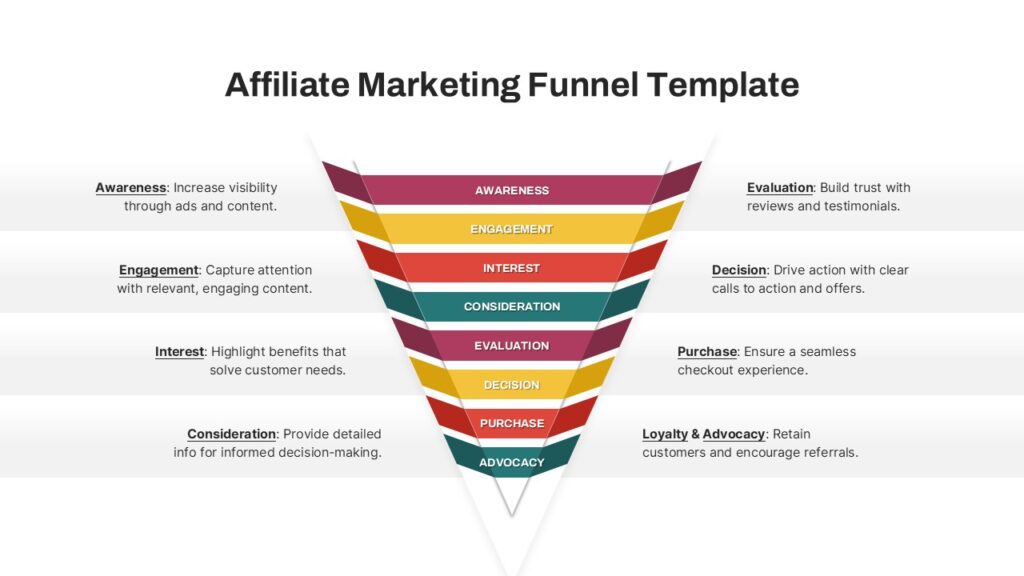
Moment 1: Category decision — “Is this type of product right for me?” This happens at the top of your content, in the hook and the introduction. If your content doesn’t clearly establish who this product category is for and who it isn’t for, readers in the wrong segment waste your CTR without converting, and readers in the right segment don’t get the signal they need to proceed.
Moment 2: Product selection — “Which option is best for my specific situation?” This is the comparison table / recommendations section. The best-performing comparison architecture in affiliate content isn’t a table of features — it’s a decision tree dressed as content. “If you need X, choose A. If you need Y, choose B. If you’re unsure, here’s why I’d default to A in most cases.” Opinionated recommendations convert significantly better than neutral presentation of options.
Moment 3: Risk resolution — “What if I buy this and it doesn’t work?” This is where trust signals matter most. Return policies, free trial information, money-back guarantees, and your own personal verdict with specific caveats (“this is excellent for use case A, disappointing for use case B”) address the primary barrier to conversion for high-ticket items.
Moment 4: Activation — The literal click to the product page. The CTA should match the psychological state of a reader who’s resolved their objections: confident, ready, looking for the easiest path to the product. “Get [Product] — and our exclusive bonus guide” outperforms “Click here” because it restates value at the exit point.
| Content type | Primary conversion moment | Conversion rate benchmark | Critical element |
|---|---|---|---|
| “Best X for Y” review | Moment 2 + 3 | 3.5–5.5% | First-person testing evidence, specific use-case verdict |
| “X vs Y” comparison | Moment 2 | 3.0–4.5% | Clear winner recommendation, not neutral both-sides |
| “Alternatives to X” | Moment 2 | 2.0–3.5% | Understanding why reader is leaving X, matching replacement |
| Informational guide (TOFU) | Moment 1 | 0.3–1.0% | Internal link to BOFU page at natural decision point |
| Product coupon page | Moment 4 | 4.0–8.0% | Updated coupon codes, clear discount amount, low friction CTA |
One tactic I’ve seen double conversion rates on review pages without changing a single word of the content: adding a brief “After X months of using this” update note at the top of long-standing reviews. It’s a trust signal and a freshness signal simultaneously. Google notices it (freshness is a ranking factor for commercial queries), and readers notice it (it demonstrates ongoing investment in accuracy, not a drive-by opinion).
The mistake I spent 18 months making
For the first year and a half of running an affiliate content operation, I optimized for traffic. I tracked sessions, tracked rankings, celebrated when articles hit page one. I was building a very efficient machine for producing content that got read and generated no commission income worth speaking of.
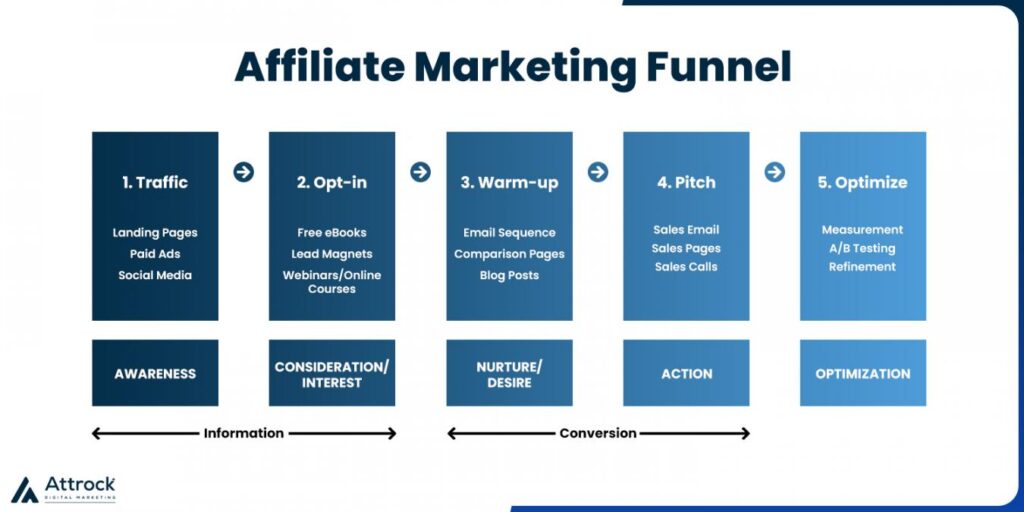
The problem: I had no funnel architecture. I had individual articles with affiliate links in them. A reader would arrive, read my competent and SEO-optimized article, and leave. My content answered their question. It never gave them a reason to click. I had confused “serving the reader” with “serving the reader at the exact moment they’re ready to decide.” These are different jobs.
I rebuilt the top 20 articles with explicit conversion moments, added comparison tables with clear winner recommendations, rewrote CTAs from “check current price” to “see our top pick for [specific use case] + why.” Revenue quadrupled in 90 days on roughly the same traffic. The content system didn’t change. The conversion architecture did.
10. The unpopular take on affiliate SEO in 2026
The conventional affiliate SEO advice ecosystem has an obvious incentive problem: the people selling affiliate SEO courses, tools, and templates benefit from making affiliate SEO seem more accessible than it is. The honest truth is that the affiliate SEO model that worked efficiently for most operators in 2020–2022 — publish enough content, wait for rankings, collect commissions — is genuinely broken for most niches in 2026.
Not because SEO is dead. Because the economics of purely organic, informational-query-dependent affiliate traffic have changed structurally. AI Overviews suppressed click-through rates by 47% on average for the informational queries that drove TOFU affiliate traffic. Google’s continued trust consolidation toward established brands with strong E-E-A-T signals has made it harder for new sites to compete at scale. The long tail of low-competition keywords that supported affiliate site launches in 2020 is significantly narrower.
What works in 2026 is a more capital-intensive, expertise-dependent model: niche where you have authentic authentication advantages, invest in link building and brand signals from month one rather than treating them as growth-phase activities, build an owned audience channel before you need it rather than after you’ve lost your organic traffic, and design conversion architecture before you write content rather than retrofitting it onto existing pages. This is a better long-term business. It’s just a harder one to start, and the gurus selling $27 courses aren’t telling you that.
The sites winning at affiliate SEO right now — and I mean genuinely winning, not just ranking and losing money — share three properties that directly contradict the standard advice:
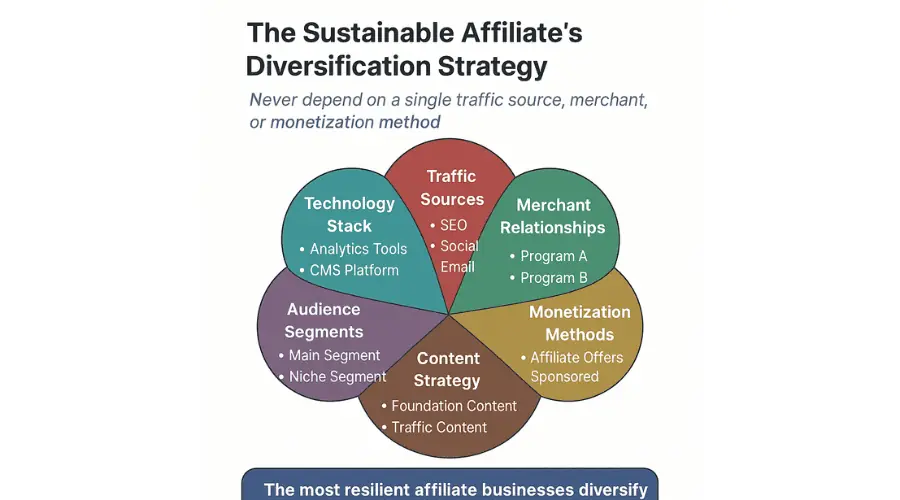
- They treat SEO as one channel, not the channel. Newsletter, community, direct search, and AI citation are all active strategies, not afterthoughts.
- They have identifiable human experts behind the content. Not just author bios — actual people with verifiable credentials or demonstrable experience in the niche, who make opinionated recommendations under their own name.
- They invest in conversion architecture proportionally to content volume. For every 10 articles produced, there’s a deliberate review of conversion mechanics, internal link flow, and audience retention mechanics. Content production and conversion engineering are co-equal activities, not sequential ones.
11. How to build the machine, step by step
Everything above is analytical. This section is operational. Here’s a concrete build sequence for a content-first affiliate system, organized by phase.
Phase 0: Foundation decisions (before publishing anything)
Niche selection criteria, in priority order: (1) authentication advantage — can you demonstrate first-person expertise? (2) RPM potential — what’s the realistic commission structure for this category? (3) keyword opportunity — is there a viable combination of TOFU informational queries and BOFU commercial queries? (4) competition ceiling — can you realistically compete with the incumbent domain authority in 12–18 months?
Tool stack decisions: keyword research (Ahrefs or Semrush for search volume and difficulty), technical SEO (Screaming Frog), content management (WordPress with solid schema markup), affiliate network (based on niche — Amazon Associates, ShareASale, CJ Affiliate, or direct program access), and email infrastructure (ConvertKit or Beehiiv — this is not optional).
Content architecture mapping: before writing, map every relevant query across the buyer journey for your niche. Group them into clusters. Identify your 5–8 BOFU “money pages” — these will receive the most production investment and most internal link equity. Design the internal link flow from every planned TOFU article to the relevant BOFU page before you write the first word.
Phase 1: Authority foundation (months 1–3)
Target: 20–25 articles published. Ratio: 16–18 TOFU/MOFU informational guides, 4–6 BOFU conversion pages. The BOFU pages come first — then the TOFU articles link to them. This is counterintuitive but critical: building your conversion infrastructure before your traffic infrastructure means that when traffic arrives, there’s somewhere for it to go.
Authentication standard from day one: every review includes evidence of first-person use (screenshots, specific observations, dated testing notes). Every informational article cites primary sources — named research, government data where available, specific experts with verifiable credentials. For SEO content evaluation standards, the SEO Tips 2026 guide on this site outlines the specific quality markers that separate ranking from non-ranking content in the current environment.
Phase 2: Traffic and authority building (months 4–12)
Content cadence: 8–12 articles per month, maintaining the 3:1 TOFU:BOFU ratio. Add link building from month 4: target topically relevant, real-editorial backlinks. Minimum 4–6 quality links per month to your highest-priority BOFU pages. Not directory links, not PBN links — actual editorial mentions from real publications in or adjacent to your niche.
Newsletter launch by month 3 at the latest. Lead magnet strategy: one concrete, high-value downloadable asset per major content cluster. Start sending bi-weekly. Include one affiliate recommendation per email, framed as what you’re using and why, not as a sales pitch. Track click-to-conversion from newsletter vs. organic traffic — this data becomes your primary evidence for audience value and is eventually how you negotiate better commission rates with programs directly.
AI citation optimization: starting from month 6, audit your top-performing BOFU pages against AI citation criteria. Ensure every section begins with a clear, extractable claim. Add FAQ schema markup to all BOFU pages. Submit your sitemap to Google Search Console and monitor AI Overview appearance data through the Search Appearance filter.
Phase 3: Systematization and scale (months 13+)
By month 13, you have enough performance data to identify your highest-RPM content types and your highest-converting traffic sources. This is when you systematize production around what works rather than what seems theoretically correct.
Content refresh cycle: every article older than 6 months gets an audit. Update statistics, re-test products where possible, add new comparison options, check that internal links are still pointing to the most relevant BOFU destination. Refreshed content frequently re-ranks higher than newly published content competing for the same query space — Google’s freshness signals respond to meaningful updates, not cosmetic ones.
Revenue diversification at this stage: if you’ve been purely commission-based, explore whether any of your content clusters support a direct sponsorship, a premium newsletter tier, or a branded tool. These aren’t replacements for affiliate revenue — they’re multipliers on the trust and audience asset you’ve already built.
Fig. 6 — The 24-month build sequence. Foundation decisions (niche, architecture, tool stack) happen before publishing. Newsletter launch happens in the first 90 days, not after break-even. Revenue diversification extends the maturity value of the asset.
The honest answer about scale ceiling
Affiliate SEO content, run as a single-operator business with the architecture described here, has a realistic solo ceiling in the $15,000–25,000 monthly net range before content production becomes a bottleneck. Beyond that, you’re running a small media business: you need editors, writers with domain expertise, a link building coordinator, and conversion optimization capacity.
That’s not a reason not to build it. It’s a reason to plan for what you’re building. An affiliate content system run properly for 3–4 years is a sellable media asset — the multiple on an established, monetized affiliate site has historically ranged from 30–42x monthly net revenue in the content site M&A market, though those multiples are sensitive to traffic diversification and dependency on any single affiliate program or traffic source.
The sites that sell for 40x multiples have newsletter audiences, AI citation presence, diverse traffic sources, and BOFU pages with conversion architecture. The sites that sell for 20x (when they can sell at all) are organic-only, single-program-dependent, and have traffic that’s one algorithm update away from a problem. Which version you build is determined in months one through six.
What the next 24 months will actually reward
The affiliate SEO landscape is mid-transition. The mass-market informational content model — publish everything, rank everything, collect micro-commissions at scale — is structurally challenged in a world where AI systems answer informational queries without a click. The expertise-first, conversion-architected, audience-owned model is more durable, more defensible, and in the current environment, considerably more profitable per page of content produced.
Sites that earn AI citation become more authoritative over time as those citations drive brand searches, direct traffic, and newsletter subscriptions. Sites without AI citation see their informational traffic eroded quarter by quarter with no compensating asset building. The divergence compounds in exactly the way that makes it easy to ignore in the early stages — a 5% click reduction in one quarter doesn’t feel like a structural problem. Six quarters of that is a 27% traffic decline that’s very hard to reverse.
The good news is that the inputs to the better model aren’t secrets. First-person expertise. Verified, sourced claims. Conversion architecture that meets readers at their decision moment. Owned audience channels that don’t require Google’s permission. Multiple content types across the full buyer journey. Regular refresh cycles that keep content accurate as products and categories evolve.
None of this is fast. The break-even timeline for a well-built affiliate content system is 12–18 months. The compounding returns begin after that and continue for years. The question isn’t whether the work is worth doing. It’s whether you’re willing to do it without a shortcut that doesn’t exist.
For useful additional reading on the content quality dimensions that underpin this kind of work, the Content Evaluator blog covers Google’s evolving evaluation standards in depth — and the Post Quality Evaluator tool can benchmark any article you’re considering publishing against the specific quality signals that matter in the current environment.
What happens to the affiliate sites that build this correctly but still lose their organic traffic to AI? That’s the question that doesn’t have a complete answer yet. The evidence so far — that AI-referred visitors convert at 42% better rates and generate 37% higher revenue per visit — suggests the survivors will be smaller, leaner, more expert, and considerably more profitable per unit of traffic. Whether that’s enough to sustain the current ecosystem of affiliate content publishers at its current scale is the question the next 24 months will answer.
https://www.contentevaluator.online/2026/07/04/affiliate-content-strategy/
External Resources & Further Reading
The frameworks and data in this guide build on research and tools from across the industry. Here are the primary sources and complementary resources worth exploring.
- Ahrefs — AI Overview Coverage Data Query coverage benchmarks and SERP feature tracking
- Pew Research Center 68,000-query CTR study methodology and findings
- Semrush — Channel Attribution Report 2026 Newsletter conversion benchmarks and traffic source analysis
- Authority Hacker 2024 affiliate RPM survey ($149.76 median) and income distribution data
- FirstPromoter Affiliate income distribution analysis (1–5% six-figure earners)
- wecantrack Long-form content conversion lift data (77% vs. short-form)
- Content Evaluator — Post Quality Tool Benchmark articles against 2026 quality signals and E-E-A-T criteria
- Screaming Frog Technical SEO auditing and internal link analysis
- ConvertKit Newsletter infrastructure for owned audience building
- Amazon Associates Broad product coverage, lower commission rates (1–10%)
- ShareASale Mid-tier merchant network with diverse verticals
- CJ Affiliate (Commission Junction) Enterprise-grade tracking and high-commission brand partnerships
https://www.contentevaluator.online/2026/05/22/affiliate-seo-content-systems/