
Updated May 2026 · 8-min read · contentevaluator.online
60% of searches end without a click
- 60% of Google searches now end with zero clicks to any website — and it’s accelerating.
- Zero-click content is content designed to deliver value within the platform, not to pull people away from it.
- This isn’t a trick to game Google. It’s a structural shift in how information reaches people.
- Brands that adapt early win visibility. Brands that don’t lose it even with good rankings.
- This guide shows you exactly what it is, why it happened, and what to do about it.
https://www.contentevaluator.online/2026/06/29/traditional-seo-is-dying/
Contents
- Should you care about this?
- What zero-click content actually is
- Why it exploded in 2024–2026
- The two worlds of zero-click
- Who wins and who loses
- How zero-click content works in practice
- A real workflow (step by step)
- The 80% solution stack
- How to measure what you can’t click
- Limitations and honest trade-offs
- FAQ
- Final thoughts
Should you care about this?
Quick filter — read on if any of these apply to you
Yes, this is your issue
- Your organic traffic fell despite stable rankings
- You rely on blog or SEO traffic for leads
- You publish on LinkedIn, X, or Instagram
- You create how-to, guide, or FAQ content
- You want to build an audience, not just a website
Lower priority for you
- 100% of your traffic is paid or direct
- You operate in a transactional niche (e-commerce checkout pages)
- You produce exclusively gated/private content
If you landed in the left column, keep reading. This is almost certainly affecting your numbers right now, even if you haven’t connected the dots yet.
What zero-click content actually is
A user types a question. They get the answer. They never visit your website. That’s zero-click — and it’s now the majority of all online searches.
Zero-click content refers to any content that delivers its full value within the platform where it’s consumed — whether that’s Google’s search results page, LinkedIn’s feed, an Instagram carousel, or an AI chatbot response. The reader gets what they came for without going anywhere else.
There are two distinct flavors, and most people confuse them:
Framework: The Two Meanings of “Zero-Click”
| Type | Where it happens | Who controls it | Your goal |
|---|---|---|---|
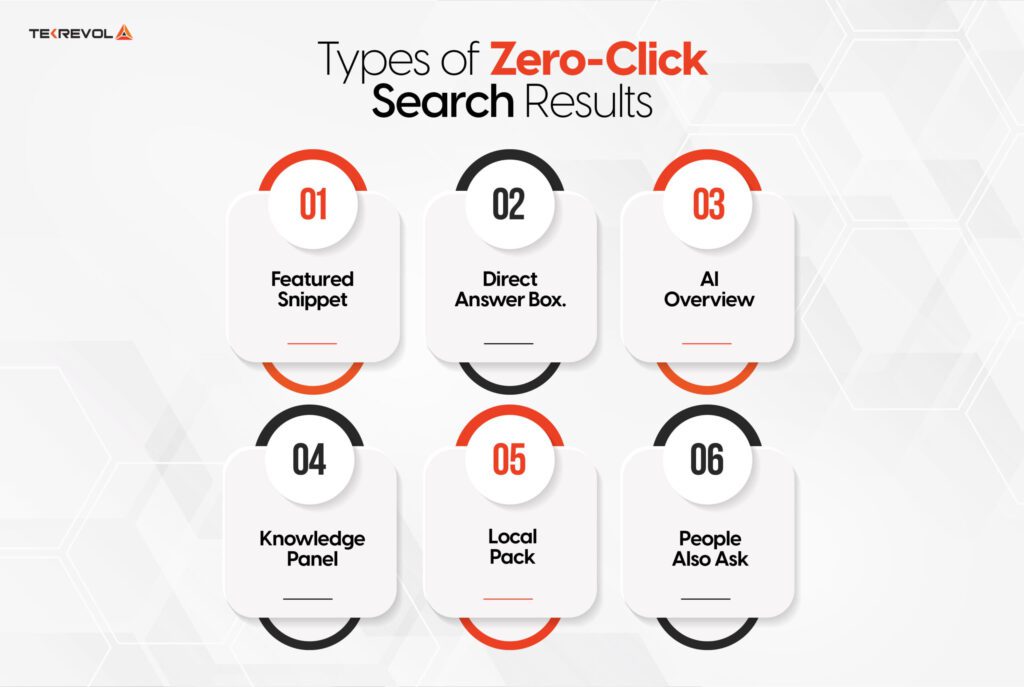
| Passive zero-click (Google) | Search results page — AI Overviews, featured snippets, Knowledge Panels | Google’s algorithm | Get cited as the source inside the answer |
| Active zero-click (Social) | LinkedIn, X/Twitter, Instagram, TikTok, newsletters | You (mostly) | Build authority and trust directly, no click needed |
Most beginner guides only talk about one of these. This article covers both, because your strategy for each is very different.
Why will it explode in 2024–2026
This isn’t new. Google has been chipping away at outbound clicks for over a decade with featured snippets, Knowledge Panels, and the local pack. But 2024 was the year the trend became impossible to ignore.
60%
of US Google searches end with no click to any website (Semrush, 2025)
−61%
organic CTR drops when AI Overviews appear (multiple studies, 2025)
99.9%
of informational queries now trigger an AI Overview (Ahrefs, Nov 2025)
+35%
CTR uplift for brands cited inside AI Overviews vs standard results
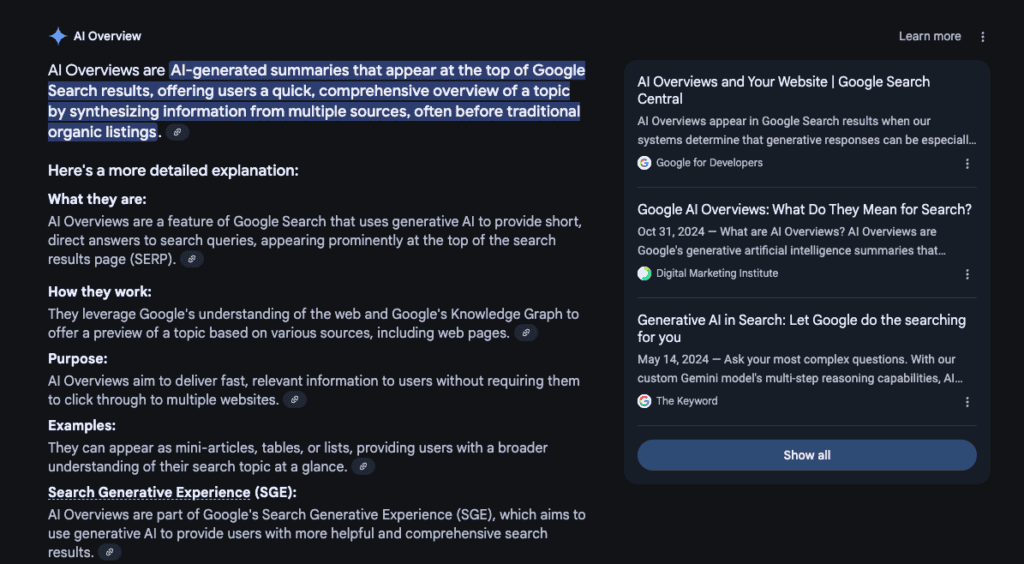
The driver is Google’s rapid expansion of AI Overviews. In January 2025, they appeared for roughly 6.5% of all queries. By March 2025, that had doubled to 13%. By late 2025, they appeared on over 27% of searches — with virtually every informational query (guides, how-tos, definitions, comparisons) being affected.
The brutal math: If your content ranks #1 on a query that triggers an AI Overview, you may still lose over half your expected clicks. Position matters less. Being cited in the AI answer matters more.
On social media, the shift happened for different reasons. LinkedIn, Instagram, and X all quietly adjusted their algorithms to deprioritize posts containing external links. A post that sends people away from the platform is a post that the algorithm treats as a threat to engagement time. Platform-native content — posts that deliver value without asking anyone to leave — gets pushed harder and further.
The two worlds of zero-click — how each one works
World 1: Search (passive zero-click)
Here, zero-click is something that happens to you. Google, Bing, and AI tools like ChatGPT and Perplexity are extracting information from your content and presenting it directly to users. You don’t control the format. You don’t control how much they take. And you don’t get the click.
But here’s the non-obvious part: being the source cited inside an AI answer is actually more valuable than ranking #3 in standard results. The cited brand gets the trust signal, the brand impression, and in many cases a click — at a far higher intent level than typical organic traffic. Studies suggest AI-referred visitors convert at significantly higher rates than standard organic traffic, precisely because they arrived after an AI system explicitly endorsed a source.
In one sentence: For search, your goal isn’t to avoid zero-click — it’s to be the zero-click answer. Get cited, not just ranked.
World 2: Social media (active zero-click)
Here, zero-click is a strategy you choose. Instead of writing a teaser post that says “I wrote an article about X — click the link!”, you write the full insight directly in the post. The value is in the feed. The link, if it exists, is optional and secondary.
This feels counterintuitive. Why give away your best content for free? Because the platform rewards it with reach, and reach compounds into authority, which eventually drives more of the high-intent traffic you actually want. The logic is: you stop chasing clicks from people who weren’t ready to click anyway, and instead build the kind of audience that seeks you out.
Who wins and who loses — an honest look
| Content type | Zero-click threat level | Zero-click opportunity |
|---|---|---|
| How-to guides & tutorials | High | High — format perfectly for featured snippets + AI citations |
| Definitions & explainers | High | High — concise 40–60 word definitions are prime snippet material |
| News & breaking content | High | Moderate — Google often answers news queries directly |
| Opinion & analysis | Low | High — AI struggles to replicate genuine POV; expert takes get cited |
| Original research & data | Low | Very high — AI cites data sources heavily; original data earns backlinks |
| Product pages (transactional) | Medium | Lower — purchase intent still drives clicks; comparison content is vulnerable |
| LinkedIn native posts | N/A | Very high — algorithm actively rewards platform-native long-form |
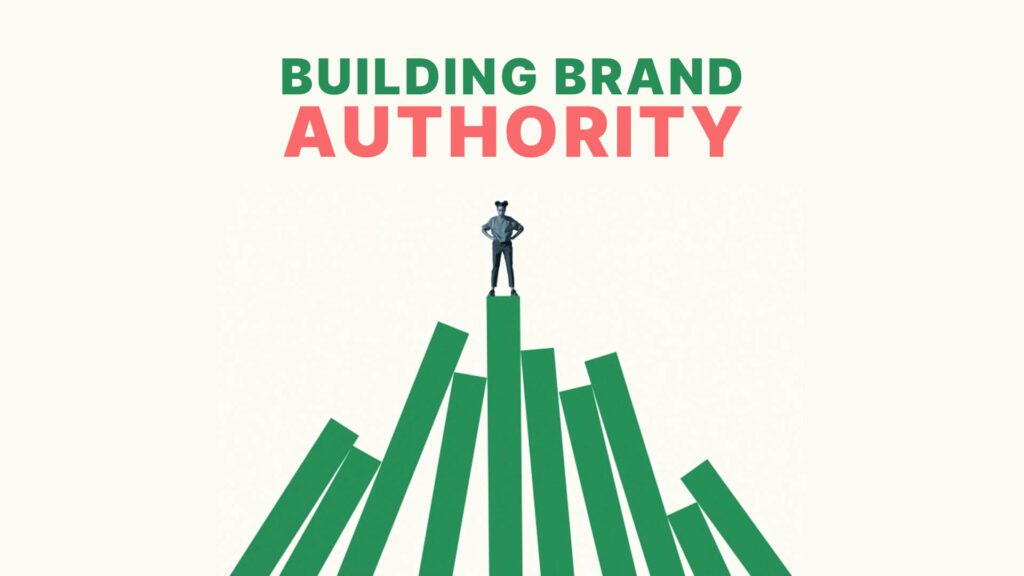
What most guides don’t tell you: The sites losing the most traffic to zero-click are the ones that built their entire business model around informational content with no defensible edge — generic how-to content that AI can now reproduce or summarize instantly. Sites built around original data, proprietary research, strong editorial voices, and community are largely holding their ground.
How zero-click content works in practice
For Google: the anatomy of a zero-click-friendly page
Google’s AI Overviews, featured snippets, and “People Also Ask” boxes prefer content that is structured to answer a specific question directly and concisely, then expands from there. The structure that works is sometimes called an “inverted pyramid” format, but the practical rules are simpler than that label suggests:
Framework: The Zero-Click Page Structure
1
Answer the question in the first 40–60 words
Place a direct, complete definition or answer immediately after the question heading. No preamble. No “great question!” warmup. Google pulls this verbatim or near-verbatim for featured snippets.
2
Structure your page with explicit H2/H3 questions
Each subheading should be a complete question. “What is zero-click content?” not “Overview.” This directly maps to People Also Ask boxes and voice search answers.
3
Use structured data (schema markup)
FAQ schema, HowTo schema, and Article schema signal your page’s structure to Google explicitly. This isn’t optional anymore — it’s infrastructure.
4
Cite sources and data where possible
AI Overviews cite sources that cite sources. Pages with verified, linked data are treated as more authoritative input material than opinion posts.
5
Maintain depth beyond the snippet
The direct answer earns the snippet. The depth beneath it earns the click from the 1–5% who want more. Don’t sacrifice one for the other.
For social media: what actually performs
The common failure mode is writing a long-form LinkedIn post and ending it with “full article in the comments.” That’s neither zero-click content nor a proper link post. It’s a hedge that delivers neither reach nor traffic.
Genuinely high-performing zero-click social content tends to follow one of these patterns:
Framework: Zero-Click Social Formats That Work
The Contrarian Take
State an uncomfortable truth about your industry. Back it with one data point. End with a clear implication. No link needed — the value is in the argument itself.
The Structured List Post
5–10 specific, actionable items on a narrow topic. Each item should be useful on its own. The post is the product.
The Personal Story With a Framework
A real experience that reveals a transferable lesson. The story provides emotional engagement; the framework provides practical value. This combination is very hard for AI to replicate.
The Carousel (Instagram / LinkedIn)
A visual breakdown of a concept. Slide 1 is the hook; slides 2–8 are the content; the last slide is the call to action. The whole lesson lives in the carousel.
A real zero-click workflow — step by step
Here is how a single piece of content can be built to work across both zero-click environments simultaneously. This isn’t theoretical — it’s a practical content workflow used by teams that have navigated the traffic decline successfully.
1
Choose a question-first topic
Start with a specific, answerable question. Not “content marketing tips” — but “what is zero-click content and does it hurt my traffic?” The sharper the question, the cleaner the zero-click answer you can provide.
2
Write a 50-word direct answer first
Before anything else, draft a clean, complete answer to the question in 40–60 words. This becomes your featured snippet target, your AI Overview citation target, and your social post hook — all at once.
3
Build depth beneath the answer
Expand into the mechanisms, trade-offs, examples, and nuances. This is what earns the click from the small percentage who want more — and what earns AI system trust as a credible, comprehensive source.
4
Add schema markup before publishing
Implement the FAQ schema for every question-answer pair. HowTo schema if the content is procedural. This is the step most beginners skip — and one of the highest-leverage technical moves available.
5
Repurpose the 50-word answer as a social post
Take that clean 50-word direct answer. Add one data point, one example, or one counterintuitive angle. Post it natively on LinkedIn or X. No link required. Let the platform distribute it on its own terms.
6
Track presence, not just position
Monitor whether your brand or content is being cited inside AI Overviews, ChatGPT responses, and Perplexity answers — not just where you rank in the 10 blue links. Different metric, different tools, different strategy.
The 80% solution stack
You don’t need a massive toolset to execute a solid zero-click strategy. Here is the minimal setup that covers the critical functions:
Ahrefs or SemrushTrack, which of your queries trigger AI Overviews + measure CTR shifts by position
Google Search Console: Monitor impressions vs clicks — the gap between the two reveals your zero-click exposure
Schema markup plugin (Yoast / Rank Math): Implement FAQ and HowTo schema without touching code
LinkedIn Analytics: Measure reach and engagement on native posts vs link posts — the difference will surprise you
AI visibility tracker (Profound / BrandMentions)Emerging category — monitors whether AI tools cite your brand in responses
What you don’t need: A complete content overhaul, a new website, or a dedicated AEO (Answer Engine Optimization) agency. Start with restructuring existing high-traffic pages to lead with direct answers. The gains from that alone can be significant.
How to measure what you can’t click
This is the question that stumps most beginners. If nobody clicks, how do you know if zero-click content is working?
Framework: Zero-Click Measurement Signals
| Signal | What it tells you | Tool |
|---|---|---|
| Impressions (Search Console) | Your content is being surfaced even if not clicked — brand awareness at scale | Google Search Console |
| AI Overview citations | Google is pulling from your content to answer queries — highest authority signal | Ahrefs, Semrush (new feature) |
| Direct traffic trend | People searching for your brand by name — the lagging indicator of zero-click brand building | GA4 |
| Email subscriber growth | Audience choosing to deepen the relationship — the true conversion of zero-click awareness | Your email platform |
| LinkedIn organic reach | Native post reach vs link post reach — shows algorithm preference in your niche | LinkedIn Analytics |
Limitations and honest trade-offs
Zero-click strategy is not a replacement for a complete content and SEO approach. Here is what it does not solve:
- It doesn’t grow your email list automatically. Reach without a conversion mechanism just builds someone else’s audience. You need a clear path from zero-click exposure to owned-channel conversion.
- It doesn’t work equally across all niches. The threat level of AI Overviews varies enormously by category. Health content is targeted far more aggressively than local business content, for example.
- Social platform algorithms change. LinkedIn’s preference for native content is strong today. That can reverse. Platform-native strategies carry platform risk.
- Citations in AI answers are opaque. There is currently no reliable, real-time way to know when and how often AI systems cite your content. Measurement is partial and improving slowly.
The core trade-off: Zero-click content builds reach and authority but makes the conversion funnel longer and harder to measure. If your business depends on immediate click-to-lead conversions, optimizing purely for zero-click is a strategic mistake. The right balance depends on your conversion model.
FAQ
Does zero-click content mean I should stop trying to get website traffic?
No. Transactional, high-intent queries still generate clicks. What’s changed is that informational content — guides, how-tos, definitions — is increasingly answered directly in the SERP. Shift your effort accordingly: lean into content types that still earn clicks (comparisons, tools, deep original research) and optimize informational content for citation rather than just ranking.
If Google takes my content and uses it in AI Overviews, is that legal?
This is an actively contested legal and policy question. Several major publishers have sued Google over AI Overviews. For now, opting out via robots.txt blocks crawling but also removes you from all search results. Most publishers accept the trade-off. The legal situation will evolve over the next 2–3 years.
Is zero-click content just for big brands with large audiences?
No, in some ways, smaller, niche publishers have an advantage. AI systems prefer authoritative, specific, well-sourced content over generic mass-market content. A niche expert with clearly demonstrated E-E-A-T signals can outperform a large publisher with thin, high-volume content.
Should I use zero-click content on LinkedIn even if my business isn’t B2B?
LinkedIn is primarily useful for B2B and professional audiences. For B2C brands, the same principle applies on Instagram (carousels) and TikTok (educational videos). The zero-click logic is platform-agnostic — it’s about delivering value within the feed, wherever your audience lives.
Final thoughts — the uncomfortable truth
Here it is: most content that existed before 2024 was built to earn a click, not to earn trust. Those are different things — and for a long time, they were correlated enough that the distinction didn’t matter. That correlation has broken down.
Google’s AI systems have made it possible to extract the transactional value of your informational content — the answer — without directing any attention back to you. That’s not going to reverse. The platforms aren’t going to rebuild the old link economy.
The brands that will hold their ground are the ones that understood something the traffic-chasing era obscured: clicks were always a proxy for trust, not trust itself. Zero-click forces you to build the real thing. If your content genuinely helps people — with original data, honest analysis, and a distinctive voice — you will find your way into AI answers, into people’s feeds, and into their decisions. Just not always through a click.
That’s a harder business to build. It’s also a more defensible one.
Sources
- Semrush Zero-Click Searches Study (2025) — semrush.com
- Onely: Zero-Click Search Is Evolving Into Zero-Search Discovery (Dec 2025) — onely.com
- Search Engine Journal: Google AI Overviews Cut Organic Clicks 38% (2025) — searchenginejournal.com
- Digital Bloom: 2025 Organic Traffic Crisis Report — thedigitalbloom.com
- Pasquale Pillitteri: Google AI Mode and Zero-Click (Apr 2026) — pasqualepillitteri.it
- Social Media Examiner / Rand Fishkin: Zero-Click Challenge (Sep 2025) — socialmediaexaminer.com
Related articles
→ How to evaluate your content’s E-E-A-T signals→ Featured snippets vs AI Overviews: what’s the difference?→ How to structure content for Answer Engine Optimization (AEO)→ Building an owned audience in the zero-click era
https://www.contentevaluator.online/contact-us/
Last updated: May 2026 · Statistics sourced from Semrush, Ahrefs, Search Engine Journal, and Only. AI Overview prevalence figures are subject to rapid change — verify with current tools before citing.
https://www.contentevaluator.online/blog/