

Ethical Parasite SEO
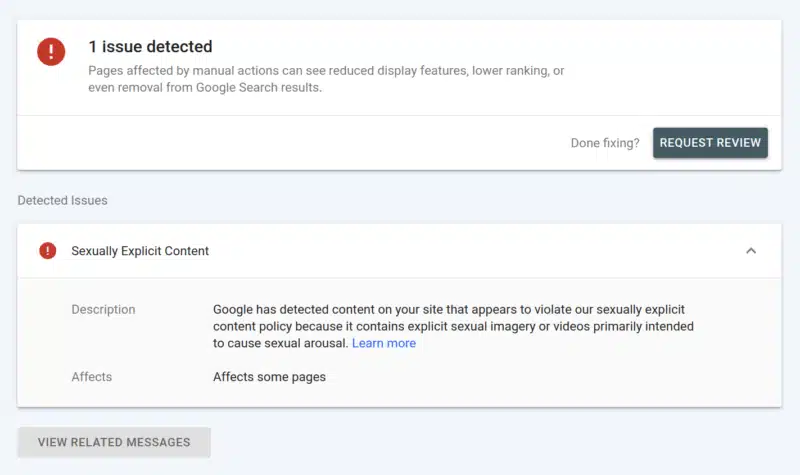
Google spent three years dismantling domain-authority leasing. This is a ledger of what enforcement actually did, what still legitimately transfers, and how to tell a real host partnership from the thing that gets you a manual action.
On the ledger
- Google confirmed on August 28, 2026 that starting August 30, site reputation abuse manual actions will stop affecting search results for users in the European Economic Area — the first time the effect of a spam penalty has differed by user location.
- The penalty itself and the underlying policy are unchanged. Outside the EEA, the same violation still costs a site its rankings.
- What still works in 2026 isn’t “parasite SEO” — it’s a much narrower list of arrangements that would make sense on the host even if nobody paid for them.
01What “Site Reputation Abuse” Actually Means
Parasite SEO is the practice of publishing your content on a high-authority third-party domain so it inherits that domain’s ranking signals — a CBD review on a hospital’s website, a “best personal loans” hub bolted onto a news outlet, a coupon subfolder on a magazine that has never covered retail in its life. For years this worked because Google’s ranking systems mostly evaluated a domain as a single unit: if nytimes.com ranked well, anything published under that root benefited.
Google formally named this “site reputation abuse” in its March 2024 core update and spam policy announcement, defining it as third-party content published mainly to exploit a host’s already-established ranking signals, with little real connection to what the host is about. Enforcement began as manual action only, with a two-month grace period before penalties took effect on May 5, 2024.
In November 2024, Google closed what had been the industry’s favorite defense. Site owners had argued that light editorial review — a quick read-through, a shared CMS login — made third-party sections legitimate. Google’s Search Quality team rewrote the policy to state plainly that the violation exists
regardless of whether there is first-party involvement or oversight of the contentGoogle Search Central, November 2024 policy updateThat single sentence killed the “we approve every article” defense that agencies had been selling to publishers for months.
02The Enforcement Ledger, 2024–2026
Treat this like an actual audit trail — because functionally, that’s what it is. Every entry below is a documented policy or enforcement event, not an estimate.
03Who Actually Got Hit
The policy wasn’t theoretical for long, but the timeline is easy to get wrong: enforcement went live May 5, 2024, yet the drops that made headlines took months to arrive. SEO analyst Glenn Gabe documented partial hits going back to mid-2024 (AP News Buyline, Time Stamped in July; Forbes and Fortune sections through September), but the wave that actually made news — and the one most people mean when they cite this policy — landed on November 20, 2024, days before Black Friday.
| Publisher | Affected section | What happened |
|---|---|---|
| CNN | Underscored (coupons/deals subfolder) | Deindexed to roughly 10 remaining URLs, per Glenn Gabe’s site-query checks the same day |
| Forbes | Forbes Advisor, including its health directory | Entire directories deindexed; Lily Ray reported the health section wiped alongside the main Advisor folder |
| USA Today / WSJ / The Sun | “Reviewed,” Buy Side, Shopping sections | Reported drops in organic visibility the same week, per Press Gazette’s roundup of affected publishers |
None of these publishers disappeared from Google entirely — their core news and editorial content was unaffected. What vanished was specifically the third-party commercial subfolders trading on the parent domain’s authority. That distinction is the entire policy in miniature: Google isn’t penalizing a domain for existing, it’s penalizing a specific arrangement.
04What Still Legitimately Transfers
The old promise — a free ranking boost by leasing someone else’s authority — is gone. What’s left is narrower, and it only holds up when the placement would make sense on the host even if nobody had paid for it. A useful adjacent concept here is barnacle SEO: rather than trying to make a third-party domain rank for something it has no business ranking for, you optimize your presence on a platform that already legitimately ranks for that topic — a well-maintained Trustpilot profile, a complete Google Business listing, an active presence on an industry directory.
| Approach | Mechanism | 2026 policy risk |
|---|---|---|
| Parasite SEO (classic) | Publish off-topic third-party content on a high-authority host to borrow its ranking signals | High — explicit policy violation |
| Barnacle SEO | Optimize your own presence on a platform that already ranks for the relevant query | Low — you’re not borrowing anything |
| Genuine host partnership | Content lives on a topically adjacent host with real editorial integration and disclosed authorship | Depends entirely on execution |
05The Host-Fit Score
This is a decision rubric, not a benchmark — score any prospective host placement against these five criteria before you commit budget to it. It won’t predict a manual action with certainty; nothing does, since Google doesn’t publish its detection thresholds. What it does is force the same question Google’s own guidance keeps repeating: would this placement exist if the host’s authority weren’t part of the pitch?
06The Regulatory Split That Just Opened
Until August 2026, Google’s enforcement was the same everywhere. That’s no longer true, and it matters for any multi-market content operation.
| Market | Manual action affects rankings? | Notes |
|---|---|---|
| European Economic Area | No, as of Aug 30, 2026 | Manual actions still issued and visible in Search Console; affected sections may still be ranked separately from the parent domain, but the demotion itself no longer applies to EEA search results |
| United States, UK, rest of world | Yes, unchanged | Full enforcement continues; a violation still costs global visibility outside the EEA |
Don’t read the EEA change as Google softening its position. Google’s own public statements around the change describe it as a change in enforcement approach demanded by the European Commission, not a policy reversal — the company has said it stands by the underlying rule. If you operate across regions, this creates a genuinely new compliance question: a placement that’s commercially survivable in EEA traffic may still cost you everything in the US or UK.
07Where People Still Get This Wrong
I’ve watched teams talk themselves into placements that fail the Host-Fit Score above a dozen times over, usually for the same three reasons.
Mistaking “the host reviewed it” for editorial integration. A quick approval pass from an intern isn’t oversight in the sense Google’s policy means — and after November 2024, oversight doesn’t even matter if the underlying purpose is signal-borrowing. This was the exact defense the policy update was written to eliminate.
Treating algorithmic enforcement as slower or softer than manual review. It’s the opposite. Since August 2025, detection doesn’t wait for a human to flag your site — the pattern gets caught by the same systems scanning everything else. There’s no longer a window where a new placement flies under the radar simply because nobody’s looked at it yet.
Assuming the EEA rollback creates room to relaunch. It doesn’t, unless every dollar of your traffic and revenue comes from EEA searchers specifically. For nearly every content operation, the rest-of-world enforcement is still the one that determines whether the placement survives.
08When to Avoid Host Placements Entirely
Being honest about limitations: there are situations where no amount of Host-Fit scoring makes this worth pursuing.
If your own domain has the authority to rank for the target keywords within a reasonable timeframe, building on your own property is almost always the better trade — you keep the equity, the links, and the audience relationship instead of renting them. If the topic is adjacent to Your Money or Your Life categories (health, finance, safety), the bar for editorial integration a host will actually meet is high enough that most commercial arrangements won’t clear it — this is precisely the category Forbes Advisor’s health directory fell into when it was wiped in the November 2024 wave. And if you can’t get a straight answer from the host about who reviews the content and how authorship is disclosed, that’s the answer — walk away before you’ve spent the budget. A practical tell: if the arrangement requires a separate content template, a different byline convention, or a disclaimer distancing it from the host’s regular editorial voice, the host itself doesn’t consider it part of their real coverage — and Google’s detection systems are built to notice the same seam.
09Frequently Asked Questions
Is parasite SEO illegal?
Does a manual action against the host also penalize my own site?
Can editorial oversight save a third-party placement from penalty?
Is guest posting the same thing as parasite SEO?
What is barnacle SEO and is it safer?
Does the August 2026 EEA change mean parasite SEO is coming back in Europe?
How would I know if a section on my own site could be classified as site reputation abuse?
Did the policy ever apply to AI-generated answers, not just classic search results?
What should I do if a section I run has already lost rankings under this policy?
10Sources
- Google Search Central Blog — “What web creators should know about our March 2024 core update and new spam policies”
- Google Search Central Blog — “Updating our site reputation abuse policy”
- Search Engine Roundtable — coverage of the August 2026 EEA enforcement change, and reporting on January 2025 EEA enforcement start
- ppc.land — “Google drops parasite SEO penalties in Europe under Commission mandate,” August 28, 2026
- Stan Ventures — “7 Google Spam Updates Later: Where SEO Stands in 2026” (source for the 40%/45% content-reduction figures)
- Search Engine Journal — “Google Strengthens Policy Against Site Reputation Abuse,” documenting the November 20, 2024 manual-action wave via Glenn Gabe and Lily Ray
- Press Gazette — “Publisher shopping revenue dealt blow on eve of Black Friday,” Dec 2024, publisher-by-publisher impact roundup
- GSQI (Glenn Gabe) — “A Nightmare on Affiliate Street,” documenting the mid-to-late-2024 rollout of drops ahead of the November wave
[Author name — add real byline before publishing]
[Add 2–3 sentences of real, verifiable credentials here: years working in technical SEO, specific sites or brands worked on, any relevant certifications. Don’t publish a placeholder bio — an unverifiable author bio undercuts the E-E-A-T signal this article is arguing for.]