Ultimate Guide to Zero-Click SEO
The Ultimate Guide to Zero-Click SEO: Get Traffic Without Clicks
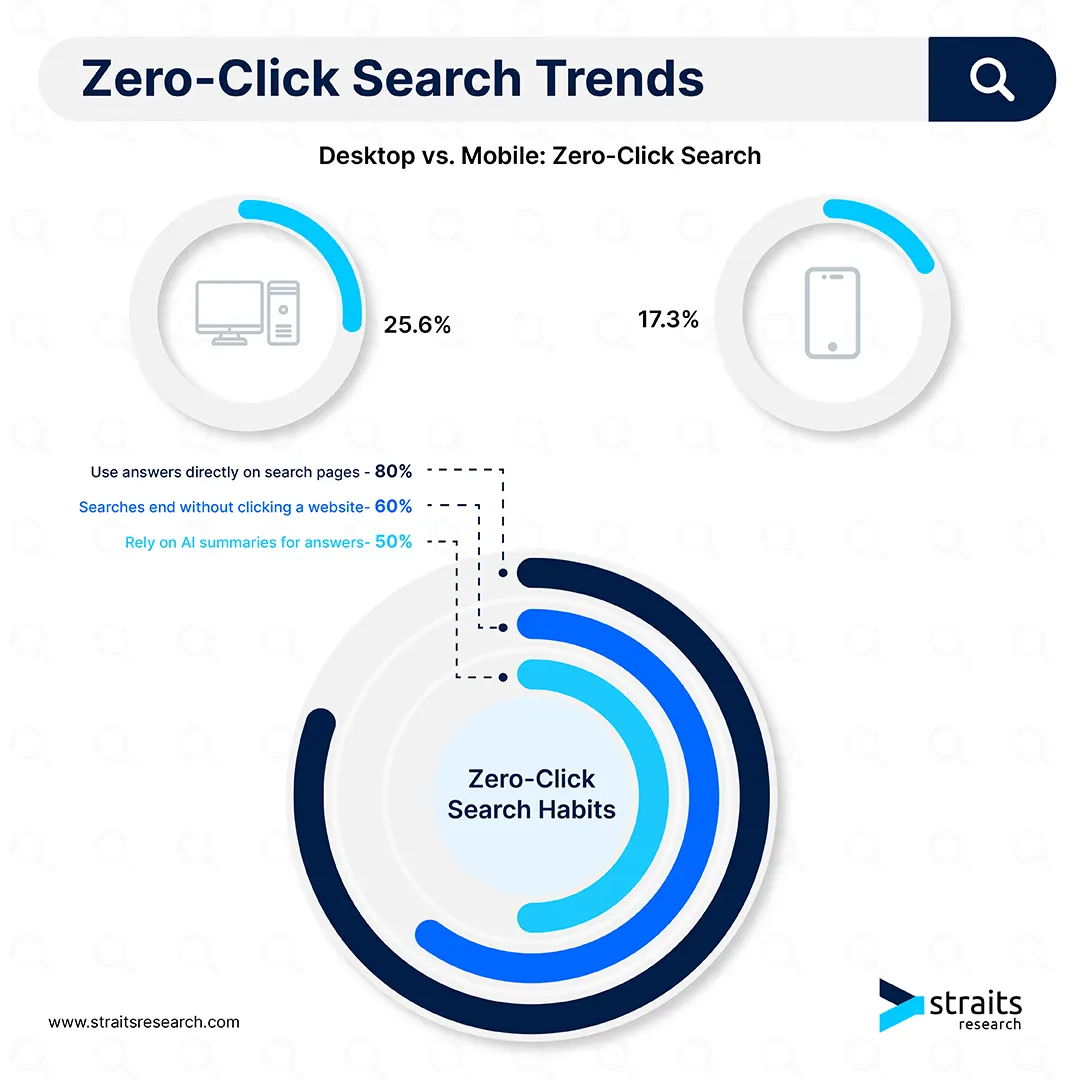
60% of Google searches now end without anyone visiting your website. Here is the strategy for turning that into a competitive advantage — not a death sentence.
Zero-click searches are not a bug to fix — they are a new distribution channel to own. Google has become an answer engine. Your job is to be the source Google quotes, not the link it buries. This guide gives you a decision framework for which queries to target, how to structure content so it gets cited by AI Overviews, and which metrics actually matter when traffic is no longer the primary signal of success.
- Informational queries are nearly dead for click traffic — re-frame them as brand touchpoints
- Transactional and local queries still drive clicks — protect these aggressively
- Schema markup, structured answers, and E-E-A-T are now infrastructure, not extras
- Branded search growth and direct traffic are the leading indicators of zero-click success
Should You Even Do This?
Not every business should chase zero-click visibility with the same urgency. Before restructuring your content strategy, be honest about where your revenue actually comes from. The math differs dramatically depending on your model.
✓ Pursue this now
- You sell a service where trust precedes purchase
- You run a local business (law, health, finance, trades)
- Your content is heavily informational and CTR has already dropped
- You are building brand awareness over 12+ month horizon
- Your competitors dominate traditional organic results
- You have schema markup infrastructure in place
✗ Pause and reassess first
- Your revenue depends entirely on informational traffic CPMs
- You have no brand differentiation — you are one-of-many
- Your team cannot maintain structured, regularly updated content
- You have no way to capture direct email or social following
- Your product requires demonstration, not discovery
Zero-click visibility only compounds if your brand is memorable enough that users search for you by name later. If you are anonymous in your niche, impressions are worthless. Build distinctiveness first.
What Zero-Click Search Actually Means (And Why Definitions Matter)
The term gets thrown around carelessly. A zero-click search is any search that ends without the user navigating to an external website — because the answer was fully resolved inside the SERP. This includes featured snippets, knowledge panels, People Also Ask boxes, local packs, weather/calculator cards, AI Overviews, and direct definitional answers.
What it does not mean: that your content was useless. In many cases, your content is the source that got quoted, summarised, or cited. The visit just never happened.
Zero-click often reflects excellent content — content so answer-complete that Google trusted it enough to surface the response directly. The failure is not in the content. It’s in the monetisation strategy that assumed every impression would become a pageview.
The SERP Features Driving This
| SERP Feature | Query Type | Still drives clicks? | Optimisable? |
|---|---|---|---|
| Featured Snippet | Informational, how-to | Sometimes | Yes |
| AI Overview | Broad, research, explanatory | Rarely | Yes — citation |
| Knowledge Panel | Entity / brand queries | Rarely | Yes — schema |
| People Also Ask | Follow-up, clarification | Often | Yes |
| Local Pack | Near me, local intent | Yes — maps | Yes — GBP |
| Calculator / Weather | Utility, instant answers | Never | No |
| Transactional Organic | Buy, hire, compare | Mostly yes | Yes — standard SEO |
The strategic implication is clear: not all queries are equal under zero-click pressure. Informational and educational content is where visibility has decoupled from traffic most dramatically. Commercial and transactional intent remains a relatively safer zone for click generation — AI Overviews appear in only around 10% of commercial queries, compared to much higher rates for informational searches.
The Mechanism: How Google Decides What to Surface
Understanding why Google elevates certain content into SERP features — rather than merely linking to it — changes how you write. Google’s extraction process is not random. It prioritises content that is:
- Answer-first: The direct response appears in the first 50–60 words of a section, without preamble
- Structurally legible: Question used as a heading, answer immediately below — matching NLP extraction patterns
- Authoritative by entity: Google’s Knowledge Graph recognises the publishing entity as credible in that domain
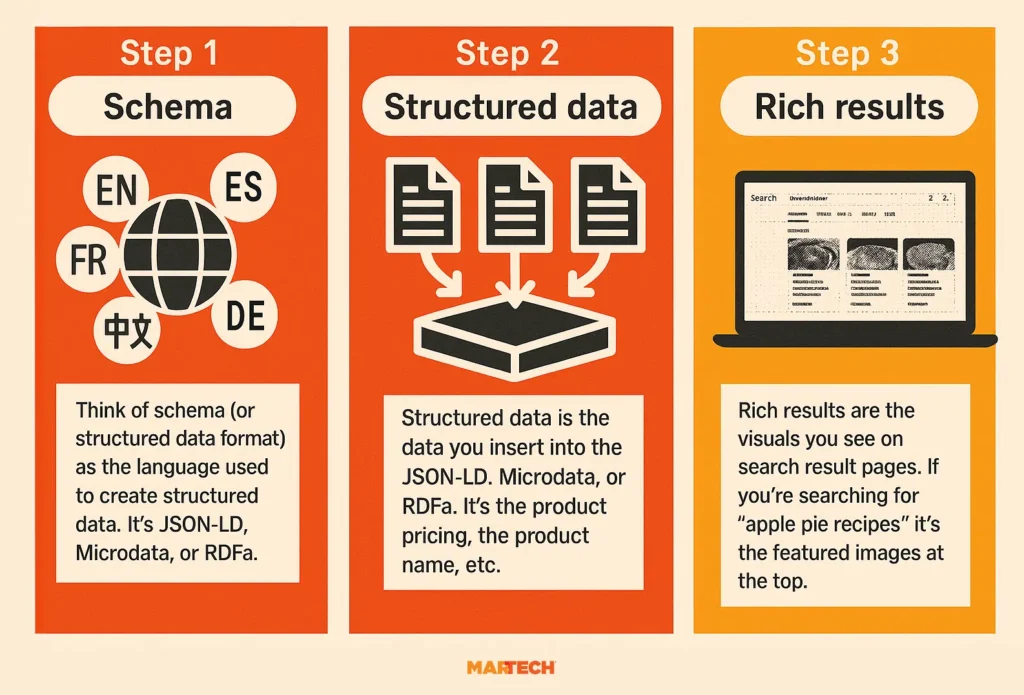
- Schema-annotated: Structured data provides machine-readable context — Google does not have to infer what the content is about
- Freshly updated: Stale content loses citation eligibility over time, particularly for volatile topics
“Snippets don’t just refer to featured snippets. When AI Overviews present answers on SERPs, they often present short paragraphs of text, lifted from multiple authoritative sources and synthesised using natural language.”
— Search Engine Land, Zero-Click Searches Guide, November 2025
This means the optimisation target has shifted from rank to extractability. A page ranked #3 with perfect answer structure will often be cited in an AI Overview before the #1 result that buries its answer in paragraph six.
Consequences: What the Data Actually Shows
Let’s be precise about impact, because the discourse tends to collapse several different phenomena into one panic.
Two simultaneous truths that most SEOs miss
- Impressions are up. One Search Console dataset showed impressions more than doubling after AI Overviews launched in May 2024. More people are seeing brands than ever before.
- Clicks are down — but not uniformly. News publishers lost roughly 26% of Google-referred traffic between mid-2024 and early 2025. SaaS and e-commerce brands with transactional focus saw much smaller declines.
- Conversion rates often improve. Visitors who do click through have already been pre-qualified by the SERP answer. They arrive with higher intent and narrower needs.
- Branded search grows. Users who see a brand cited in AI Overviews frequently return via direct or branded search. This is where the delayed ROI lives.
The honest version of the zero-click story: if your model depends on volume traffic to informational content, monetised through display ads or affiliate links, your model is structurally impaired. If your model depends on brand authority converting to sales, zero-click creates more touchpoints at earlier stages of the funnel.
What People Get Wrong
The most common mistake is treating zero-click as an SEO problem to solve rather than a business model question to answer. SEO tactics can help you appear in AI Overviews. They cannot help you if appearing in an AI Overview produces no downstream value for your business.
A second common mistake is abandoning informational content entirely. Pages that earn featured snippets often command a 42.9% click-through rate — higher than first-position organic results at 39.8%. The snippet is not always the end of the journey. For complex queries with follow-up need, it is frequently the beginning.
The Zero-Click Strategy: What to Optimise For
Most zero-click strategy guides give you a list of tactics. What they skip is the decision layer before the tactics. Here it is.
Step 1 — Segment your keyword portfolio
| Query Type | Zero-Click Risk | Strategic Posture | Primary Goal |
|---|---|---|---|
| Definitional / “What is” | Very High | Optimise for citation, not clicks | Brand mention in AI Overview |
| How-to / Procedural | High | Compete for snippet but build depth for click-through | Snippet + follow-up clicks |
| Comparison / Best X for Y | Medium | Comprehensive, specific enough to require a click | Organic click + conversion |
| Local / Near Me | Medium | Google Business Profile + local schema | Map click + phone/visit |
| Transactional / Pricing | Low | Standard commercial SEO — protect rankings hard | Direct click + purchase |
| Branded / Company name | Very Low | Knowledge Panel optimisation + reputation management | Click + trust reinforcement |
Step 2 — Restructure content for extraction
This is the tactical core of zero-click strategy. Google’s extraction algorithms prefer specific structural patterns. Adapting to these is not dumbing down your content — it is making it more useful to both machines and humans.
For any page targeting an informational or how-to query
- Use the exact query as an H2 heading — match the phrasing users type, not keyword-stuffed variations
- Open with a direct answer in 40–60 words — no throat-clearing, no “great question”, no preamble
- Follow with depth — the snippet satisfies scanners; the full section rewards readers who click
- Use bullet or numbered format where the answer is a list — these are extracted directly into AI Overviews and People Also Ask
- Close with a transition — a natural hook that invites the next click (“To see how this applies to [specific use case], see our guide on…”)
Step 3 — Implement schema markup systematically
Schema markup is no longer an advanced tactic. It is table-stakes infrastructure for 2025–2026 SEO. The most valuable types for zero-click strategy:
- FAQPage: Marks up Q&A sections for direct extraction into People Also Ask and featured snippet formats. Lead with the answer in the heading, answer within 60 words.
- HowTo: Step-by-step processes that Google can render as rich results, and feed into procedural AI Overviews
- Article + Author: Supports E-E-A-T signals — Google needs to know who wrote it and whether their expertise is verifiable
- Organization / LocalBusiness: Powers Knowledge Panel content and verifies entity information across the Knowledge Graph
- Product + Review: Protects transactional pages with rich results that keep clicks flowing
Schema markup increases your eligibility for SERP features — it does not guarantee them. Google still selects the best source. The markup makes you a candidate; the content quality makes you the winner.
How This Actually Works Together: The Zero-Click Content Workflow
Tactics in isolation fail. Here is how the pieces connect into an integrated system, from keyword identification to performance measurement.
Keyword audit — segment by zero-click risk
In Semrush or Ahrefs, filter your existing rankings by SERP features present. Flag all queries where a Featured Snippet, AI Overview, or Knowledge Panel already appears. These are your zero-click exposure points. Separate them from your commercial and transactional keywords — which need a different optimisation posture entirely.
Content restructuring — answer-first rewriting
For each high-risk informational page, apply the answer-first structure. Rewrite H2 headings to match exact query phrasing. Move the direct answer to the first paragraph of each section. Add FAQ schema via Rank Math, Yoast Premium, or Schema Pro. This is an editorial task, not a technical one — it takes 20–40 minutes per page done properly.
E-E-A-T reinforcement — make authorship visible
Google’s AI citation preference heavily favours content with verifiable expertise signals. Add author bylines with credentials, link author profiles to external authority signals (LinkedIn, published work, certifications), and add Organisation schema that connects your entity to your domain. This is the slowest step to take effect, but compounding over time.
Multi-platform presence — expand beyond Google search
Zero-click pressure from Google is accelerating the case for owned channels. Build email list capture at the “citation moment” — when a reader lands from a snippet or branded search, the goal is to convert them to direct. Social, YouTube, and newsletters become primary channels when organic click volume declines. This is not an SEO tactic — it is structural risk management.
Measurement — track the right signals
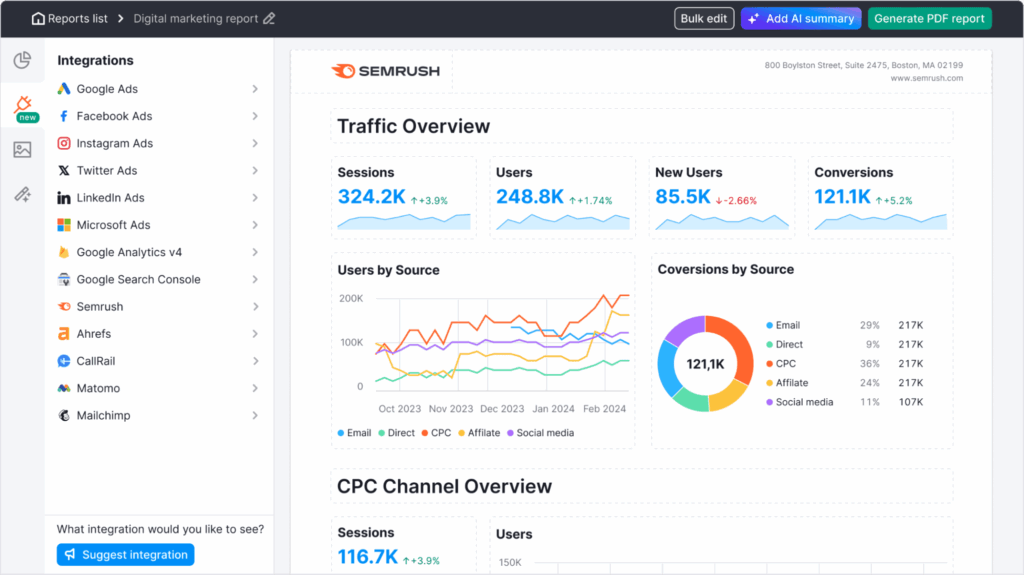
Shift from sessions to a broader visibility index. Track: Search Console impressions (not just clicks), branded search query volume month-over-month, direct traffic trend, featured snippet ownership count, and conversion rate of existing organic visitors. If impressions rise while clicks fall but branded search grows — that is the zero-click strategy working exactly as designed.
Steps 2 and 3 are native to your CMS workflow. Steps 4 and 5 require tools. The integration is manual at first — Google Search Console to Semrush/Ahrefs for impression tracking, and GA4 for branded traffic segmentation. Semi-automated tracking is possible via Ahrefs’ SERP feature column and SE Ranking’s snippet monitor.
The 80% Solution Stack
You do not need an expensive enterprise platform to execute zero-click SEO well. This is the minimal effective toolkit for most teams.
When to use schema automation tools (Rank Math, Yoast Premium)
- Use if: Your site runs WordPress or similar CMS, you have 10+ pages needing schema, you lack developer resource for manual JSON-LD
- Avoid if: You are on a headless or custom-built platform — schema plugins often conflict with custom rendering pipelines; write JSON-LD directly instead
- Use if: You want FAQ schema deployed at scale across blog content quickly
- Avoid if: Your FAQ content is thin or generic — Google ignores poorly-answered FAQs and may penalise schema misuse
Measuring Zero-Click Success: The Metrics That Actually Matter
This is where most teams go wrong. They keep measuring click volume, see a decline, and conclude the strategy is failing — when the strategy may be succeeding on every metric that precedes a purchase decision.
| Metric | What It Shows | Zero-Click Relevance | Tool |
|---|---|---|---|
| Search impressions | How often you appear in SERPs | Core KPI | Search Console |
| Branded search volume | Users searching your name directly | Core KPI | Search Console, Ahrefs |
| Featured snippet ownership | Position zero count, by query | Core KPI | Semrush, SE Ranking |
| Direct traffic trend | Returning visitors, recall conversions | Leading indicator | GA4 |
| Organic sessions | Raw click volume | Secondary only | GA4 |
| Organic CTR | Click rate by query | Diagnostic only | Search Console |
| Conversion rate (organic) | Revenue per organic visitor | Reassures on quality | GA4 |
In practice, the pattern that confirms a healthy zero-click strategy looks like this: impressions rising, organic sessions flat or slightly declining, branded search growing, direct traffic growing, conversion rate stable or improving. Businesses reporting this profile frequently find that revenue is outpacing what their click volume alone would predict.
Real Limitations — What Zero-Click SEO Cannot Do
Intellectual honesty requires acknowledging what this strategy does not solve.
- It cannot rescue a commoditised, anonymous brand. Brand impressions in AI Overviews only convert to branded search if the user remembers who they saw. A generic “10 best tools for X” list loses attribution almost immediately. Build a distinctive brand identity first.
- It cannot replace direct traffic channels. Email, community, and social are the downstream conversion layer. Zero-click impressions without owned channels create awareness that competitors capture instead.
- Industries with 15–25% click declines (health, education, weather) face structural revenue pressure that no amount of schema markup reverses. In these categories, the content model itself needs rethinking — toward paid, gated, or community formats.
- AI citation selection is not fully deterministic. Google’s AI Overview sources change as content is updated, competitors improve, and Gemini’s evaluation evolves. An AI citation today is not guaranteed tomorrow. This is not a stable moat.
- Schema markup misuse creates risk. Marking up content incorrectly, or applying FAQ schema to thin responses, can trigger manual review or structured data penalties. Do not automate schema without auditing output.
FAQ
Final Thoughts: The Trade-Off No One Wants to Name
Here is the uncomfortable truth underneath all of this.
Zero-click SEO strategy, done well, turns you into Google’s unpaid research department. You do the work of creating accurate, structured, up-to-date information. Google extracts your best sentences, presents them to millions of users, and gives you a brand mention in exchange for the clicks you used to earn. Whether that is a good trade depends almost entirely on how effectively your brand converts awareness into direct relationships.
The brands that will compound from this shift are those with strong email lists, loyal communities, and recognisable names — so that “I saw this on [brand]” becomes a search query. The brands that will struggle are those that have been optimising for anonymous volume: traffic from users who never knew or remembered who gave them the answer.
The hard decision zero-click forces is not a technical one. It is strategic: are you building a media property or a brand? Media properties need clicks to monetise. Brands need recognition, and recognition can come from the SERP itself.
Zero-click is not killing SEO. It is killing the version of SEO that was always parasitic — extracting value from Google’s index without building anything a human would specifically seek out. That version deserved to end.
Sources
- SparkToro & Similarweb (2024). Zero-click search analysis: 60–63% of Google searches end without a click. sparktoro.com
- Semrush (2025). Click-stream analysis: AI Overview impact on organic CTR. semrush.com
- Search Engine Land (November 2025). Zero-Click Searches: What They Are & How SEOs Can Adapt. searchengineland.com
- Dataslayer (2025). Zero-Click Search SEO Strategy: 2025 Guide + Data. dataslayer.ai
- Seer Interactive (September 2025). AI Overview CTR impact analysis. Cited in Digital Applied.
- Briskon / European Commission Joint Research Centre. Study on zero-click outcomes and brand impression uplift. Cited in Markteer.com