Brands Grow Without Website Clicks
How Brands Grow Without Website Clicks
(And Why It Works)
Nearly 60% of Google searches now end without a single click. The brands that figured this out first aren’t panicking — they’re pulling ahead. Here’s the strategic logic behind growth that doesn’t depend on traffic.
- Traffic is no longer the primary growth signal. Visibility, brand recall, and entity authority are.
- Google, ChatGPT, and Perplexity now answer questions in-platform. Your content is cited as a source — but the user never lands on your site.
- Brands that appear consistently in AI answers and zero-click SERP features build a trust moat that converts at higher rates when users do eventually search directly.
- Measuring this requires different signals: branded search volume, share of voice, AI citation frequency, and dark social spillover.
- The shift is not optional. Brands ignoring it are not preserving their traffic — they are slowly becoming invisible.
Should You Even Care About This?
Not every brand is equally exposed to the zero-click problem. Before rethinking your entire strategy, check where you actually stand.
Run this diagnosis: Open Google Search Console. Look at your last 6 months. Are impressions rising while clicks are flat or falling?
- Impressions up, CTR declining
- Informational content is your primary traffic source
- You target top-of-funnel keywords (how to, what is, best…)
- Your audience researches on LinkedIn, Reddit, or in Slack before buying
- You operate in SaaS, B2B services, media, or e-commerce
- Your traffic is almost entirely branded searches
- You serve purely local queries (directions, hours)
- Your buyers are completely offline and use no digital research
- You have no content strategy at all yet
If you’re in the left column, read everything. If you’re in the right, bookmark this for six months from now — it will be relevant soon enough.
The Contract That Broke
For 15 years, digital marketing ran on a single, simple deal: you create content, Google ranks it, Google sends you visitors. Businesses were built entirely on that exchange. Entire agencies existed to optimize it.
That deal is no longer in effect.
According to Q4 2025 data from Datos and SparkToro, 56% of Google desktop searches end without a click. On mobile, the figure is even more striking — 77% of mobile queries resolve entirely on the search results page. Users get their answer, close the tab, and go about their lives. Your content was cited in the AI Overview. Your brand name may have appeared. But your analytics dashboard recorded nothing.
“Impressions kept increasing, but CTR dropped sharply. Google now shows your content inside AI answers — so impressions go up, but clicks go down.”
— Ankush Gupta, SEO practitioner, via Semrush (Oct 2025)
This is the new operating environment. The question is not whether to accept it. The question is how to grow inside it.
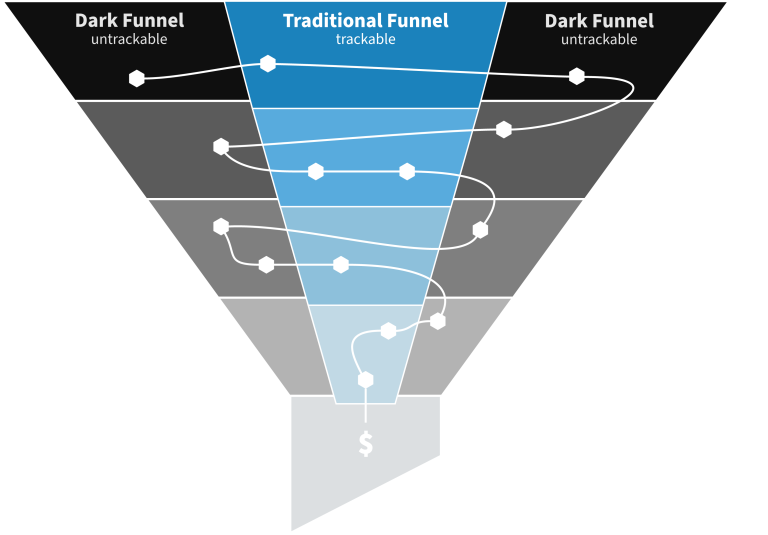
The uncomfortable truth is that many brands are growing without clicks — they just don’t know it yet, because they’re measuring the wrong things. The brands that have internalized this shift have stopped treating traffic as the primary proof of health, and started treating it as one downstream signal among many.
How Zero-Click Brand Growth Actually Works
👉 In one sentence: When your brand appears consistently in the answers people receive — whether from Google, ChatGPT, LinkedIn, or a podcast — it creates familiarity and authority that converts later, through a different channel.
Here is the mechanism in full:
A user searches “best content evaluation tools.” Your brand appears in a Google AI Overview as a cited source. No click happens. But the name registers.
The same user sees your brand mentioned in a LinkedIn post. Then in a Reddit thread. Then in a colleague’s Slack message. Each exposure reinforces the prior ones.
After repeated exposure, familiarity tips into trust. The brand no longer needs to be explained. It is assumed to be credible because it appears everywhere credible sources appear.
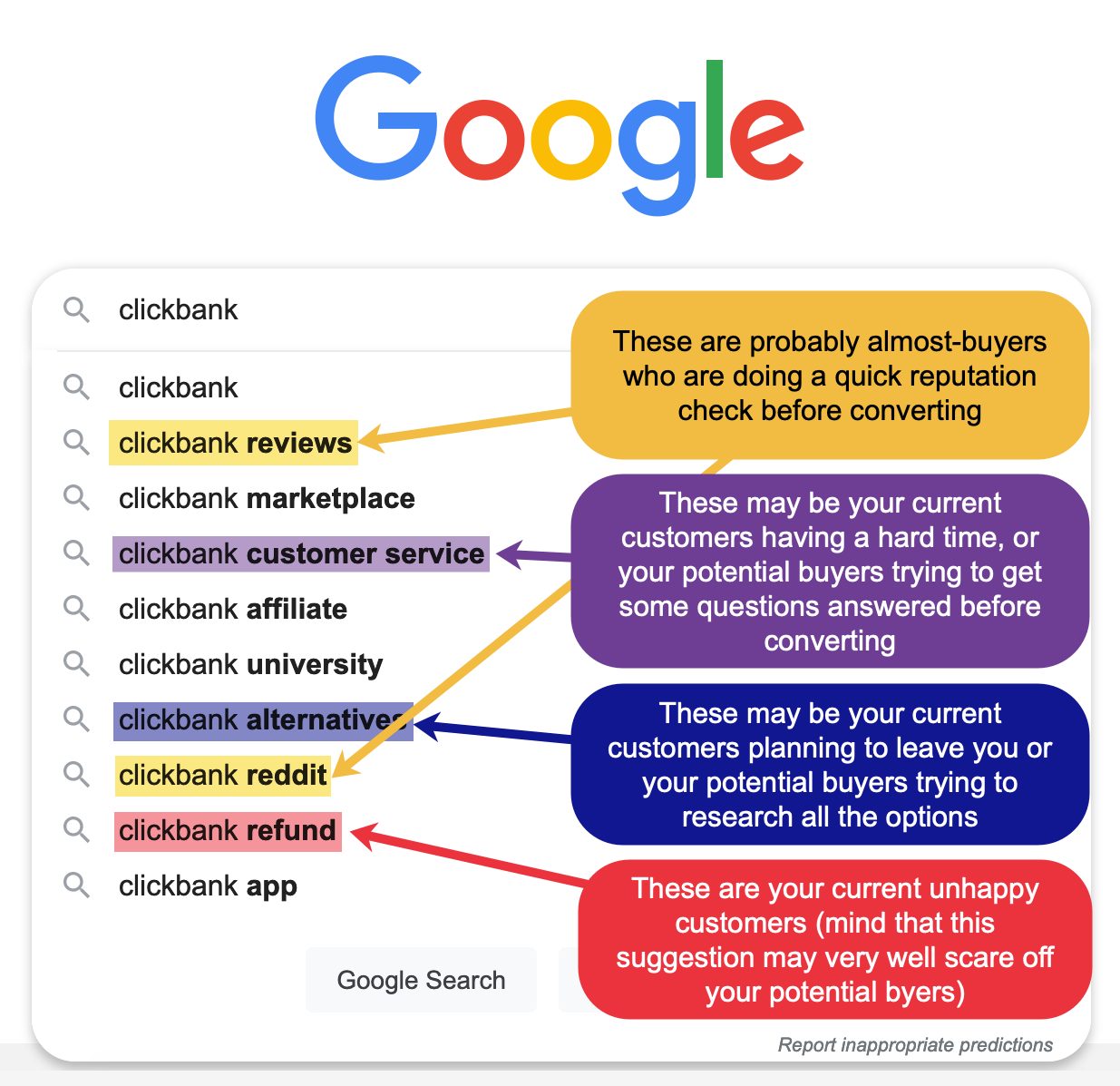
When the user is finally ready to act, they don’t search a category term. They search your brand name directly. This converts at 2–3× the rate of generic queries, because trust is already priced in.
Every new piece of content that earns AI citations, SERP features, or social engagement restarts the loop with a wider audience. The moat deepens with each cycle.
AI Visibility: The New Discoverability Edge
This is where the zero-click conversation gets genuinely new. For the first time in internet history, a brand can appear as the answer to a query — not just a link near the answer.
The landscape as of mid-2026:
| Platform | How brands appear | Click rate | Authority signal |
|---|---|---|---|
| Google AI Overviews | Cited in synthesized answer, sometimes with logo | Very low | High |
| Google AI Mode | Referenced in conversational response | ~7% (93% no-click) | Very High |
| ChatGPT Search | Cited with source link in responses | Moderate | High |
| Perplexity AI | Named in answer with citation badge | Moderate–High | High |
| Gemini (Google) | Often paraphrased, 92% without citation | Very low | Weak Signal |
| YouTube (in AI Overviews) | Video clips embedded in SERP answers | Low–Moderate | High |
Sources: Goodfirms 2026 SEO Survey, WITHIN (Feb 2026), Chad Wyatt (Dec 2025), DigitalApplied (Apr 2026)
The critical insight from Ahrefs’ 2026 research: external brand mentions correlate with AI Overview appearances at a coefficient of 0.664. What this means in practice is that earning coverage, citations, and unlinked mentions across the web — in publications, podcasts, forums, and expert roundups — is now as strategically important as building backlinks was a decade ago.
Sites with over 32,000 referring domains are 3.5× more likely to be cited by ChatGPT. But the underlying driver is brand authority, not link count. The links are proxies for the fact that many credible humans have found the brand worth mentioning.
The Click-Free Brand Growth Framework
| Growth Lever | How It Works | Measurable Signal | Timeline |
|---|---|---|---|
| Featured Snippets & AI Citations | Structured, direct-answer content earns position zero and AI source slots | Snippet presence, AI citation tracking via tools like Brand24 | 3–6 months |
| Platform-Native Content | LinkedIn carousels, YouTube Shorts, Reddit posts that resolve in-platform | Saves, shares, DMs, comment depth | 1–3 months |
| Unlinked Brand Mentions | Podcast appearances, expert quotes, forum discussions | Mention volume via Brand24/Mention, sentiment | 2–6 months |
| Dark Social Distribution | Content designed to be forwarded in chat, not shared publicly | Direct traffic spikes, “how did you hear” responses | Ongoing |
| Branded Search Growth | Everything above compounds into users searching your name directly | Google Search Console, branded keyword trends | 6–18 months |
How This Actually Works Together
The five levers above are not independent tactics. They form a single integrated system. Here is the workflow used by brands executing this well in 2026:
A long-form guide or research post with clear definitions, comparison tables, and direct-answer formatting. This is the content engine. It earns AI citations and featured snippets.
Break the core insight into a LinkedIn carousel (for professionals), a YouTube Short (for visual learners), a Reddit comment that adds real value to an existing thread, and a tight email summary for your list. Each of these lives natively on its platform — no click required to consume it.
Use the long-form piece as the credibility asset when pitching podcast hosts, journalists, and newsletter writers. You are not asking for a link. You are asking to be mentioned as an authority. The link may or may not follow — both outcomes build brand.
Before publishing, ask: “Is there one insight here that a marketing manager would paste into Slack right now?” If not, the piece is not yet dark-social-ready. Add a counterintuitive stat, a sharp framework name, or a concrete example that works out of context.
Monitor your brand name in Google Search Console monthly. Rising branded search volume is the delayed confirmation that the zero-click exposure loop is compounding. It typically lags activity by 60–90 days.
What to Measure Instead of Traffic
This is where most teams get stuck. If traffic is no longer the primary signal, what tells you the strategy is working?
Four metrics form the new performance dashboard for zero-click brand growth:
| Metric | What It Tells You | How to Track It |
|---|---|---|
| Branded search volume | People are actively searching your name — the ultimate trust signal | Google Search Console (filter by brand terms) |
| Share of voice | How often your brand is mentioned versus competitors across the web | Brand24, Mention.com, SparkToro |
| AI citation presence | Whether your content is being cited in AI Overviews and LLM answers | Manual spot-checks + AI visibility tools (Brand24 AI tab, Profound) |
| Self-reported attribution | How buyers say they found you — catches dark social & word of mouth | “How did you hear about us?” on all conversion forms |
The 80% Solution Stack
Pricing last checked: May 2026. Verify current plans before budgeting.
Limitations and Hard Trade-offs
Zero-click brand growth is genuinely powerful. It is also genuinely difficult to justify in most marketing reporting structures, and it comes with real constraints worth naming directly.
| Limitation | Severity | Mitigation |
|---|---|---|
| Attribution is structurally broken | High | Accept it as a feature, not a bug. Use self-reported attribution and branded search as proxies. |
| Slow time-to-signal | Medium | Branded search typically lags content activity by 60–90 days. Set expectation up front. |
| Harder to defend in performance reviews | High in short-cycle orgs | Run a parallel channel that generates measurable leads, and treat zero-click as the demand-creation layer feeding it. |
| Risk of building visibility without pipeline | Real | Zero-click content still needs a clear conversion path. Make sure branded search lands on a page that converts, not just an About page. |
| AI platform changes can remove your citations | Medium | Diversify across platforms. Don’t build the entire strategy around Google AI Overviews alone. |
FAQ
Final Thoughts
The most important reframe here is not tactical — it is about what you believe marketing is for.
If marketing is for generating sessions and pageviews, zero-click growth looks like a crisis. Every AI Overview that cites your content and satisfies a user without a click feels like theft. You invested in the content; Google extracted the value.
If marketing is for building a brand that people trust, recognize, and eventually seek out directly, zero-click growth is simply a different version of what great marketing has always done. Television advertising never generated website traffic either. Sponsoring a conference didn’t create UTM parameters. But both built brands that converted at scale when the moment arrived.
The brands winning in 2026 have made peace with an uncomfortable metric structure and an uncomfortable truth: most of your influence is happening in places you will never measure, through conversations you will never see, in the moments before a buyer decides whether you are even on their list.
You can optimize for measurable short-term traffic, or you can optimize for unmeasurable long-term trust. Both are legitimate strategies. Very few brands have the patience and organizational trust to execute the second one well — which is precisely why it remains a durable competitive advantage for those who do.
Primary Sources
- Datos & SparkToro, Q4 2025 Zero-Click Search Report — team4.agency
- Goodfirms, “AI SEO Statistics 2026: 35+ Verified Stats” — goodfirms.co
- Ahrefs, AI Overview Citation Correlation Study (2026) — cited in DigitalApplied.com
Secondary Sources
- Semrush Blog, “How to Win in a Zero-Click Search Market” (Oct 2025) — semrush.com
- WITHIN, “Zero-Click Searches: Why 60% of Google Users Never Click Through” (Feb 2026) — within.co
- Chad Wyatt, “Zero-Click Content in 2026” (Dec 2025) — chad-wyatt.com