

Pinterest SEO in 2026
Pinterest stopped being a batch-scored feed sometime in the last eighteen months. It now reacts to a save while you’re still holding your phone. Here’s what actually moves a Pin through search in 2026 — and what’s just recycled 2019 advice wearing a new date stamp.
On this page
- The state of Pinterest search in 2026
- What actually changed under the hood
- The four signals that decide whether a Pin ranks
- A model for thinking about Pin decay (and why “post more” is bad advice)
- The tactics that still work in 2026
- What Ask Pinterest and Pinterest MCP mean for your strategy
- Where Pinterest SEO quietly fails people
- Frequently asked questions
Thin, derivative content on your website. No amount of Pinterest keyword-stuffing fixes that. Pinterest’s domain-quality signal — by its own public guidance and by independent analysts who track it — weighs heavily on what’s on the other side of the click, and in 2026 that scrutiny is sharper and faster-reacting than it was two years ago. It’s the biggest reason Pinterest SEO campaigns fail, and it’s rarely the first thing a Pinterest course tells you.
With that out of the way, here’s what’s actually different this year.
The state of Pinterest search in 2026
Pinterest closed Q2 2026 with 640 million global monthly active users, an all-time high and its eleventh straight quarter of double-digit user growth, up 11% year over year — straight from the company’s own Q2 2026 earnings release, filed with the SEC on August 4, 2026 (Form 8-K, accession no. 0001506293-26-000102).1 Quarterly revenue reached $1.18 billion, up 18% year over year, the fourth consecutive quarter above the $1 billion mark, with global ARPU of $1.86.1 One quarter earlier, Q1 2026 revenue was $1.008 billion on 631 million MAUs (Form 8-K, accession no. 0001506293-26-000066, filed May 4, 2026), so growth has held steady rather than decelerated between quarters.1
A small, honest tangent that matters more than it looks: search “Pinterest monthly active users 2026” and you’ll get answers ranging from under 500 million to 640 million, sometimes published the same month on the same domain that ran a stale figure a year earlier. Most of that spread is aggregator sites quoting the wrong quarter. The only numbers worth planning a strategy around are the ones Pinterest itself files with the SEC each quarter — everything else is a guess wearing a citation.
The regional breakdown in that same Q2 2026 filing is more useful for strategy than the headline number, and it splits three ways, not two. U.S. and Canada carries 106 million MAUs (+4% YoY) and by far the highest ARPU, at $8.30 (+14%). Europe carries 157 million MAUs (+8%) at an ARPU of $1.35 (+4%). Rest of World carries the most users of any region — 377 million (+15%) — at an ARPU of just $0.23 (+21%).1 That’s roughly a 36x monetization gap between Pinterest’s most and least mature markets, and it’s the real story behind Pinterest’s growth: the user base is globalizing fast, but ad revenue is catching up from a much lower base, especially outside North America and Europe.
Ninety-six percent of top Pinterest searches are unbranded — a figure Pinterest has cited since at least 2023 and reaffirmed at its September 2025 Pinterest Presents advertiser summit, alongside a stat that 45% of clicks happen within the top ten search results.2 A separate, Pinterest-cited figure — 39% of consumers say they’ve used Pinterest as a search engine — comes from an Adobe survey of 800 consumers fielded March 12, 2025.3 Neither is a 2026-native data point, and I’m dating them explicitly rather than letting the “2026” framing imply otherwise. But they’re not stale in any way that matters here: they describe a structural search behavior, not a number that resets every quarter. Read together, that’s the opportunity — people search for the thing before they’ve picked who sells it, and a disproportionate share of the payoff sits in a small number of top slots.
What actually changed under the hood
For years, “the Pinterest algorithm” meant a model that re-ranked your account in batches — you’d post, wait, and see results days later. That’s no longer accurate. Two shifts define 2026. Worth saying up front: Pinterest hasn’t published engineering documentation of its ranking mechanics, so both shifts below rest on independent marketing-analyst reporting.4 Several of those publishers cite and cross-link each other, which makes it weaker evidence than genuinely independent confirmation would be. Read it as current analyst consensus, not a statement from Pinterest’s engineering team.
1. Engagement now appears to propagate closer to real time
Multiple independent trackers report that when someone saves or clicks a Pin, Pinterest’s system reacts within that same session and starts surfacing related content to that user almost immediately, rather than waiting for the next model retraining cycle.4 A single strong day of engagement — a Pin catching a trend, a seasonal spike — can compound faster than it used to. It can also decay faster if the follow-through content isn’t there.
2. A reported freshness window for new Pins
Industry trackers describe a January 2026 change giving new Pins a roughly 24-to-48-hour visibility boost, letting fresh content prove itself before ranking settles into its longer-term pattern.4 That lines up with Pinterest’s own long-standing guidance that it prioritizes testing new Pins and new imagery.9 It’s a real shift from the “old Pins never die” mental model a lot of 2023-era advice still repeats.
3. Pinterest is quietly becoming an AI-native discovery layer
In June 2026, ahead of Cannes Lions, Pinterest announced AI infrastructure that changes what “search” means on the platform: Ask Pinterest, a conversational, limited-access shopping app built on its internal “Taste Graph”; Pinterest MCP (Model Context Protocol), which exposes campaign, analytics, and keyword data to AI agents and copilots for a small alpha group of agency partners; a Performance+ creative-selection model that lifted click volume 7.5% over the previous approach in Pinterest’s own testing; and Business Assistant, an AI collaborator inside Ads Manager currently in beta.5 Pinterest’s Chief Business Officer Lee Brown framed it directly: discovery will increasingly be “shaped by context, taste, and trusted recommendations” rather than keywords alone.5
None of that means keywords stop mattering — they’re still the primary way Pinterest’s models understand what a Pin is about. It means the layer sitting on top of keyword matching is getting thicker, faster, and more personalized, which changes what “optimized” looks like.
The four signals that decide whether a Pin ranks
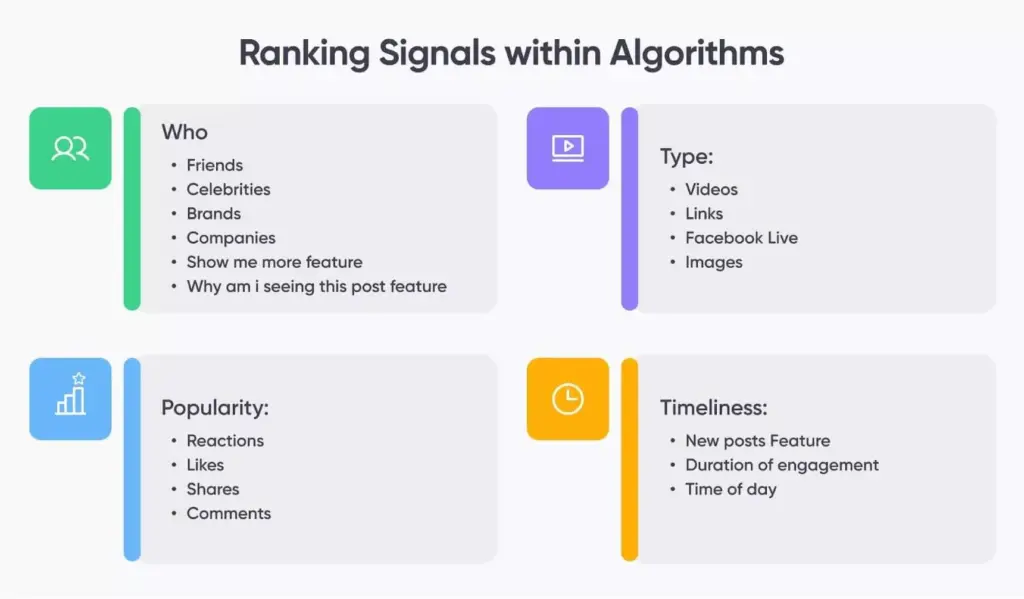
Strip away the marketing language, and Pinterest’s own guidance plus consistent independent-analyst reporting converge on four signal groups.4,6,7 Nobody outside Menlo Park knows the exact internal weighting. Treat any article that hands you precise percentages for a black-box ranking model with suspicion.
| Signal | What it actually measures | What moves it |
|---|---|---|
| Pin quality | Is the image/video well-made, correctly formatted, and does the platform have confidence in what it depicts? | Vertical 2:3 images, legible text overlay, no low-effort stock-photo templating, correct dimensions for video/Idea Pins |
| Engagement / Pinner quality | Do people act on this Pin, and is your account generally trustworthy? | Saves weighted more heavily than raw impressions; sustained performance over months beats a single viral spike; unreported, unflagged account history |
| Relevance | Does the Pin’s text (title, description, alt text) and board placement match real search intent? | Specific, query-matching titles and descriptions — “Vegan Soy Candle for Sustainable Gifting,” not “New Product” |
| Domain quality & freshness | Is the linked site trustworthy, and is the content current? | Time-on-site after click-through, direct-from-website pin saves, low report/flag rate, content that isn’t stale relative to the query |
Pinterest explicitly models its domain-quality signal on search-engine logic — the same “does this page satisfy the visit” test Google chases.6 Already doing serious on-site SEO? You’re most of the way to Pinterest domain quality without touching Pinterest at all.
A model for thinking about Pin decay (and why “post more” is bad advice)
The Freshness-Compounding Model
I built this for clients who keep asking “how many pins per day,” because that question has no single right answer, and the real answer — “it depends on save velocity relative to your catalog size” — doesn’t fit in a tweet. It’s my way of reasoning about the pattern, built from publicly reported mechanics: the 24–48 hour freshness window, real-time engagement propagation, and Pinterest’s well-documented preference for sustained-over-months performance.4,7 It isn’t a disclosed Pinterest formula — treat the numbers below as a way to reason about trade-offs, not measured data.
Every new Pin gets a short “trial window” (roughly the 24–48 hours reported by industry trackers, sourcing caveat above). What happens after that window depends on two things: early save velocity (saves per hour during the trial) and topical durability (does the underlying query keep getting searched months later — “meal prep ideas” — versus a Pin tied to a week-long trend). High velocity, low durability spikes and fades. Modest velocity, high durability compounds slowly and is often still driving clicks a year later.
That’s not just theory. Tailwind’s 2025 Benchmark Study — pulled from its own platform-wide user data, not a single account — found that more than 60% of all Pinterest saves come from Pins over a year old, and that more than 90% of referral traffic to creator and brand websites traces back to newly created Pins rather than repins of others’ content.10 Put those two numbers together and the model’s logic isn’t hypothetical: the content earning saves today is disproportionately old, and the content driving clicks is disproportionately original. Volume-repinning optimizes for neither.
The planning implication: publishing 15 rushed Pins a week to “feed the algorithm” dilutes your account’s average save velocity per Pin — the opposite of what you want once the trial window closes. Publishing 3–5 well-targeted, original Pins against durable, evergreen queries gives each one a fairer shot at clearing that window with real signal.
The tactics that still work in 2026
Keyword placement, still the foundation
- Business profile name and bio carry keyword weight — Pinterest indexes them the way a search engine indexes an About page
- Board titles and descriptions should describe a category a real person would search, not a vague vibe (“Sustainable Gifting Ideas,” not “Faves”)
- Pin titles under 100 characters, front-loaded with the specific query, not the brand name
- Alt text pulled from your site should be genuinely descriptive — Pinterest scans it directly9
- Search Pinterest’s own autocomplete and guided search chips for the actual phrasing Pinners use — it’s often different from Google phrasing (“content marketing infographic ideas” instead of “content marketing tips”)9
Rich Pins are still worth the setup cost
Rich Pins pull live data — price, ingredients, article metadata — directly from your site and keep it updated automatically when the source page changes.4 They don’t directly juice the ranking algorithm, but they materially improve click-through and time-on-site, which are exactly the domain-quality inputs that do.
Publish for durability, not volume
Two to five well-targeted, fresh Pins per week is enough distribution under the current model — the same conclusion Tailwind’s 2025 benchmark data points to (60%+ of saves from year-old-plus Pins, 90%+ of referral traffic from newly created rather than repinned content).10 The old “pin 30–50 times a day” advice describes a Pinterest that stopped existing years ago, and it now actively works against you by diluting account-level engagement quality.9
What Ask Pinterest and Pinterest MCP mean for your strategy
Most Pinterest SEO content published this year hasn’t caught up to this part, because it’s genuinely new — the Cannes 2026 announcements landed in June.5 Below, what Pinterest actually said is separated from what I think it implies.
What Pinterest announced, in its own words: Ask Pinterest is built for decisions that don’t fit a single search — planning a dinner party on a budget, furnishing a room over time — and it’s explicitly experimental and limited-access.5 Pinterest MCP exposes campaign, analytics, and keyword data to AI agents and copilots, and is currently limited to a handful of named agency partners, not open to individual creators.5
What I’d actually do about it right now
Neither product is optimizable today in any concrete, testable way. Content that answers one narrow query well but doesn’t connect to the adjacent decisions a real project involves is built for a search paradigm Pinterest is visibly moving away from. Structuring content in connected clusters — a room-by-room renovation series, not one isolated “kitchen backsplash ideas” post — is a reasonable hedge against that direction. It’s not a documented ranking tactic; it’s a bet.
On MCP: content that’s unambiguous, well-labeled, and structured — clear headings, explicit product/price data via Rich Pins — should be easier for both Pinterest’s own models and third-party AI agents to represent correctly. General “structured content ages well” logic, applied to a new context. Nobody outside the alpha partner group has enough information to say more.
The uncomfortable version of this argument, stated plainly rather than hinted at: keyword optimization has a half-life. Not an expiration date — matching a Pin’s text to what people type is still the primary way Pinterest’s models classify content today, and that isn’t changing this year or next. But when a platform’s own leadership is on record saying discovery will be “shaped by context, taste, and trusted recommendations” rather than keywords alone,5 the ceiling on pure keyword-matching as a standalone strategy is visibly lower than it was three years ago. This is my read of where the puck is going, not a documented Pinterest position — treat it as a reason to build topical depth and connected content clusters now, while keyword tactics still work, rather than a reason to stop doing keyword work today.
Where Pinterest SEO quietly fails people
| Situation | Verdict | Why |
|---|---|---|
| New account, thin site, aggressive daily pinning | Won’t work | Domain quality and pinner trust take time; volume can’t substitute for it |
| Established blog, evergreen content, 3–5 focused Pins/week | Realistic | Matches the current freshness + durability model directly |
| Repinning others’ content to “stay active” | Won’t work | Pinterest has moved decisively toward rewarding original, freshly-created Pins over repin volume9 |
| Fast-loading site, Rich Pins enabled, clear intent-matching titles | Realistic | Directly improves the domain-quality and relevance signals Pinterest has confirmed it measures |
Frequently asked questions
How long does it take to see results from Pinterest SEO?
Do I need a Pinterest Business account?
Does posting more Pins per day help?
What’s the single highest-leverage fix for a stalled Pinterest account?
How is Pinterest’s algorithm different from Google’s?
What is Ask Pinterest, and should I do anything about it yet?
Key takeaways
- Pinterest hit 640M monthly active users and $1.18B in revenue in Q2 2026 — verify any Pinterest statistic against the company’s own SEC filings, not aggregator round-ups
- Ranking now happens partly in real time, with a reported (not Pinterest-confirmed) 24–48 hour freshness window for new Pins
- Four consistently reported signals drive ranking: Pin quality, engagement/Pinner quality, relevance, and domain quality/freshness
- Volume-based pinning strategies are outdated; 2–5 focused, durable Pins per week now outperforms daily mass-posting
- Domain quality — what happens after the click — is frequently the real bottleneck, not Pinterest optimization itself
- Tailwind’s own benchmark data backs the durability argument directly: 60%+ of saves come from Pins over a year old, and 90%+ of referral traffic comes from newly created Pins, not repins
- Ask Pinterest and Pinterest MCP signal a shift toward AI-mediated, multi-step discovery worth planning content clusters around — and, on the author’s read, a sign that pure keyword-matching has a half-life worth planning around now
If you’re building out a broader content strategy around this, our keyword research guide and our breakdown of the SEO mistakes that quietly kill rankings both apply directly to the domain-quality half of this equation — Pinterest traffic only compounds if the page it lands on holds up.
Sources
- Pinterest, Inc., Form 8-K earnings releases: “First Quarter 2026 Results” (May 4, 2026, accession no. 0001506293-26-000066) and “Second Quarter 2026 Results” (Aug. 4, 2026, accession no. 0001506293-26-000102), plus the corresponding Form 10-Q filings — full text at sec.gov/cgi-bin/browse-edgar?action=getcompany&CIK=0001506293&type=8-K.
- Pinterest Newsroom, “Pinterest introduces Top of Search ads and new advertising tools,” announced at Pinterest Presents, Sept. 25, 2025; eMarketer, “Pinterest’s director of strategy on how consumers use its platform” (96% unbranded-search figure dates to at least 2023).
- Search Engine Land / Adobe Express, “Pinterest is emerging as a go-to search engine,” survey of 800 consumers fielded March 12, 2025.
- Optimise Your Marketing, “Pinterest Algorithm 2026: How the Ranking System Actually Works” — independent industry reporting on real-time ranking and the freshness window; not an official Pinterest disclosure.
- Pinterest Newsroom, “Pinterest’s new AI tools for the discovery era: from ads to personalized shopping,” June 17, 2026.
- Dash Social, “How the Pinterest Algorithm Works in 2026”; Lyfe Marketing, “Everything You Need to Know About Pinterest Algorithm in 2026.”
- Sprout Social, “Pinterest SEO: 8 Essential Steps for Visibility.”
- 84pins, “Pinterest Statistics 2026: The Numbers Business Owners Should Know” (methodology note on sourcing from official filings).
- Outfy, “Pinterest SEO 2026: Complete Guide to Traffic & Sales”; Tailwind, “Pinterest Keywords: The Ultimate Guide.”
- Tailwind, “Pinterest Marketing: The Complete 2025 Guide” — 2025 Benchmark Study data on save longevity and Creates vs. Saves traffic share.