

AI Overviews just deleted 61% of organic CTR for informational queries. The old volume-minus-difficulty math is dead. This is what serious keyword research looks like now — and how to hack every SERP feature that’s eating your traffic.
Let me tell you about the worst keyword research decision I’ve ever watched a team make. They spent three months building a 200-page content silo targeting high-volume informational keywords — “what is,” “how does,” “explain” — perfectly optimized. Beautiful structure. Real expertise. Launched in late 2024. By Q2 2025, Google’s AI Overviews had swallowed every single one of those queries. Traffic cratered 70% before anyone noticed the data. The keywords were right. The intent match was right. The timing was catastrophically wrong. That team wasn’t doing bad keyword research. They were doing old keyword research.
- The Reframe: Why Volume × Difficulty Is a Broken Formula
- The CTR Collapse: What the Data Actually Says
- Mapping the 2026 SERP: 37 Features, 5 That Matter
- The SERP Feature Hacking Framework (New Model)
- The Research Process, Step by Step
- Intent Triage: The Decision Matrix
- Winning AIO Citations: What the Data Shows
- The Honest Tool Stack for 2026
- The Unpopular Take: Most Content Silos Are Now a Liability
- Quick Wins Checklist
The Reframe: Why Volume × Difficulty Is a Broken Formula
For fifteen years, the dominant keyword research heuristic has been a two-variable filter: find keywords with high search volume and low keyword difficulty. Bolt on a traffic potential estimate. Build the content. Wait for rankings. It’s clean. It’s teachable. And in 2026, it’s increasingly suicidal for informational content.
The formula never accounted for what happens after you rank. It assumed that ranking = traffic, and traffic = clicks. That assumption collapsed when Google began intercepting demand at the results page itself — first with featured snippets, then with People Also Ask, and now, at scale, with AI Overviews that appear in anywhere from 25% to 50% of all tracked queries depending on your niche and query mix.
“The average first page of Google results now contains 4.2 distinct SERP feature types, up from 1.8 in 2019. Only 1.16% of first-page results have no SERP features at all.”
Semrush Sensor, March 2026
Think about what that means. You’re not competing for a ranking anymore. You’re competing for attention inside a page that is increasingly designed to keep users on it. The old formula gave you a seat at the table. The new game is about owning the table itself.
Here’s the framework shift in a single sentence: keyword research in 2026 is about identifying where your content can own a SERP feature, not just where it can rank.
Not every niche is equally affected. Transactional and navigational queries — “buy [product]”, “login to [tool]” — have far lower AI Overview exposure (around 5–8%). If your content is primarily commercial-intent, many of these warnings don’t apply equally. Check your own GSC data before panicking.
The CTR Collapse: What the Data Actually Says
Before we get to strategy, let’s sit with the data honestly. There’s a lot of noise about how bad AI Overviews are for traffic, and not all of it is well-sourced. Here’s what rigorous research actually shows — and where the numbers conflict.
The headline numbers
Seer Interactive’s longitudinal study is the most rigorous published to date: 3,119 search terms across 42 client organizations, 25.1 million organic impressions, tracked from June 2024 through September 2025. Their finding: organic CTR on AIO-present queries dropped from 1.76% to 0.61% — a 61% decline. Paid CTR on the same queries dropped 68%.
Ahrefs ran a complementary analysis of 300,000 keywords comparing December 2023 to December 2025. Position-1 CTR fell 58% on AIO queries. Non-AIO CTR also fell — from 0.076 to 0.039 — showing the entire SERP is shifting, not just AIO queries. The most unusual finding: top positions take the biggest hit, which reverses every prior pattern we’d seen from algorithm updates.
The Pew Research Center, using controlled browsing data from 900 US adults in March 2025, found that only 8% of users clicked a traditional result when an AI summary appeared, versus 15% without one. A 46.7% relative decline in click rate.
Where the numbers conflict — and why it matters
The honest version of this data is messier than most “AI Overviews are destroying SEO” takes admit. Amsive Digital’s study of 700,000 keywords found only a 15.49% average decline — far smaller than Seer’s 61%. Why the gap? Sample composition. Amsive includes commercial and branded queries where AI Overviews barely appear. Seer deliberately selected informational queries most vulnerable to AIOs. Both numbers are real. They’re measuring different things.
There’s also a genuine sign of recovery: after hitting a floor of 1.3% CTR in December 2025, Seer’s February 2026 update showed AIO-query CTR had rebounded to 2.4% — an 85% jump in two months. The sky may not be falling quite as fast as 2025’s peak panic suggested. But the structural shift is real and permanent.
And critically: branded queries with AIO present actually see an 18% CTR increase (Digital Applied, March 2026). The implication is profound — AI Overviews aren’t killing traffic uniformly. They’re redistributing it toward cited, authoritative brands and away from anonymous informational content producers.
Mapping the 2026 SERP: 37 Features, 5 That Matter Most
Google now displays 37 distinct SERP features in the US as of 2026. Together, these features occupy 60–80% of above-the-fold real estate on most commercial queries. Only 1.16% of first-page results show no SERP features at all.
But you don’t need to optimize for all 37. Based on capture rate, traffic impact, and optimization tractability, five features deserve your full attention:
The 5 features worth systematically hacking
- AI Overviews (AIO) citations — appearing in ~48% of tracked queries as of Q1 2026 (BrightEdge). Not optional to ignore. Being cited inside an AIO yields 35% more organic clicks than being uncited on the same SERP.
- People Also Ask (PAA) boxes — consistently high prevalence, far more tractable than AIOs, and a direct line into long-tail query clusters you haven’t thought to target.
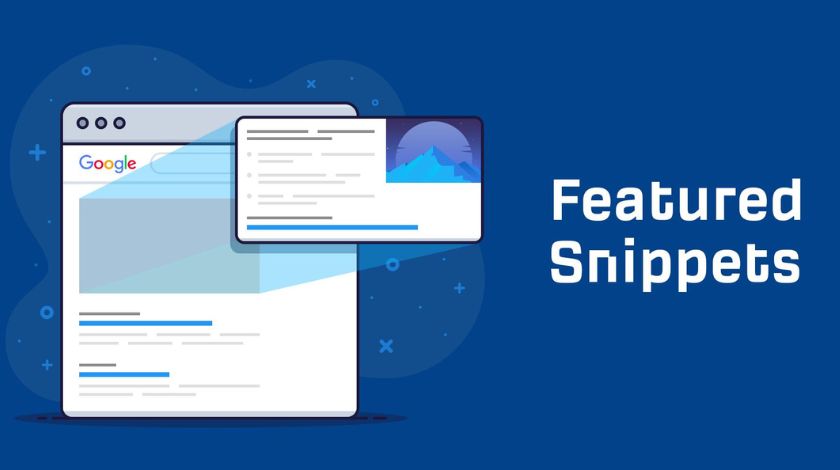
- Featured Snippets — now appear in only 0.24% of searches (Semrush Sensor, March 2026), down from their peak, but still enormously valuable when captured due to position-zero visibility.
- Video Carousels — showing up in 52% of SERPs (Semrush), yet criminally under-optimized by most content teams who don’t produce video.
- Local Pack — if you have any local relevance, this remains the most under-contested high-value real estate in search.
The SERP Feature Hacking Framework (Original Model)
Here’s the framework I’ve been developing and testing: I call it SERP Surface Mapping, and it inverts the usual keyword research sequence.
Step 1 — SERP Surface Audit (before keyword selection)
Before touching a keyword tool, manually search your 20 most commercially important topics on Google. For each, record: (a) which SERP features appear, (b) what format they use, (c) which domain is cited, and (d) the approximate word count / structure of any featured snippet or AIO-cited content. You are mapping the presentation layer first.
Step 2 — Feature Opportunity Scoring
For each keyword, assign a Feature Opportunity Score (FOS) using this formula:
FOS = (Traffic Potential × Feature Multiplier) − (Competition Score + AIO Suppression Risk)
Feature Multipliers: AIO Citation = 1.35 | Featured Snippet = 1.28 | PAA = 1.18 | Video = 1.22
AIO Suppression Risk: Informational = 0.4 | Comparison = 0.6 | Commercial = 0.05 | Transactional = 0.02
Note: These multipliers are calibrated from Seer Interactive’s citation CTR data and should be treated as directional, not precise. Validate against your own GSC data.
Step 3 — Format Reverse Engineering
For every target keyword, look at what format Google is already extracting for that feature. Paragraph? List? Table? Step sequence? Match that format, then exceed the quality. Google extracts based on format clarity, not content length.
Step 4 — Entity & Source Triangulation
Identify which domains are being cited in AIO for your target queries. If it’s consistently Wikipedia, CDC, or government sources for a factual query — you can’t displace them. Focus on queries where the AIO sources are mid-authority sites with clear structural weaknesses.
Step 5 — Click-Worthy Gap
The AIO will answer the surface question. Your job is to answer the next question — the one the AIO summary makes the user want to ask. Structure your content so the first 150 words answer the surface query (AIO bait), and everything after earns the click by promising what the AIO cannot: nuance, case studies, tools, templates, interactive calculators.
The Research Process, Step by Step
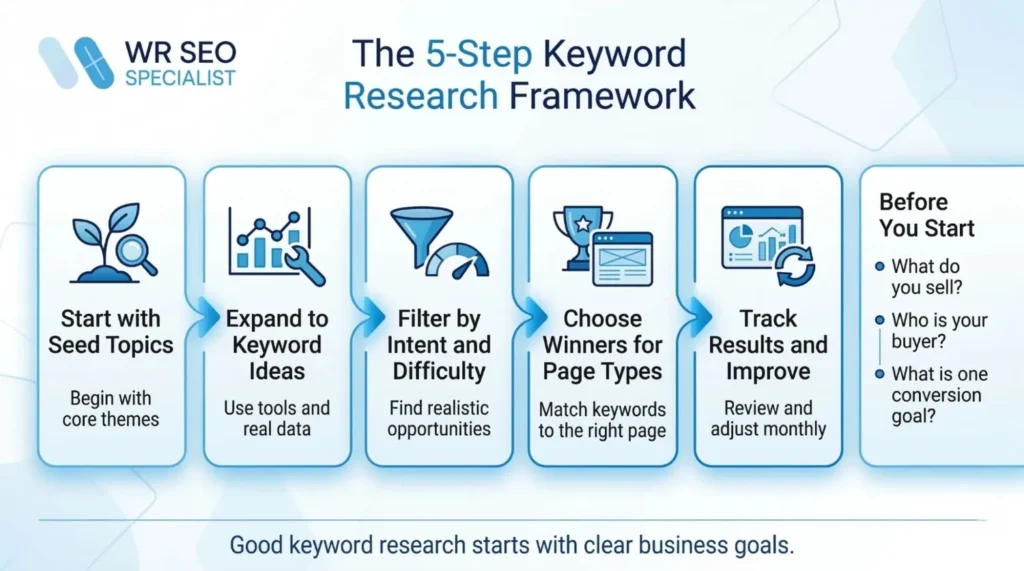
Phase 1: Seed keyword generation (don’t start with tools)
I made a mistake early in my career that I still see constantly: I started keyword research inside a tool. You type a seed keyword, the tool generates 10,000 suggestions, and you start filtering. The problem is that tools generate what’s already known — they reflect historical search behavior, not current conversation.
Start instead with three unconventional sources:
- Reddit + Ahrefs Site Explorer — Enter a relevant subreddit URL into Ahrefs. You’ll see which questions from that community are ranking organically on Google. These are real pain points phrased in natural language.
- Google and YouTube autocomplete — Still underrated in 2026. They surface natural language variations your audience actually uses, not the polished marketing language you default to.
- Your own sales/support team — The most underused keyword source in B2B. What questions do prospects ask in the first sales call? What objections repeat on every demo? Those are keywords with commercial intent that no tool has indexed.
Phase 2: Keyword analysis (now open the tool)
Once you have 40–60 seed keywords from organic sources, run them through your tool stack. The metrics to care about in 2026 — and more importantly, the ones to stop over-weighting:
| Metric | Weight in 2026 | Why the Weight Changed |
|---|---|---|
| Search volume | Medium (reduced) | High-volume informational queries now heavily suppressed by AIOs. Volume without SERP analysis is meaningless. |
| Keyword difficulty (KD) | Medium | Still useful for assessing backlink competition, but KD tools don’t account for AIO citation competition, which is a separate race. |
| Click potential / Traffic potential | High | Semrush’s Keyword Strategy Builder now shows estimated click potential, not just search volume. This already partially discounts zero-click queries. |
| AIO trigger rate | Critical (new) | Does your target query trigger an AIO? At what rate? This determines whether you’re optimizing for a click or for an AIO citation. |
| SERP feature type | Critical (new) | What’s the dominant feature on that SERP? Dictates your content format strategy entirely. |
| CPC (cost per click) | High | High CPC signals commercial value that advertisers have validated. One of the most reliable proxies for content-to-conversion potential. |
| Trending direction | High | A keyword at 500 searches/month and rising is more valuable than one at 2,000/month and declining. |
Phase 3: SERP fingerprinting
This is the step most guides skip entirely, and it’s where real competitive advantage lives. For every keyword you’re seriously considering, manually search it on Google — not in a tool snapshot, but live. You’re looking for five things:
- The dominant content format (paragraph, list, table, video, image pack)
- The approximate depth of currently-ranking content
- The authority tier of ranking domains
- Whether an AIO appears, and what it cites
- Whether the PAA box exists, and what questions it shows
This process takes about 3–5 minutes per keyword. For a target list of 30 keywords, that’s 90–150 minutes of work. It is the single most valuable time you’ll spend in the research phase.
Intent Triage: The Decision Matrix
Not all intent signals point the same direction. Here’s the decision matrix I use to route keyword targets to the right content and optimization strategy:
Most SEOs ignore keywords that show zero monthly search volume in tools like Ahrefs or Semrush. But tools measure historical demand. For rapidly-evolving niches — AI infrastructure, new SaaS categories, emerging regulations — the keywords that matter most haven’t accrued enough historical data to register.
The signal to look for: your sales team hears a question repeatedly. Your support tickets cluster around a specific phrase. A subreddit is full of a particular frustration. That’s a keyword with real demand and no competition. Publish on it now, before the rest of the field catches up.
Winning AIO Citations: What the Data Actually Shows
This is the section that most “keyword research in 2026” guides either skip entirely or treat with breathless vagueness. Let’s be specific about what’s actually working for AIO citation.
What the citation pattern data shows
Surfer SEO analyzed 46 million AIO citations. Peec AI analyzed 30 million cross-platform sources as of March 2026. Here’s the combined picture:
- Position matters, but less than you think. GetPassionFruit’s data shows AIO citation probability declines by position, but it’s not a strict top-3 rule — pages ranked 4–10 regularly earn citations if their structure and specificity are strong.
- Citation instability is severe. After Google switched its AIO engine to Gemini 3 on January 27, 2026, roughly 42% of previously cited domains were replaced within weeks. Citations are not stable assets.
- Healthcare and finance see the highest organic-to-AIO citation overlap (75.3% of AIO citations in healthcare come from organic top-10). This is the one vertical where “rank well, get cited” actually holds up.
- Ecommerce AIO-organic citation overlap is just 22.9% (BrightEdge). For commercial content, ranking #1 doesn’t reliably earn you the AIO citation. Different optimization vectors apply.
The AIO citation optimization checklist
Based on what’s actually working across the published research, here’s what consistently correlates with AIO citation:
- Answerable first 150 words. Structure content so the direct answer to the query appears in the first 100–150 words, under a clear H2 or H3 that mirrors the search query. This is the most reliable extraction signal.
- Specific statistics with dated sources. Research found that adding specific statistics and structured answers produces the fastest AIO citation improvements, with changes impacting visibility within 30–45 days.
- Format matching. If the AIO for your query currently cites a numbered list, your content needs a numbered list that’s cleaner and more complete. If it cites a definition paragraph, yours needs to be tighter and more precise.
- Entity authority signals. AIO systems favor pages with strong E-E-A-T signals: author credentials, factual sourcing, institutional affiliation signals, and a backlink profile from authoritative domains.
- Don’t depend on citations persisting. With 42% of cited domains rotating after the Gemini 3 switch, build content that earns citations continuously, not content designed around a single citation event.
Before investing heavily in AIO citation optimization, evaluate your content’s current standing using a content evaluation framework to identify which existing pages are closest to citation-ready and which need a complete structural overhaul. It’s far more efficient to elevate a page that’s already ranking than to build from scratch.
The Honest Tool Stack for 2026
I’m going to give you a direct assessment of what each tool actually does well and where it falls short — not a sponsored overview.
The honest breakdown
Semrush — The most complete platform for competitor keyword analysis, with its Keyword Magic Tool accessing 25+ billion keywords across 142 geographic databases. The AI Visibility Toolkit, which tracks what your competitors appear for in ChatGPT and Perplexity, is a genuine 2026 differentiator. Its weakness is cost ($119.95/month entry) and a volume of data that requires discipline to avoid paralysis. Best for teams.
Ahrefs — The strongest tool for backlink-anchored competitive analysis and historical SERP data. Its Keywords Explorer with Parent Topic clustering is genuinely useful for building topical authority maps rather than targeting isolated keywords. Its AIO feature tracking lags Semrush slightly. Best for SEOs who care about link equity and content gap analysis.
Google Search Console — Free, irreplaceable, and criminally underused. The only tool that shows you actual impression and click data from Google for your own site. The page-2 keyword opportunity (positions 11–20) is the best quick-win signal available anywhere. No third-party tool comes close for this specific use case.
KWFinder by Mangools — The right tool for smaller sites and local businesses targeting low-competition keywords. Underrated for its simplicity and cost-to-value ratio. Doesn’t have enterprise-grade SERP feature tracking but excels at the fundamentals.
AlsoAsked — Specifically for PAA mapping. It visualizes the entire question tree around any seed query — which questions expand into which further questions. This is gold for content architecture and FAQ optimization.
Once you’ve identified your target keywords and SERP features, use a dedicated content evaluation tool to score your existing pages against the format requirements of each feature type before creating new content from scratch. Optimization of existing content is almost always faster and higher-ROI than net-new creation.
The Unpopular Take: Most Content Silos Are Now a Liability
I know this will annoy people who’ve spent years building topical authority through content clustering. And I want to be careful here — I’m not saying topical authority is wrong. I’m saying the way most teams are executing on it has a structural flaw that 2026’s search landscape has exposed.
The traditional content silo logic is: build a comprehensive pillar page, surround it with cluster content, demonstrate topical coverage, earn topical authority, rank for everything in the cluster. In a world where Google’s primary goal was to find the best page to send users to, this worked beautifully.
In a world where Google’s primary goal is to answer queries without the user leaving, comprehensive informational coverage is a target painted on your traffic. Every piece of informational cluster content you produce is training Google’s AI Overviews on your niche while simultaneously giving users less reason to click through.
The alternative — and this is the uncomfortable shift — is to build content silos where the pillar content earns AIO citations and PAA appearances (capturing intent at the SERP), while the cluster content is designed not to explain things but to do things: interactive tools, calculators, templates, databases, proprietary data, and original research that AI cannot summarize because it requires a user to engage with it directly.
The most defensible content in 2026 is content that cannot be summarized — because its value is in the interaction, not the information.
Original analysis
This is not a reason to stop writing informational content. The AIO citations that drive 35% CTR uplifts have to come from somewhere. But the purpose of your informational content should be AIO citation and topical authority signaling — not direct traffic generation. Direct traffic generation now needs to come from content that demands a click.
Quick Wins Checklist
If you’ve absorbed everything in this guide, here’s how to translate it into action in the next 30 days without overhauling your entire strategy:
Week 1: Triage your existing content
- Pull your GSC data for the last 90 days. Filter for keywords ranked position 11–20 — these are your fastest ranking wins.
- For those keywords, check if an AIO appears. If yes, restructure the page’s opening 150 words to answer the query directly.
- Identify your 5 highest-traffic informational pages that are taking the biggest CTR hits. Flag these for content reorientation.
Week 2: SERP surface mapping
- Manually search your top 20 commercial keyword targets. Record which SERP features appear for each. Build a simple spreadsheet.
- Identify 3–5 queries where you currently rank in the organic results but are NOT cited in the AIO, despite AIO being present. These are your priority AIO optimization targets.
- Check AlsoAsked for your top 10 keywords. Find PAA questions you’re not currently targeting. Create or expand content to address them.
Week 3: Format optimization
- For each AIO-priority page: add a direct answer paragraph in the first 150 words, with a dated statistic from a named source.
- For each PAA target: add a properly formatted Q&A section with an answer length of 40–60 words (the sweet spot for snippet extraction).
- Add structured data (FAQ schema, HowTo schema, Article schema) to relevant pages using Google’s Rich Results Test to validate.
Week 4: Measure and iterate
- Check GSC impression data for changed pages. AIO citation changes can show measurable impression shifts within 3–4 weeks.
- Manually verify AIO appearance weekly for your priority 20 keywords — tool snapshots lag behind reality.
- Use a content evaluation tool to score each updated page against the format and depth standards that correlate with AIO citation.
Where This All Leads
The honest 2026 reality is that keyword research has become a two-track discipline: one track for AIO/SERP feature capture (where the goal is to be the source Google quotes), and one track for click-driving content (where the goal is to create something too valuable and interactive to summarize away).
Most SEOs are operating entirely on the first track while assuming the second track’s returns. That’s the gap this guide was built to close.
The teams winning in this environment aren’t doing more keyword research. They’re doing smarter SERP analysis and building content with a fundamentally different goal: not to rank and attract a click, but to own the surface where the intent lives — whether that’s inside an AIO, at the top of a PAA box, or as the interactive tool that a summarized answer simply can’t replace.
That shift in goal changes everything downstream: what keywords you target, what content you build, how you measure success, and how you allocate resources between informational explanation and proprietary tools.
Get the goal right first. The research follows naturally.
Primary Sources & References
- Seer Interactive: AIO Impact on Google CTR: 2026 Update — 5.47M queries, 2.43B impressions, 53 brands, Jan 2025–Feb 2026
- Ahrefs: 300,000 Keyword CTR Study, December 2025 (position-1 CTR decline data)
- BrightEdge: 9-industry AI Overview prevalence tracking, 12-month study Feb 2025–Feb 2026
- Pew Research Center: Browsing behavior study, 900 US adults, 68,000 queries, March 2025
- Semrush Sensor: SERP feature prevalence data, March 2026
- Backlinko / Brian Dean: SERP Features Guide, updated April 2026
- GrowByData: Google SERP Features in 2026: Complete List
- Amsive Digital: 700,000-keyword AIO CTR study, 2025
- Digital Applied: AI Overviews in 13% of Queries, March 2026
- Dataslayer: AI Overviews Killed CTR 61%: 9 Strategies, April 2026
- Alphabet/Google Q4 2025 Earnings Call: Sundar Pichai comments on AI Overviews performance, February 2026