Zero-Click Content Strategy

Deep Analysis · Search Strategy
Zero-Click Content Strategy:
The Future of SEO Is Visibility Without Traffic
60% of Google searches now end without a single click. But the visitors who do click through convert at 23× the rate of traditional organic traffic. Here is the complete strategy for winning in a world where the SERP is the destination — not the doorway.
TL;DR
The old SEO goal was traffic. The new goal is brand authority at the point of answer. AI Overviews now appear in ~48% of all searches. Only 38% of AI-cited pages rank in Google’s top 10. Citation eligibility — not ranking position — increasingly determines whether your brand appears in front of high-intent users.
The brands that adapt now build a compounding authority advantage. The brands that don’t will watch their domain expertise get attributed to competitors who optimized for citation, not just clicks.
Should You Even Invest in Zero-Click Strategy?
Not every business needs to rethink SEO from scratch. The zero-click shift affects some verticals far harder than others. Before committing budget and time, run this honest self-assessment.
Decision Framework — Zero-Click Strategy: Go or No-Go?
| Condition | Verdict | Reasoning |
| Your top-10 keywords trigger AI Overviews 40%+ of the time | ✓ Go | Your visible ranking is already being displaced — adapt now or lose impressions |
| You generate revenue from informational/educational content | ✓ Go | The informational query segment is 70%+ covered by AI Overviews — your model must evolve |
| You operate a local business with navigational search intent | → Lower priority | Local intent queries still drive high click-through; traditional Local SEO remains dominant |
| You sell complex B2B solutions with long sales cycles | ✓ Urgently go | AI-referred B2B visitors convert at 4.4× traditional organic — the channel is disproportionately valuable |
| Your content is purely transactional (product listings, pricing) | → Hybrid approach | Transaction queries still drive clicks; focus 60/40 on traditional SEO vs. zero-click optimisation |
| Your brand has weak entity signals (no Wikipedia, inconsistent NAP) | → Fix entity first | AI systems verify brands before citing them; citation-optimised content on a weak entity foundation is wasted effort |
What Zero-Click Content Actually Is (and Isn’t)
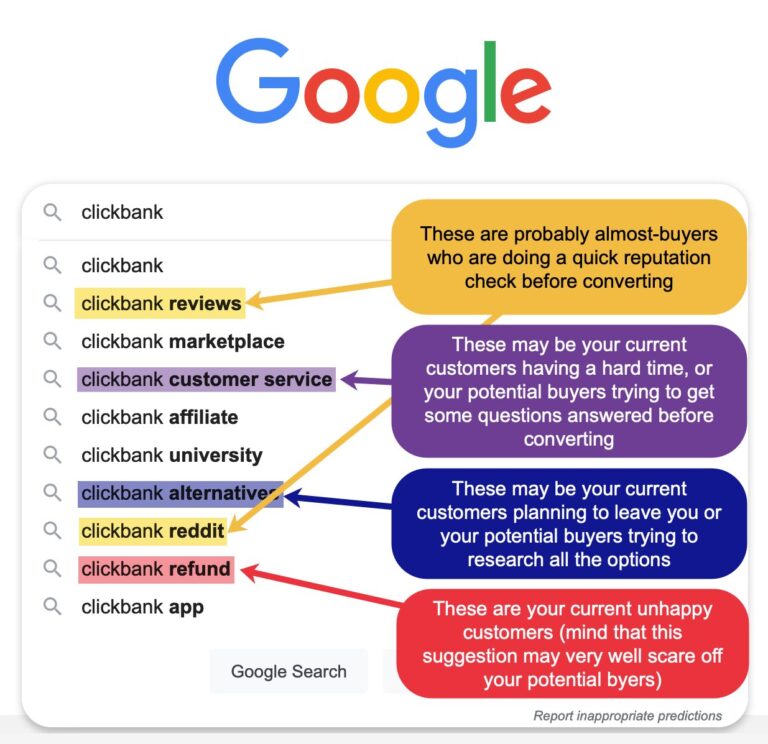
The definition matters because it shapes your strategy. Zero-click content is not a single format. It is a distribution philosophy — creating content designed to be extracted, surfaced, and attributed within AI Overviews, Featured Snippets, People Also Ask boxes, Knowledge Panels, and social feeds.
The distinction most content teams miss: zero-click is not the opposite of driving traffic. It is the upstream layer. When a user sees your brand cited three times in an AI Overview on a decision-stage query, the click they take next — even if it’s directly to your site days later — is warmer, more qualified, and statistically more likely to convert. Awareness and authority accrue before the URL is ever visited.
The Three Variants Worth Your Time
SERP-level zero-click covers Featured Snippets, AI Overviews, PAA boxes, and Knowledge Panels on Google. This is the highest-value tier because it reaches users in active discovery mode with verified purchase or decision intent.
Platform-native zero-click covers LinkedIn articles read in-feed, Twitter/X threads, TikTok and YouTube shorts, and newsletter digests that are consumed entirely on-platform. Platforms are structurally designed to suppress outbound clicks; content that delivers value in-feed earns compounding reach, engagement data, and brand recall even without generating a session on your domain.
AI inference-layer zero-click is the emerging frontier: content structured so that ChatGPT, Perplexity, Claude, and Gemini accurately describe your product, position, or expertise when users query those systems with no explicit intent to visit your website. This is not traditional SEO at all — it is reputation management at the model level.
The Scale of the Shift: Why 2026 Is the Inflection Point
Zero-click search is not new. Rand Fishkin and SparkToro documented the trend as far back as 2019. What has changed between 2024 and 2026 is the acceleration rate. Google’s AI Overviews, which rolled out globally in late 2024 and expanded aggressively through 2025, pushed the zero-click share from around 55% to 60% in roughly 18 months — the largest single-year jump in the metric’s history.
For news publishers, the pain has been acute. Organic visits from search to news sites dropped from over 2.3 billion in mid-2024 to under 1.7 billion by May 2025. For most other content-heavy sites, the decline is more gradual but structurally permanent: informational queries — the historical backbone of top-of-funnel SEO — are now resolved on the SERP more than 70% of the time when an AI Overview is present.
“The search results page is no longer a gateway — it’s the destination.” — Limor Barenholtz, Similarweb, May 2025
The right response is not to abandon SEO or panic about traffic decline. The right response is to understand why the traffic that still comes through is more valuable than it has ever been — and to design content that makes your brand the obvious citation source for AI systems operating at scale.
Citation Eligibility: The New SEO Signal Nobody Talks About Enough
Here is the finding that should fundamentally change how content teams allocate their effort: only 38% of pages cited in AI Overviews also rank in Google’s top 10, down from 76% just seven months prior. And 31% of AI-cited pages rank outside the top 100 entirely.
This structural decoupling between ranking and citation is not a bug — it is the outcome of how generative AI systems evaluate sources. Ranking algorithms optimise for relevance and authority measured by links and engagement. Citation algorithms optimise for extractability, semantic completeness, and cross-source consensus. These are overlapping but meaningfully different criteria.
What Actually Drives Citation Eligibility
Answer Engine Optimization — Citation Stack
- Entity Authority: AI systems verify brands before citing them. Consistent NAP, Wikidata presence, organization schema, and cross-platform mentions signal that you are a real, trustworthy entity — not a content farm. The gap between “invisible to AI” and “consistently cited” is often an entity infrastructure gap, not a content quality gap.
- Structural Extractability: Pages must answer a question clearly in the first 40–60 words of the relevant section. H2/H3 headings that mirror user queries, FAQ schema, and HowTo markup all increase the probability that a passage meets the AI’s “extractability threshold.”
- Multi-Source Corroboration: AI systems apply corroboration logic. If your brand is described consistently across multiple independent, high-authority domains, confidence in citing you increases. 90–95% of AI citations come from external sources — your own website content is necessary but not sufficient.
- Content Depth and Freshness: Pages above 20,000 characters average ~10 AI citations each, versus 2.4 for pages under 500 characters. Pages updated within two months earn 28% more citations than older content. Freshness is not a soft signal — it is a hard eligibility criterion for many query types.
- Technical Accessibility: Pages with First Contentful Paint under 0.4 seconds average 6.7 AI citations, while slower pages drop to 2.1. If AI crawlers cannot efficiently parse and load your pages, they are unlikely to treat them as trusted citation sources.
How This Actually Works Together: The Full Workflow
Zero-click strategy fails when its components are treated as independent tactics. Here is how entity authority, content structure, and multi-platform distribution form a working system — and where the friction points are.
| # | Step | Tool / Method | Integration Type | Friction Points |
|---|---|---|---|---|
| 1 | Entity Audit — Verify brand signals across Wikidata, Google Knowledge Graph, schema.org markup, and top-tier directory listings | Google Search Console · Search Atlas · Manual check | Manual | Inconsistencies take 4–8 weeks to propagate after correction |
| 2 | Query Portfolio Analysis — Segment keywords by AI Overview presence (triggers AIO vs. doesn’t) | SEMrush · Ahrefs · Similarweb Visibility Reports | Automated | AIO appearance rates fluctuate — spot-check weekly, not monthly |
| 3 | Content Restructuring — Reformat depth pages with question-based H2/H3s, 40–60 word answer paragraphs, FAQ schema, Article + Organization schema markup | Surfer SEO · Clearscope · Manual editorial | Hybrid | Over-optimisation for snippets can harm readability — maintain genuine depth after the extracted answer |
| 4 | External Authority Building — Secure editorial mentions on independent, topically relevant domains (not paid placements or directories) | Digital PR · HARO alternatives · Podcast appearances | Manual | 90–95% of AI citations are from external sources — this step is not optional |
| 5 | Platform-Native Distribution — Publish condensed, value-complete versions of core insights on LinkedIn, newsletter, and relevant community forums | LinkedIn Native · Beehiiv / Substack · Reddit/Quora | Hybrid | Platform algorithm changes can suppress reach; diversify across at least three platforms |
| 6 | Citation Monitoring — Track brand appearance in AI Overviews, ChatGPT responses, Perplexity, and Gemini for target queries | Search Atlas · Profound · Manual query testing | Automated | AIO content changes ~70% of the time for the same query; citations must be monitored continuously, not at launch |
| 7 | Content Refresh Cycle — Prioritise pages for 60–90 day refresh cycles; freshness is a hard citation eligibility criterion | Google Search Console (impressions decay signal) · Content calendar | Hybrid | Teams that refresh only based on ranking drops will miss the citation decay signal, which is a leading — not lagging — indicator |
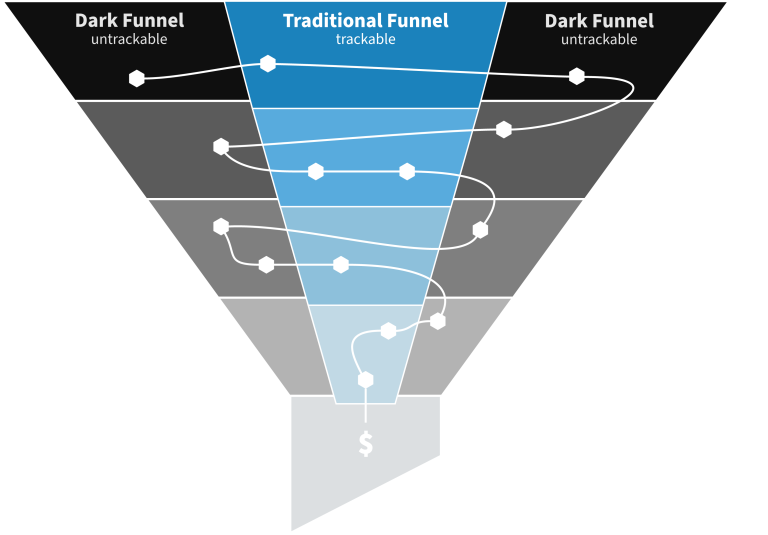
The data flow between these steps matters. Entity authority (Step 1) determines the baseline confidence AI systems assign to your domain. Content structure (Step 3) determines extractability. External mentions (Step 4) provide the corroboration AI systems use to elevate citation confidence. Distribution (Step 5) generates the engagement signals and additional citation surfaces that reinforce entity authority. It is a loop, not a funnel.
Practical Application: The 80% Solution Stack
You do not need an enterprise tech stack to execute this well. The following tools cover 80% of the workflow for most content teams — including solo operators and small agencies.
What People Get Wrong About Zero-Click Strategy
The most common mistake is treating zero-click optimisation as a separate content track — producing short “snippet-bait” content alongside regular articles. This fails for two reasons.
First, AI Overviews preferentially cite content that has genuine depth (not content trimmed to fit a snippet). Pages above 20,000 characters earn roughly four times more citations than thin pages. The snippet is extracted from depth content, not from shallow content engineered to look like an answer.
Second, the entity authority signals that make AI systems trust your domain are built through comprehensive topical coverage — not isolated optimisation of individual pages. A brand that publishes 20 rigorously researched, well-structured articles in a specific niche earns more citations across all 20 topics than a brand that publishes 200 thin articles across 200 topics. Topical authority through content clusters is no longer a nice-to-have — it is a prerequisite for AI citation, not just for traditional SEO.
Limitations and Trade-Offs Worth Being Honest About
Zero-click success is genuinely hard to measure with traditional tools. Most analytics platforms report sessions and clicks — metrics that structurally decline as zero-click share increases, even when your brand visibility is growing. Teams that report to leadership using CTR and organic traffic as primary KPIs will appear to be failing even while executing a sound zero-click strategy. This is an organisational and reporting problem that must be solved alongside the technical strategy.
Citation inclusion does not translate to reliable traffic. AI Overviews generate clicks in only 1% of sessions compared to 15% for traditional search results. Being cited builds brand familiarity and authority; it does not replace click-driven traffic for revenue models that depend on volume.
The strategies that work today may not work in six months. AI Overview content changes approximately 70% of the time for the same query, and when the answer updates, nearly half of the cited sources get replaced. The citation landscape is structurally more volatile than traditional search rankings. Quarterly content refreshes are the minimum; for high-value queries, monthly audits are reasonable.
Entity authority building takes time that most teams underestimate. Foundation work — schema, entity consistency, content restructuring — takes 4–8 weeks to implement. Authority building through cross-platform presence and genuine PR mention acquisition takes 3–6 months. Teams expecting citation improvements within 30 days will be disappointed.
The “23× conversion rate” figure is real but contextually bounded. That figure from BrightEdge’s 2025 cross-industry study reflects self-selection: users who click through from an AI Overview are already past the awareness stage. It does not mean a brand can survive on AI-referred traffic alone at current citation volumes. The channel is exceptionally high-quality; it is not yet high-volume for most brands.
FAQ
Does optimising for AI citations hurt traditional SEO ranking?
Not when done correctly. The structural changes that improve citation eligibility — deeper content, clearer headers, better schema, faster pages — align with Google’s quality signals for traditional ranking. The risk comes from over-optimising for extractable answers at the expense of genuine depth and readability, which can hurt dwell time and engagement signals. The answer is to ensure the extracted answer is followed by substantive depth, not terminated at the snippet.
If 60% of searches end without a click, should we cut our content budget?
No — but you should reallocate within it. The 40% of searches that do generate clicks are substantially more intent-rich and conversion-ready than they were three years ago. Content that wins citation eligibility and entity authority sets up the high-conversion click. Cutting content investment now is the equivalent of removing the billboard right before the market becomes willing to buy.
What metrics should replace organic traffic in a zero-click world?
The most actionable replacements are: (1) AI citation frequency — how often your brand appears in AI-generated answers for target queries; (2) branded search volume trend — AI exposure drives direct brand searches even without a click; (3) impression-to-click ratio change — track whether your share of the remaining clicks is increasing even as total click volumes decline; (4) AI referral conversion rate — a small number of AI-referred sessions converting at 4.4× the rate of organic traffic changes the revenue calculation dramatically.
Is this strategy only relevant for large brands with established authority?
Meaningfully no. Entity authority is about systematic execution, not budget. A niche operator with strong Wikidata presence, consistent schema, and ten high-quality external mentions from relevant publications can outperform a large brand that has never invested in these signals. The window to build this advantage before AI search consolidates further around established entities is still open — but it is narrowing.
Final Thoughts
The SEO community has been arguing about zero-click search for seven years. The argument is over. Roughly 60% of searches now conclude on the results page, AI Overviews appear on nearly half of all queries, and the structural decoupling between ranking position and citation inclusion is confirmed and accelerating.
The interesting question is not whether zero-click dominance is real — it is. The interesting question is what the right strategic response looks like for content teams working under real constraints of time, budget, and organisational inertia.
The answer is more nuanced than most coverage suggests. Traditional SEO is not dead. Queries that do not trigger AI Overviews still operate on conventional click-through logic, and those queries still exist across most keyword portfolios. The correct posture is a two-lane strategy: defend and grow traditional ranking on queries where clicks still flow freely, while simultaneously building the entity authority and content structure that earns AI citation on the queries where clicks are already disappearing.
The brands that do this systematically over the next 12 months will own an authority position that is genuinely difficult to displace — not because they ranked higher, but because AI systems learned to trust and cite them consistently. That trust, once established at the model level, compounds in ways that traditional SEO rankings never did.
The Trade-Off You Need to Accept
There is a real possibility that executing this strategy well — building deep, citation-eligible content, earning genuine external authority, refreshing pages quarterly — means your organic traffic metrics look worse for 6–12 months before they get better. That is not a sign the strategy is failing. It is the natural outcome of traffic quality improving as casual curiosity visits filter out and high-intent visits remain. The businesses that pull back when the traffic numbers dip will hand their citation authority to the ones that hold steady.
Sources
Primary Sources
Datos Group & SparkToro: Zero-Click Search Share Research, 2024–2026
BrightEdge Research: AI Search Visitor Conversion Study, Cross-Industry (1,200 sites), 2025
Secondary Sources
Digital Applied: 60% Zero-Click Searches: The 2026 SEO Crisis Strategy, March 2026