

https://www.contentevaluator.online/2026/04/08/how-i-10xd-organic-traffic/
https://www.contentevaluator.online/2026/06/29/traditional-seo-is-dying/
https://www.contentevaluator.online/2026/05/22/affiliate-seo-content-systems/
https://www.contentevaluator.online/2026/07/04/affiliate-content-strategy/
https://www.contentevaluator.online/2026/07/01/affiliate-seo/
Affiliate SEO Systems · Deep Analysis · June 2026
Everything they don’t tell you about building an affiliate site that Google actually respects — including the unit economics, the failure modes, and the one strategic shift that separates the top 3% from everyone else.
I’m going to start with the thing that would get me uninvited from most affiliate marketing conferences: the majority of what passes for “SEO strategy” in this industry is theater. It’s a performance of busyness — keyword matrices, content calendars, HARO link campaigns — that substitutes activity for outcomes. I know because I watched sites I worked on closely follow every “best practice” playbook and still get demolished by Google’s March 2024 and December 2025 core updates.
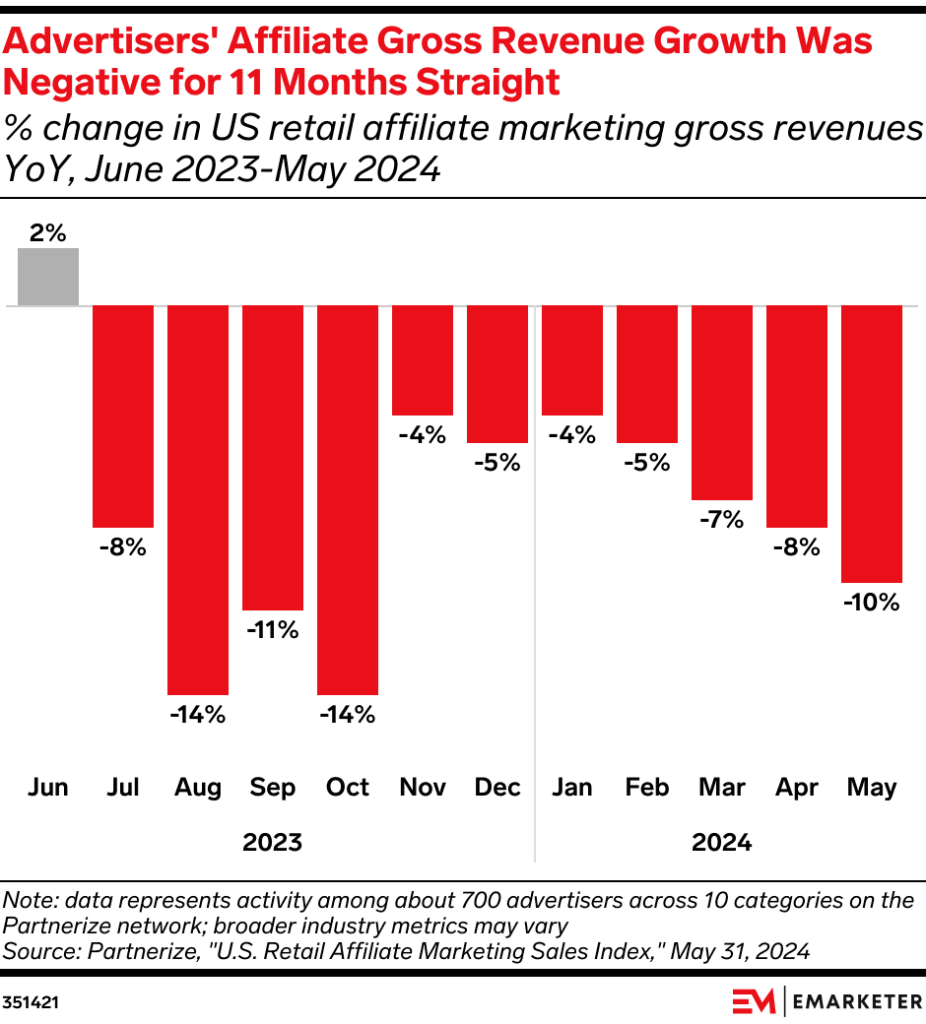
The December 2025 Core Update alone wiped out 71% of affiliate sites that experienced significant ranking changes — the highest impact rate of any content category. That’s not bad luck. That’s a structural problem with how the industry thinks about content.
This article is my attempt to say what actually works, grounded in data, grounded in failure, and free of the cheerful optimism that sells courses but doesn’t survive contact with Google’s algorithm.
In 2023, I helped architect a content strategy for a mid-size affiliate site in the software review space. We produced 200+ articles in 12 months following a “topical authority” model — broad keyword coverage, systematic internal linking, clean technical SEO. Traffic grew 160%. Then the September 2023 Helpful Content Update arrived, followed by March 2024. We lost 73% of organic traffic in 8 weeks. The painful truth: we’d built a content machine optimized for coverage, not for genuine expertise. Every article was researched — none were lived. Google noticed before we did.
1. The Reality Check Nobody Gives You
Let’s set the stage with honest numbers, because the affiliate marketing industry is notorious for publishing statistics that make everything sound rosier than it is.
The global affiliate marketing market has reached genuine scale — $37B+ in 2025 by the most rigorous estimates, growing toward $71.74 billion by 2034 at a 15.2% CAGR. Those numbers are real. What’s also real: the distribution of that revenue is profoundly unequal. According to Authority Hacker’s survey data, only the top seven niches exceed $7,000/month in average affiliate income. The median affiliate earns far less.
Here’s the chart that actually matters — not the market size, but the income distribution:
Fig. 1 — Affiliate income distribution, 2025. The majority of the $37B+ market concentrates in the top quintile. Source: Authority Hacker, DesignRush 2025.
What separates the top tier isn’t, at its core, a better keyword tool or a smarter link building strategy. It’s a fundamentally different relationship with content quality and strategic positioning. That’s the uncomfortable thing. It’s not a tactic. It’s an orientation.
The Google December 2025 Core Update made this viscerally clear. Affiliate sites experienced a 71% impact rate — the highest of any content category — primarily because most demonstrated no genuine product expertise or original testing. Thin content built for search engines, not readers, got systematically deprioritized. CrakRevenue’s post-update analysis captured it plainly: the winning sites included “specific details about using the product — setup quirks, real use cases, actual problems encountered.” Not summaries of spec sheets. Actual use.
“Our systems don’t care if content is created by AI or humans. We care if it’s helpful, accurate, and created to serve users rather than just manipulate search rankings.” — John Mueller, Google (November 2025)
2. Keyword Architecture: The Three-Layer Stack
Most affiliate keyword strategies are built around a single-dimensional metric: search volume. Find keywords with decent volume, decent CPC, low competition — write articles. This is the commodity approach. It’s why so many affiliate sites look identical and compete on identical pages.
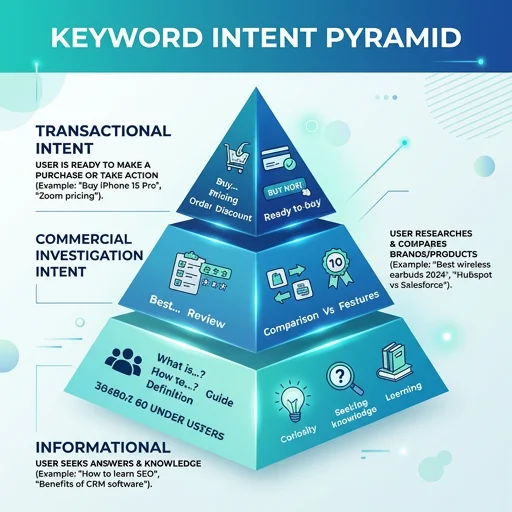
What actually works in 2026 is a Three-Layer Keyword Stack that maps keywords to revenue potential AND content type AND realistic ranking probability simultaneously. Here’s how to think about it:
Fig. 2 — The Three-Layer Affiliate Keyword Stack. Most affiliates start at Layer 3 and fail. Sustainable sites build Layer 1 first, which funds the authority to rank Layers 2 and 3.
Layer 1: Informational Authority Keywords
These are your earn the right to exist keywords. “How does VPN encryption work.” “What is a robo-advisor.” “How to choose a mattress for back pain.” High volume, lower commercial intent, but they are the content that earns backlinks, builds topical depth, and signals to Google that you actually know the space — not just its products.
The mistake most affiliates make is treating these as filler between money pages. They’re not filler. They’re your authority infrastructure. Ahrefs’ keyword research data consistently shows that sites ranking for Layers 2 and 3 have dramatically higher Layer 1 coverage than their competitors. The correlation isn’t coincidental.
Layer 2: Commercial Comparison Keywords (Your Primary Revenue Engine)
These are the “best X for Y,” “X vs Y,” and “X review” queries. They sit at the buyer research stage — the person already knows they want to solve a problem, they’re comparing solutions. This is where the majority of affiliate revenue is made, and it’s where Google’s helpful content crackdown has been most severe.
The December 2025 update demolished sites with comparison content built from spec-sheet research. What survived: content with specific testing observations, honest trade-offs, and original photography or testing methodology. Boomcycle’s HCU analysis noted this cleanly: “A knee replacement article written by someone who had the surgery will outrank one written by someone who interviewed surgeons.” That principle applies directly to software reviews, mattress comparisons, and financial product analyses.
Layer 3: Transactional Keywords
Coupon pages, “buy X” pages, branded + discount terms. Highest intent, smallest volume, direct commission. These should exist and be technically well-optimized, but they should never be the strategic foundation. Sites that led with Layer 3 content and built downward got eviscerated by Google’s spam policies around “scaled content abuse.”
Ahrefs has repeatedly noted that zero-volume keywords — terms that tools show as having no monthly searches — often yield the highest ROI for affiliate marketers because there is functionally zero competition. An article targeting “Notion vs Obsidian for academic research on iPad” may show 0 volume in Ahrefs, but real people search exactly that phrase. The affiliate who writes that specific article owns it entirely. This is micro-intent targeting — and it’s systematically underused because tools make it invisible.
The Practical Keyword Audit Matrix
| Keyword Type | Volume Signal | Ranking Time | Commission Potential | Priority |
|---|---|---|---|---|
| “Best [product] for [use case]” | 500–10k/mo | 4–12 months | High | Build NOW |
| “[Product A] vs [Product B]” | 200–5k/mo | 3–9 months | Very High | Build NOW |
| “[Product] review” | 1k–50k/mo | 6–18 months | Very High | Needs E-E-A-T |
| “How to [achieve outcome]” | 5k–200k/mo | 2–6 months | Low–Medium | Authority build |
| “[Product] coupon / discount” | 100–2k/mo | 1–4 months | Direct | Supplement |
| Zero-volume micro-intent | 0–50/mo | 2–6 weeks | High per visitor | Hidden gem |
3. The Revenue Math: Unit Economics for Real
Affiliate SEO is a capital allocation problem dressed up as a content problem. Every article you publish costs time and money. The question is not “will this rank” — it’s “what is the expected value of this content investment, and how long is the payback period?” Almost nobody in affiliate SEO does this math explicitly. Here it is.
Fig. 3 — Affiliate content unit economics, SaaS vertical. CTR data: FirstPageSage 2025. Conversion rate: Wecantrack industry benchmark 2025. Commission assumption: mid-range SaaS program.
Let me make the unit economics explicit for three common scenarios:
Scenario B is the consistently underrated sweet spot for 2026. The total addressable audience is smaller, but the economics per article are dramatically better, the ranking difficulty is lower, and the content is significantly harder for competitors to copy (because it requires genuine testing and expertise). Stop chasing volume. Start chasing fit.
4. The E-E-A-T Moat: Why Most Affiliates Are Building on Sand
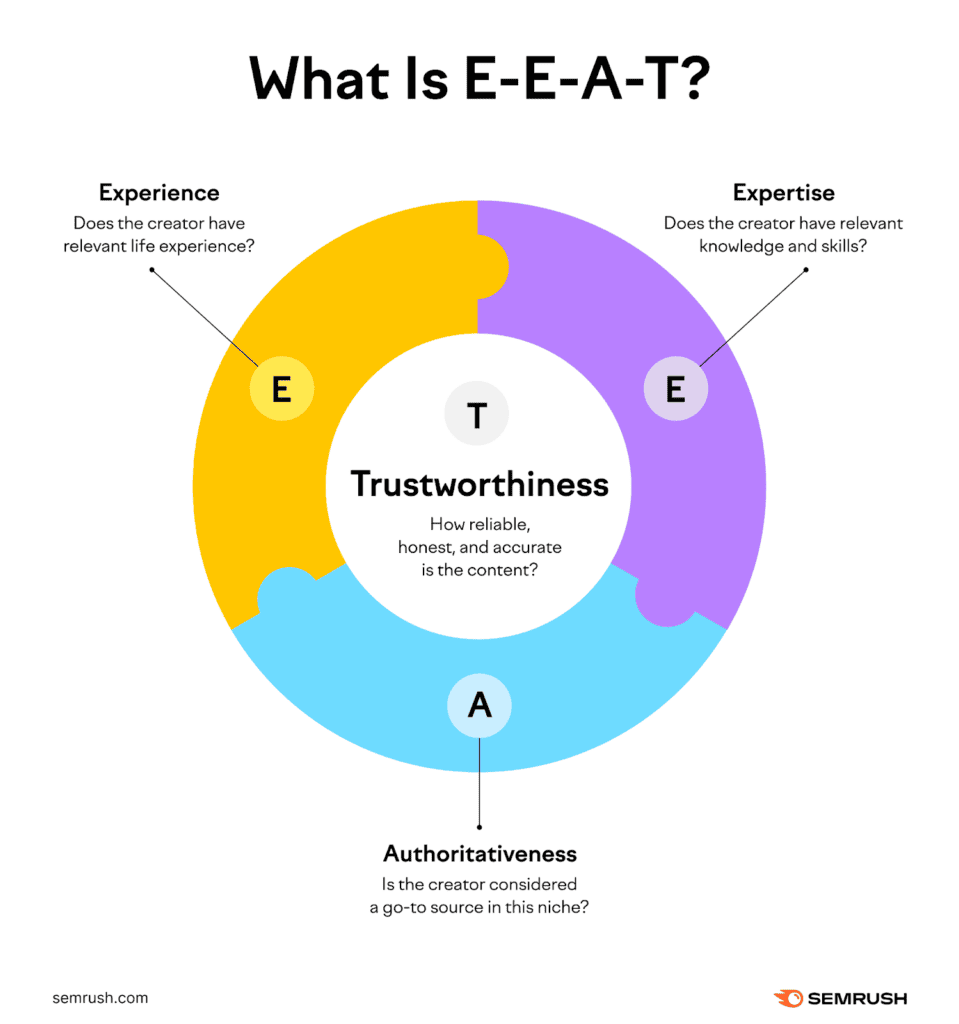
Google’s E-E-A-T framework — Experience, Expertise, Authoritativeness, Trustworthiness — is not a checklist. It’s an ecosystem. You can’t manufacture it with an author bio plugin and some stock credentials. The sites that survived the 2024–2025 update cycle had built E-E-A-T into their structural DNA, not bolted it on as an afterthought.
Here’s what that actually looks like in practice:
Fig. 4 — E-E-A-T signal architecture for affiliate sites. The Experience and Trust pillars are where most affiliate sites score weakest — and where Google’s 2025 updates hit hardest.
The “Experience” Pillar Is Now Non-Negotiable
When Google added the second “E” — Experience — in December 2022, many SEOs treated it as aesthetic. Write like you used the product. Mention a pain point. Done. The December 2025 update made clear this was a misread. Google’s systems are now sophisticated enough to distinguish between simulated experience (general observations any researcher could make) and genuine testing artifacts (specific edge cases, version-specific quirks, failure modes, comparative performance in non-ideal conditions).
This has profound practical implications. If you’re reviewing software products, you need actual accounts. You need to have done the setup. You need a screenshot of your own dashboard, not a screenshot from the vendor’s marketing page. This isn’t optional SEO polish. It’s baseline admission.
The Trust Pillar: Often the Easiest Win Nobody Takes
Trust signals — transparent FTC disclosures, visible “last tested” dates, honest methodology descriptions, and contact information — are underimplemented by a shocking proportion of affiliate sites. These are low-effort, high-signal E-E-A-T improvements that many sites skip in favor of more glamorous tactics. Mangools’ affiliate SEO analysis highlights that sites that survived the 2025 core updates almost universally had clear review methodologies and disclosure language on every review page.
5. Content Velocity vs. Content Depth: A False War
The affiliate SEO community has spent years fighting a proxy war between “publish more” and “publish better.” It’s a false binary that obscures the actual underlying question: what is the optimal content production cadence for your authority level and niche competitiveness?
Here is what the data actually supports:
Fig. 5 — Content strategy matrix by site authority level and niche competitiveness. Most new affiliate sites launch in the Danger Zone (low DR, high competition) and wonder why they see no results in 12 months.
New sites should not try to rank for “best VPN” or “best web hosting.” Full stop. Those keywords are contested by sites with DR 70+, thousands of backlinks, and dedicated editorial teams. Instead, new sites should operate almost entirely in Layer 1 informational content within a tightly defined sub-niche, building Domain Rating and topical authority before touching the high-value commercial keywords. This takes 6–18 months. Anyone telling you otherwise is selling something.
6. The Intent Stack Framework (Original Model)
Here is a framework I haven’t seen articulated elsewhere in this precise form. I’m calling it the Intent Stack, and it solves one of the most consistently mishandled problems in affiliate SEO: content that ranks but doesn’t convert, or content that converts but doesn’t rank.
The root cause of both failures is the same: a mismatch between search intent (what the user needs right now) and purchase intent (what the user is ready to do right now). Most affiliates optimize for one at the expense of the other.
The Intent Stack Framework — Core Principle
Every keyword in your content strategy exists at a specific position in a three-dimensional space defined by:
- Search Intent Type — Informational / Commercial / Transactional / Navigational
- Purchase Readiness Stage — Unaware / Problem Aware / Solution Aware / Product Aware / Most Aware
- Decision Complexity — Simple (impulse buy, <$50) / Considered ($50–$500) / Complex (>$500, multi-stakeholder)
Your content strategy fails when you mismatch the content format to the intent stack position. A “review” article written for someone who is Problem-Aware (early stage) will produce low conversions because you’re selling to someone who hasn’t chosen a category yet. A “how to X” article targeting someone who is Product-Aware (late stage) misses the moment when they’re ready to act.
Let me make this concrete with a worked example in the SaaS/SEO tools vertical:
| Keyword | Intent Type | Purchase Stage | Decision Complexity | Right Content Format | Wrong Format (common mistake) |
|---|---|---|---|---|---|
| “why my rankings dropped” | Informational | Problem Aware | — | Diagnostic guide, no hard sell | Product review pushed early |
| “best SEO tools for small business” | Commercial | Solution Aware | Considered | Category comparison + use-case filters | Generic “top 10 list” without criteria |
| “Ahrefs vs Semrush vs Moz” | Commercial | Product Aware | Considered | Head-to-head with specific test results | Summaries of each tool’s homepage |
| “Ahrefs coupon code 2026” | Transactional | Most Aware | — | Simple coupon page, fast CTA, social proof | Padded 2,000-word “review” with buried coupon |
| “does Ahrefs work for enterprise SEO teams” | Commercial | Product Aware | Complex | Case study format, workflow details, limits discussion | Feature summary that could apply to anyone |
Before writing, answer three questions explicitly: (1) What does this person already know when they type this search? (2) What are they ready to decide? (3) What’s the single next action I want them to take? If the answer to question 3 is “click an affiliate link,” make sure questions 1 and 2 confirm they’re ready for that. If not, you’re burning traffic and credibility simultaneously.
7. Content Types That Actually Convert in 2026
Not all affiliate content formats are equal, and the hierarchy has shifted meaningfully since 2023. Here’s a performance-ranked breakdown of content types, with conversion data where available:
1. First-Person Expert Reviews (Highest E-E-A-T, High Conversion)
Reviews written by someone who actually used the product, with original screenshots, video walkthroughs, and honest trade-off discussions. These are the most labor-intensive to produce and the hardest to copy — which is exactly why they work. According to the post-December 2025 update analysis, reviews that included “setup quirks, real use cases, and actual problems encountered” consistently maintained rankings while generic reviews collapsed.
Structure template for a winning review in 2026:
- Summary box at top (who it’s for, who it’s not for, bottom-line verdict)
- My testing setup (what I actually did to evaluate this)
- Key strengths (with specific examples from testing)
- Real limitations (this is where most affiliates flinch — don’t)
- Comparison to nearest alternatives (1–2 direct competitors, honest)
- Who should buy it / who shouldn’t (binary clarity converts)
- Last updated date + testing conditions (trust signal)
2. Comparison Articles (“X vs Y”) — The Revenue Workhorses
When done with real testing rather than spec-sheet summaries, comparison articles produce the highest EPC (earnings per click) of any content format. The key differentiator post-2025: winning comparisons have a clear, defensible winner recommendation — not a “it depends, here are both options” conclusion that serves nobody. Readers already know it depends. They want your judgment.
3. Methodology-Backed “Best Of” Lists
“Best project management tools for remote teams” still works — but only when the article explains how you evaluated the tools. Did you import data into each? Did you test the mobile app? Did you interview actual users? The methodology isn’t filler — it’s the evidence that you’re an expert rather than a compiler. Content Evaluator Online can help you assess whether your draft is hitting the depth benchmarks that correlate with strong rankings.
4. Original Data Studies and Surveys (Link Magnets + Authority Builders)
Original data — even small-scale — creates backlinks at a rate that no other content type matches. A survey of 200 people in your niche about their software spending habits, a benchmark study of 50 tools, a price-tracking analysis over six months: these pieces attract links from industry publications, are cited in competitor articles, and build the kind of domain authority that makes your commercial pages rank. Backlinko’s content research has consistently shown that data-backed studies earn 3–4× more backlinks than equivalent depth articles without original data.
5. Targeted Comparison Landing Pages (Supplement to Content)
Thin but technically correct pages targeting “[Product A] vs [Product B]” from a navigational/transactional angle — minimal content, clear positioning, fast load. These should supplement your deep comparison articles, not replace them. They capture the user who is already decided and just wants confirmation and a link.
8. Link Building for Affiliates: The Honest Guide
I will not tell you that link building is optional. It isn’t. Domain Rating/Domain Authority is still a meaningful signal, and new affiliate sites compete with established ones that have years of link accumulation. The question is what kind of link building actually works in 2026 without creating the kind of manipulative link profile that triggers Google’s spam detection.
What Works (With Evidence)
Original data studies and surveys remain the most reliable natural link acquisition method. A study with a verifiable methodology, hosted on a site with clear author credentials, gets cited and linked by industry publications without any outreach needed. The investment is front-loaded (research takes time), but the link payoff continues for years.
Digital PR and expert contribution — contributing expert quotes, data, or analysis to journalists writing industry stories — generates high-authority editorial links. Tools like Connectively (formerly HARO) still work, but the signal-to-noise ratio requires systematic filtering. Focus on requests from established publications and be prepared to provide genuinely novel analysis, not generic commentary.
Guest content on niche-adjacent sites with real editorial standards and engaged audiences. Note: this requires writing something that the publication’s audience actually wants to read, not a veiled product advertisement with a link. The former builds sustainable authority; the latter is increasingly detectable by Google’s link evaluation systems.
What Doesn’t Work (Or Actively Hurts)
Private Blog Networks (PBNs) — flagged, penalized, documented. The short-term ranking gains are not worth the reset risk.
Low-quality directory and profile links — negligible positive signal at best, manipulative footprint at worst in bulk.
Paid link placements in “write for us” content farms — Google’s link spam detection has become significantly more sophisticated at identifying these patterns. The risk-reward ratio is increasingly unfavorable.
New affiliate sites should expect 12–18 months before backlink investment produces meaningful ranking improvements for competitive commercial keywords. This isn’t pessimism — it’s the actual timeline documented by sites that recovered from penalties and rebuilt properly. Budget accordingly. If your business model requires revenue before month 18, affiliate SEO is not the right primary channel for the launch phase.
9. The Conversion Layer: Where Revenue Is Actually Made
Ranking is not revenue. Traffic is not revenue. The gap between a well-ranked article and a high-earning one is often entirely in the conversion layer — link placement, CTA copy, social proof, page speed, and trust architecture. This section is where the unit economics math gets multiplied or divided.
Fig. 6 — Affiliate conversion optimization by revenue impact and implementation effort. In-content link placement and summary boxes are the highest-ROI changes most affiliate sites haven’t implemented properly.
The Six Non-Negotiable Conversion Fundamentals
1. Link placement — the data is unambiguous. In-content contextual links outperform sidebar and footer links by a significant margin. The optimal placement pattern: first affiliate link within the top 25% of content, additional contextual links at natural recommendation moments, a final CTA near the conclusion. According to ShareAProfit’s conversion analysis, correct link placement alone can increase affiliate EPC by 40–80%.
2. Summary/verdict boxes at the top. The majority of commercial search users will read the headline, the first 150 words, and any visually distinct boxes before deciding whether to engage with the rest. A well-designed summary box with your clear verdict and a primary CTA captures the users who are already in decision mode and don’t need the full review.
3. Page speed under 2 seconds. Google’s own data shows that a one-second delay in page load reduces conversions by 7%. For affiliate sites where margins are already thin, a slow-loading page with excessive tracking scripts and unoptimized images is a direct revenue drain. Run your Core Web Vitals in Google PageSpeed Insights before complaining about conversions.
4. Mobile-first design. Mobile devices now account for approximately 57–60% of affiliate-driven purchases in 2025. Affiliate links that are hard to tap on mobile, comparison tables that require horizontal scrolling, and CTAs buried below the fold on a 375px screen are significant conversion killers.
5. Honest, specific CTA copy. “Check current price on [Merchant]” outperforms “Click here” in virtually every A/B test. “See if Ahrefs is right for your budget” outperforms “Get Ahrefs.” The CTA that reflects what the reader is actually thinking about converts better than one that reflects what you want them to do.
6. UTM parameter discipline. You cannot optimize what you cannot measure. Every affiliate link should carry UTM parameters that tell you which article, which section, and which anchor text drove the click. Without this data, you’re guessing about your best performers. With it, you can systematically replicate what works.
10. The Continuous Audit: How Winners Stay Winners
The “publish and forget” model is dead. Google’s 2025 update explicitly penalized sites with “outdated content without recent updates or accuracy verification” — contributing to a 39% deindexing rate for stale pages in some categories. Winning affiliate sites treat their content library like a living product, not a static archive.
The Quarterly Content Audit Process
Every 90 days, pull your top 20 pages by organic traffic from Google Search Console. For each, check:
- Product/pricing accuracy — Is the pricing current? Did the product change features? Was it discontinued?
- SERP position trend — Is the page gaining, holding, or losing ground? Losing = investigate immediately.
- CTR vs. position — If you’re in position 3 but CTR is 2% (should be ~10%), your title tag and meta description are failing.
- Affiliate link validity — Are the links still live? Is the program still active? Broken affiliate links are invisible revenue leaks.
- User signals — Bounce rate, time on page, scroll depth (via heatmap tools like Hotjar or Microsoft Clarity, both free). High bounce on a commercial page = intent mismatch or trust failure.
Then run a separate audit on your bottom 20% of pages — the ones with zero or minimal traffic. These need a decision: improve substantially, redirect to a stronger related page, or remove. The last option is counterintuitive but documented: removing consistently low-quality pages improves the overall site quality signal, which can lift the whole domain’s performance in core updates.
Add a visible “Last Tested: [Month, Year]” stamp to every review and comparison article. This is simultaneously an E-E-A-T trust signal (proving you maintain content), a conversion signal (readers prefer current information), and a Google freshness signal. It takes 30 seconds to add. Almost nobody does it consistently.
11. The Unpopular Take: Some Niches Are Now Effectively Unwinnable for New Entrants
This section challenges a core assumption of the affiliate industry. It does not argue against affiliate SEO as a strategy — only against certain niche entry points that are structurally disadvantaged for new sites in the current environment.
I’ll say it plainly because nobody else seems to want to: certain affiliate niches are now effectively closed to new entrants from an organic SEO perspective. Not difficult — closed. The economics don’t work.
The niches I’m thinking of include: web hosting, VPN services, online casinos, and broad “best credit card” content. These are dominated by sites with DR 70–90+, tens of thousands of backlinks, dedicated editorial teams, and years of Google trust accumulation. The December 2025 update, combined with Google’s enhanced behavioral signals (dwell time, return-to-SERP rate), has made it even harder for new sites to displace these incumbents because the incumbents now demonstrate genuine engagement metrics that a new site mathematically cannot match.
This is not a reason to abandon affiliate SEO. It’s a reason to be strategically selective about niche entry. The niches that are genuinely accessible to new entrants in 2026 share specific characteristics:
- The dominant players are themselves relatively new (sub-5 years), indicating the space hasn’t fully calcified
- The product category is evolving fast enough that existing reviews become stale within 6–12 months (AI tools, new SaaS categories, emerging fintech products)
- Geographic or audience specificity creates defensible sub-niches (project management software for healthcare teams vs. “best project management software”)
- The conversion event is high-value enough that even modest traffic produces meaningful revenue (B2B SaaS, financial products with high LTV)
12. Your 90-Day Action Plan
Theory without execution is expensive speculation. Here is a concrete 90-day action plan built on the frameworks above, calibrated for a site in its first or second year. Adjust timelines based on your team size and content production capacity.
Fig. 7 — 90-day affiliate SEO roadmap. Note: Revenue expectations at day 90 are minimal. This plan builds the infrastructure for months 6–18 performance, not immediate returns.
Month 1: Foundation Work (Weeks 1–4)
- Complete the Three-Layer Keyword Stack map for your niche. You need at minimum 40 Layer 1 targets, 20 Layer 2 targets, and 10 Layer 3 targets, all mapped to intent and ranked by opportunity score (volume × commercial intent ÷ difficulty).
- Run a full content audit on any existing pages. Flag for: update, consolidate, redirect, or remove.
- Fix your E-E-A-T foundation: Author bios with real credentials linked to external profiles, FTC disclosure on every page with affiliate links, visible “Last Updated” dates, About page with genuine company/team backstory.
- Address Core Web Vitals: Target <2.5s Largest Contentful Paint, <100ms First Input Delay, <0.1 Cumulative Layout Shift. These are Google’s own published thresholds. PageSpeed Insights gives you the specific fixes.
Month 2: Content Build (Weeks 5–8)
- Produce 4–6 Layer 1 informational articles on topics where you have genuine expertise. These don’t need to be commercial. They need to be the best resource on the internet for that specific question.
- Begin 2–3 Layer 2 comparison or review articles with genuine first-hand testing. Take your time here. A review you actually lived through is worth more than five you researched from press releases.
- Launch one original data study — even small scale. Survey 50 people in your target audience. Benchmark five products on a specific metric. Publish with full methodology. Pitch to three relevant publications. This is your link magnet.
Month 3: Optimize and Measure (Weeks 9–12)
- Pull your first GSC data and analyze: impressions without clicks (title/meta issues), high CTR with low position (go build links to those pages), high position with low CTR (fix the snippet).
- Run conversion optimization on your top commercial pages: add summary boxes, rewrite CTAs, check link placement, verify mobile experience.
- Set up your content audit cadence as a recurring calendar item. This is the work that separates sites that grow from sites that plateau.
The Honest Bottom Line
Affiliate SEO in 2026 is harder than it was in 2020. It’s also fairer — in the sense that the sites that genuinely deserve to rank are now more likely to rank than they were when link manipulation and content volume were sufficient. If you have real expertise, real testing experience, and a willingness to do the unglamorous work of content maintenance, the algorithm is increasingly on your side.
The Three-Layer Keyword Stack, the Intent Stack Framework, and the unit economics modeling in this article are not magic. They’re structured ways of thinking that force you to be honest with yourself about whether what you’re building is actually serving the people who are searching. That’s the only real question Google is asking.
If you’re building an affiliate content operation and you want to pressure-test your articles against genuine quality standards before publishing, Content Evaluator Online provides an objective quality score and specific improvement suggestions. It won’t replace editorial judgment — nothing will — but it’s a useful sanity check before you stake three months of effort on a page.
The industry generates $37 billion a year. The top 3% capture the overwhelming majority of that. The path to joining them runs through content that is genuinely better — not content that only looks better in a spreadsheet.
That’s the hard part. That’s also the whole thing.
https://www.contentevaluator.online/about-us/