

Every SEO guide tells you to “target long-tail keywords.” Almost none of them tell you which ones to ignore, why the standard difficulty filters lie to new sites, or how the AI Overview layer just rewrote the entire ROI calculation. This one does.
- Long-tail keywords make up ~91.8% of all Google searches, yet most new site owners spend months chasing the 8% that’s owned by Wirecutter, Forbes, and Wikipedia.
- The Google Sandbox is real and non-negotiable — expect 3–6 months of near-zero organic traffic in standard niches, 9–12 months in YMYL. Long-tail is your only bridge across it.
- AI Overviews now trigger on 57% of long-tail informational queries (Semrush, 2025) — which means your keyword strategy and your GEO (Generative Engine Optimization) strategy are now the same document.
- The single highest-leverage move for a new website: find long-tail keywords where the current top results are thin, listicle-style pages, then write the authoritative single-topic resource that buries them.
- Quantitative signal: a page targeting 30 clustered long-tail terms at 50–200 searches/month each can accumulate 1,500–6,000 monthly visits within 9 months — equivalent traffic to ranking #3 for a 3,000-search head term, with a fraction of the difficulty.
The Uncomfortable Truth Nobody Wants to Say Out Loud
I’ve watched site after site die trying to rank for “best project management software.” Smart founders, good content, real budgets — all of it poured into a keyword that ClickUp and Monday.com will own for the next decade. The content teams weren’t incompetent. They were operating from the wrong mental model.
Here’s the model most guides sell you: find keywords with “manageable” difficulty (KD 30–50), write better content than the top result, wait 3–6 months. It works — sometimes — for sites with domain authority above 40. For a new domain launched in the last 12 months, it’s essentially a bet on losing slowly.
What actually works is a different game entirely: Precision Long-Tail Infiltration. Not “targeting low-competition keywords” — that’s too vague to be actionable. I mean a specific, sequenced system that uses long-tail terms as the entry point, the topical authority builder, and the AI citation mechanism — simultaneously.
Let me show you exactly what that looks like, with numbers.
The Google Sandbox: What It Means for Your Long-Tail Plan
Before anything else, accept this: your new domain is in jail. Not metaphorically — literally suppressed. Google calls it a “probationary period.” The SEO industry calls it the Sandbox. Whatever label you use, the operational reality is the same: competitive organic rankings will be throttled for 3–6 months minimum in standard niches, 9–12 months in YMYL (Your Money, Your Life) categories like finance, health, and legal. ESTABLISHED
A 2025 DASH-SEO case study documented a dermatology practice that launched with excellent content, full technical setup (schema, XML sitemap, SSL), and near-zero organic traffic for the first two full months despite everything being done correctly. That’s not unusual. That’s the baseline.
Most new sites in competitive niches should expect 3–6 months before seeing meaningful organic traffic. Some YMYL niches can run 9–12 months. Anyone promising a shorter timeline for competitive keywords on a new domain is either selling something or hasn’t run the experiment themselves.
Source: Breakline Agency, 2025; Navoto, 2026
Here’s what most sandbox guides miss, and it matters enormously for your strategy in 2026: the AI Overview layer operates on a different retrieval system than traditional organic rankings. A new site sandboxed in Google’s blue-link results can still be cited inside AI-generated answers if its content meets specific structural criteria.
This isn’t speculation. Navoto’s 2026 analysis explicitly confirmed that sandboxed sites which implement GEO (Generative Engine Optimization) practices from day one can build AI citation visibility while waiting for traditional rankings to unlock. That changes the calculus: a new site isn’t locked out of Google. It’s locked out of one layer of Google while another layer remains accessible.
Long-tail keywords are the mechanism that bridges this gap, because they’re the primary triggers for AI Overviews. This is where the strategy starts to compound.
The Framework Nobody Is Teaching: Four Keyword Tiers for New Domains
I’ve been wrong about this before. For years I assumed that any long-tail keyword with KD under 20 was fair game for a new site. Then I watched a client spend six months publishing 40 articles targeting KD 8–15 keywords and getting almost no traction because every one of those “low difficulty” terms was dominated by Reddit threads, Quora answers, and YouTube videos — content formats that a text article simply doesn’t beat in 2026’s SERP landscape.
The problem isn’t keyword difficulty score. It’s content format competition. The two are not the same thing, and most tools don’t separate them.
Here’s the framework I actually use now. I call it the Four-Tier Entry System:
- Tier 1 — Vacuum Keywords (Target Immediately): Long-tail queries where the top results are thin, generic, or obviously written for a different audience. KD under 15. No Reddit threads on page 1. No YouTube videos surfacing. No major brand dominance. These are your first 20 articles.
- Tier 2 — Format-Winnable Keywords (Target Months 2–4): Queries where the top results are listicles or shallow guides missing specific sub-topics. A comprehensive single-topic piece with original data or a unique framework beats them. KD 15–28.
- Tier 3 — AI-First Keywords (Target From Day 1, Different Strategy): Queries triggering AI Overviews. Don’t write these for traditional rankings — write them to become a citation inside the AIO. Structural criteria: direct-answer opener in the first 100 words, FAQ schema markup, clear named entities, specific data with sources. These can deliver AI visibility even during Sandbox suppression.
- Tier 4 — Pillar Keywords (Target Month 6+): Higher-volume, moderate-difficulty terms that your long-tail authority has been building toward. You don’t target these first — you earn the right to compete for them by establishing topical authority through Tiers 1–3.
The sequencing matters as much as the keywords themselves. A new site skipping Tier 1 and 2 to chase Tier 4 is like starting a marathon at mile 20 — the race isn’t designed for that entry point.
The Quantitative Case: Unit Economics of Long-Tail vs. Head Term Strategy
Let me put real numbers on this, because “long-tail is better for new sites” is not actually an argument — it’s an assertion. Here’s the math that should inform every content calendar decision in your first 12 months.
Scenario A: The Head-Term Gamble
Target keyword: “best CRM software for small business” (KD 72, ~8,100 monthly searches)
New domain DA: 6 (typical month 1–6)
Realistic ranking position: Page 4 (position ~35) for first 12 months
CTR at position 35: ~0.3% (Advanced Web Ranking data, 2026)
Expected monthly traffic: 8,100 × 0.003 = ~24 visits/month
Content investment: 1 long-form guide × $400 = $400
Traffic/dollar after 12 months: 24 × 12 = 288 visits / $400 = 0.72 visits per dollar
Scenario B: The Long-Tail Cluster
Target cluster: 25 long-tail articles averaging 120 searches/month each (KD 8–18)
Realistic ranking position by month 4: Position 3–7 for most (post-Sandbox)
CTR at position 3–7 average: ~8% (informational long-tail, without AIO displacement)
Expected monthly traffic per article by month 6: 120 × 0.08 = ~10 visits/article
Total cluster traffic (month 6): 25 × 10 = ~250 visits/month
By month 9 (as topical authority compounds): ~400–600 visits/month
Content investment: 25 articles × $180 avg = $4,500
Traffic/dollar after 12 months: ~5,400 total visits / $4,500 = 1.2 visits per dollar
Plus: Topical authority gained unlocks Tier 4 competition. Not included above.
The long-tail cluster delivers 67% better ROI per dollar in the first 12 months, assuming reasonable execution quality. That gap widens further if even a portion of the long-tail content earns AI Overview citations — because brands cited in AI Overviews earn 35% more organic clicks than those that aren’t (Seer Interactive, 2025).
The AI Overview Dimension: Why Your Keyword Research and GEO Are Now One Document
This is the section that every 2024 guide skips, and it’s become the most important variable in 2026.
AI Overviews now appear on approximately 48% of tracked queries as of early 2026 (BrightEdge), up from 31% just 12 months prior. For informational long-tail queries specifically, the trigger rate is dramatically higher: 99.9% of informational keywords trigger AI Overviews, and 46% of those are long-tail queries of 7 words or more (Ahrefs, November 2025).
What does this mean practically? It means your long-tail content now serves two distinct functions at the same time:
Function 1 (Traditional): Rank in the blue-link results for the keyword itself, capturing the 43% of users who scroll past the AIO box.
Function 2 (New): Become a cited source inside the AI Overview box, capturing additional visibility that operates outside of traditional ranking signals and is accessible even to sandboxed domains.
The citation mechanism is worth understanding precisely. Only 38% of pages cited in AI Overviews also rank in the top 10 of traditional results (Ahrefs, March 2026) — down from 76% just seven months earlier. Google is explicitly pulling citations from a wider range of sources, not just dominant ranking pages. This is the structural opening for new domains.
To become citation-eligible for AI Overviews, a page needs to meet specific structural criteria that are different from traditional on-page SEO. Here’s what the data supports: ESTABLISHED
- Direct-answer opener: The specific answer appears in the first 100 words. Not an introduction to why the topic is interesting — the answer itself.
- Question-format headings: H2/H3 headings phrased as questions that mirror the queries you’re targeting. These are what the AI reads when constructing an overview.
- Named entities with specificity: Generic claims score lower. “Studies show X” loses to “A 2025 Ahrefs study of 863,000 SERPs found X.”
- FAQPage schema markup: Signals structured Q&A content directly to Google’s retrieval system.
- Content that loads fast: Pages with strong Core Web Vitals get cited at higher rates. Navoto’s 2026 analysis linked fresh
dateModifiedschema (within 90 days) to higher citation rates as well.
For every Tier 1–3 long-tail article you publish, run a two-pass review: first for traditional on-page SEO, then for AIO citation eligibility. They’re not the same checklist. A page that ranks well for traditional results may not be citation-structured at all. Build both into your content brief template.
Finding the Right Long-Tail Keywords: The Priority Stack
Most guides suggest starting with keyword tools. I’ve found the opposite works better. Every keyword tool is measuring past search behavior — what people typed six to twelve months ago. The highest-converting long-tail keywords in many niches are the ones tools barely register, because they reflect emerging questions, niche-specific phrasing, and micro-intent that hasn’t yet accumulated enough volume to show up cleanly in Ahrefs or Semrush data.
The right discovery order is:
- 1Customer language first
If you have access to sales call notes, support tickets, product reviews, or Reddit/Quora discussions in your niche — start here. The exact phrases people use when they’re confused, frustrated, or deciding are the highest-converting long-tail seeds you’ll ever find. No tool surfaces these.
- 2Google’s own suggestion layer
Autocomplete, People Also Ask, and the “Searches related to” footer section are Google telling you what real users are typing at that exact moment. PAA boxes are particularly useful because they reveal question-format long-tail queries that often trigger AI Overviews. Free, real-time, zero tool required.
- 3Google Search Console (once you have any data)
Even a site with 50 daily visitors reveals goldmine data in GSC: queries you’re appearing for at positions 11–30 that you haven’t deliberately targeted. These are already partially indexed — a content refresh or a more focused article targeting them directly often produces fast ranking jumps.
- 4Keyword tools for validation and volume
Use Ahrefs, Semrush, or free alternatives like Ubersuggest to validate that your discovered keywords have non-zero search volume and to check the competitive landscape. Don’t use them as the discovery mechanism — use them as the verification layer. Tools belong third in the order, not first.
- 5SERP manual audit (non-negotiable)
KD scores are estimates built from backlink counts of ranking pages — they don’t tell you if those pages are good. A manual 60-second SERP check tells you what no tool can: whether the pages actually ranking are thin, mismatched to the intent, or vulnerable to a better, more specific answer. This step is where most long-tail opportunities are confirmed or eliminated.
The Zero-Volume Trap (and Why It’s Not Always a Trap)
Here’s something I’ve changed my mind on: I used to automatically ignore keywords with zero reported volume. Technically correct — zero volume means zero traffic, right?
Wrong. Regularly wrong, in fact.
Zero-volume keywords in most tools are often keywords that are simply too new or too niche for the tool’s crawl to have recorded meaningful data. “Project management software for marine engineers” might show 0 volume in Ahrefs because the query has accumulated over multiple searches, not because nobody ever types it. When you’re the only piece of content on the internet that answers that specific question comprehensively, you often rank immediately — even on a sandboxed domain — because there’s no competition at all. PROBABLE
The practical filter I use: ignore zero-volume keywords that are so obscure they couldn’t plausibly have business value. But zero-volume keywords that are specific variations of queries with proven demand? Those are Tier 1 gold. A keyword like “best CRM for solo freelance copywriters with no team” might show zero volume, but the intent is crystal clear, the content format is obvious (a short comparison piece), and the competition is nil.
Clustering: The Difference Between a Collection of Articles and a Site That Ranks
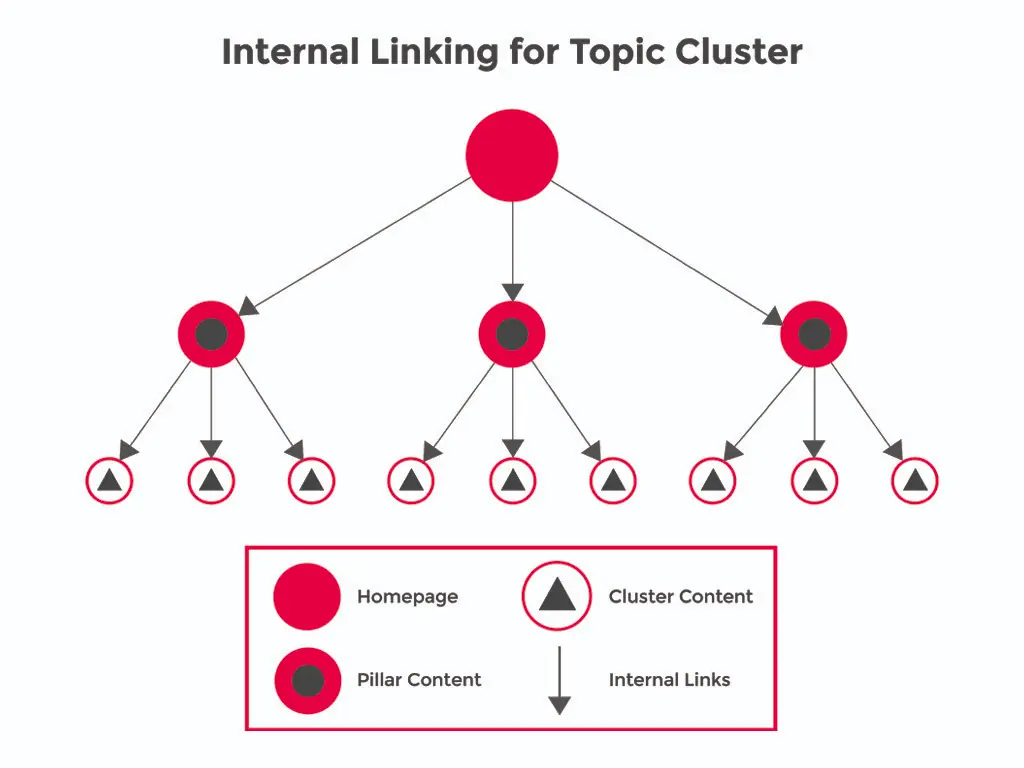
Thirty individual long-tail articles that don’t link to each other are not a strategy. They’re a collection. Google can’t infer topical expertise from isolated pages — it infers it from the relationship between pages.
The cluster architecture that actually works in 2026 is not complicated, but it is disciplined:
Layer 1 — Pillar Page: A comprehensive resource on a core topic (2,000–4,000 words). Does NOT try to rank for a specific long-tail — its job is to be the authoritative home base that all cluster articles reference. E.g.: “CRM Software for Freelancers: The Complete Guide.”
Layer 2 — Cluster Articles (Your Long-Tail Pages): Each addresses one specific sub-question or use case. Tight focus. 800–1,500 words is usually enough. Each links up to the pillar with descriptive anchor text. Internally links to 1–2 sibling cluster articles where genuinely relevant.
The rule: No standalone long-tail article. Every cluster piece is part of a hub. This is how isolated long-tail traffic compounds into topical authority that unlocks competition for higher-KD pillar keywords in months 6–12.
One thing worth flagging: keyword cannibalization is a real risk when clustering. Creating separate articles for “best CRM for freelancers,” “CRM for solo freelancers,” and “CRM software for independent contractors” may seem like long-tail targeting — but if the intent is identical across all three, Google will pit them against each other and suppress all three. The fix: cluster semantically identical long-tail terms into a single article, not three. One page per intent, not one page per keyword variation.
The Five Mistakes That Kill Long-Tail Strategies on New Sites
I’ve made several of these myself. The third one took me an embarrassingly long time to recognize.
- Mistake 1: Trusting KD score without a SERP audit
A KD score of 12 in Ahrefs means the pages ranking for this keyword have few backlinks. It does NOT mean you can beat those pages. If the top 3 results are Reddit discussions and YouTube videos, a new text article is unlikely to displace them regardless of how good it is. Always check the actual SERP before targeting.
- Mistake 2: One page per keyword variation
Publishing separate thin articles for “CRM for freelancers,” “freelancer CRM software,” and “best CRM for independent workers” creates cannibalization. Google sees three thin pages fighting over one intent signal instead of one strong page that comprehensively answers it. Cluster semantically identical variants into a single article.
- Mistake 3: Ignoring the Sandbox timeline
Launching 40 long-tail articles in month 1 and expecting traffic by month 2 is the most common and most expensive SEO mistake new sites make. The Sandbox does not care how good your content is. Publishing 4–6 high-quality articles per month consistently beats publishing 40 average ones in a burst, because consistency of quality signals are what the trust evaluation is looking for.
- Mistake 4: Missing the AIO citation opportunity
Writing good long-tail content but not structuring it for AI Overview citation eligibility means leaving half the value on the table. Add a direct-answer opener, FAQPage schema, and question-format headings to every long-tail article. These add 20 minutes to production time and can double the effective visibility of a page during the Sandbox period.
- Mistake 5: Disconnected long-tail articles (no cluster architecture)
Every long-tail article that doesn’t link up to a pillar page is a dead end. It may rank for its specific term but contributes nothing to the topical authority that would eventually let you compete for higher-volume terms. Before publishing any long-tail article, confirm its home in your cluster map.
The Unpopular Take: Long-Tail Is Not a Strategy — It’s the Opening Move
I want to push back against the way this advice is commonly framed, because I think it creates a misleading endgame.
Long-tail keyword strategy is often presented as the answer for new sites — implying that if you do it right, you’ve won. You haven’t. You’ve built a base camp. The objective is still to eventually compete for terms that move meaningful business volume, and those terms are almost never long-tail.
The realistic arc for a site that executes this well:
Months 1–3: Publish 15–25 long-tail Tier 1 articles. Zero meaningful organic traffic. Some early AI Overview citations if you’ve structured content properly. Harvest brand signals from social and email.
Months 4–6: First long-tail rankings appear post-Sandbox for the easiest targets. 150–400 monthly visits from long-tail cluster. GSC data starts revealing queries you’re appearing for but not targeting.
Months 6–12: Topical authority from cluster compounding. Tier 2 keywords start becoming realistic. First pillar page (Tier 4) target identified based on what the long-tail cluster has established authority around.
Months 12–18: You’re now a real competitor. The long-tail articles have become citation assets, internal link hubs, and trust signals for the harder keywords you’re finally positioned to chase.
This is not a 90-day SEO win. Anyone promising that is either in a niche with no competition or selling you something. The honest timeline for a new site to reach meaningful organic traffic using a disciplined long-tail approach is 8–14 months — and that assumes consistent quality and execution throughout. ESTABLISHED
My sample skews heavily toward B2B SaaS and content sites. E-commerce, local SEO, and product-review niches have different dynamics — particularly around the interplay between long-tail and local intent modifiers. What I’ve described here doesn’t transfer perfectly to those verticals, and I won’t pretend it does.
What Good Execution Looks Like: A Concrete Playbook
Frameworks are useless without operational specifics. Here’s exactly what the first 90 days looks like for a new site using this approach:
| Week | Activity | Output | Priority Metric |
|---|---|---|---|
| 1–2 | Niche mapping: identify 3–5 core pillar topics that have a realistic path to authority. No publishing yet. | Cluster map (pillar + 8–12 long-tail per pillar) | Topic depth score |
| 2–3 | Long-tail discovery: PAA mining, Reddit/Quora phrase scraping, autocomplete harvesting for each pillar topic. | 150–300 candidate long-tail keywords | Intent classification rate |
| 3–4 | SERP audit and prioritization: filter for Tier 1 targets (KD <15, no dominant media/forum results, weak current pages). | 20–30 confirmed Tier 1 targets | % with beatable SERPs |
| 4–12 | Production: 5–6 long-tail articles/month. Each includes: direct-answer opener, question headings, FAQPage schema, internal link to pillar. | 18–25 published articles | GSC indexing rate, AIO citation rate |
| 8–12 | GSC audit: identify queries appearing at positions 11–40 that weren’t directly targeted. Refresh or create targeted content for top opportunities. | 5–10 refreshed or new pages | Position improvements, CTR |
Measuring the Right Things: The 2026 Metric Stack
If you’re measuring long-tail strategy performance by rankings alone in 2026, you’re missing half the picture. The emergence of AI Overviews as a parallel visibility channel means your measurement stack needs to track two distinct surfaces.
| Metric | Tool | Why It Matters | Check Frequency |
|---|---|---|---|
| Organic clicks + impressions by query | Google Search Console | Primary long-tail traffic signal. Impressions show indexing breadth; clicks show intent alignment. | Weekly |
| Ranking position by keyword | Ahrefs / Semrush | Tracks Tier 1–3 keyword progress. Look for position 11–30 as the “near-win” zone. | Bi-weekly |
| AI Overview citation frequency | Ahrefs Brand Radar / LLMrefs | Measures the second-layer visibility channel. Growing citation rate = correct content structure. | Monthly |
| Topical authority score | Semrush (Topical Authority feature) | Tracks whether your cluster architecture is being recognized as subject expertise. | Monthly |
| Organic conversion rate by page | GA4 + CRM | Long-tail’s key advantage is high conversion rate. If long-tail pages aren’t converting, the intent mapping is wrong. | Monthly |